Is panic gripping Tehran? How Iran is feeling the heat of Trump’s economic siege
Iran’s currency hits record low as Tehran warns it can no longer tolerate the US blockade
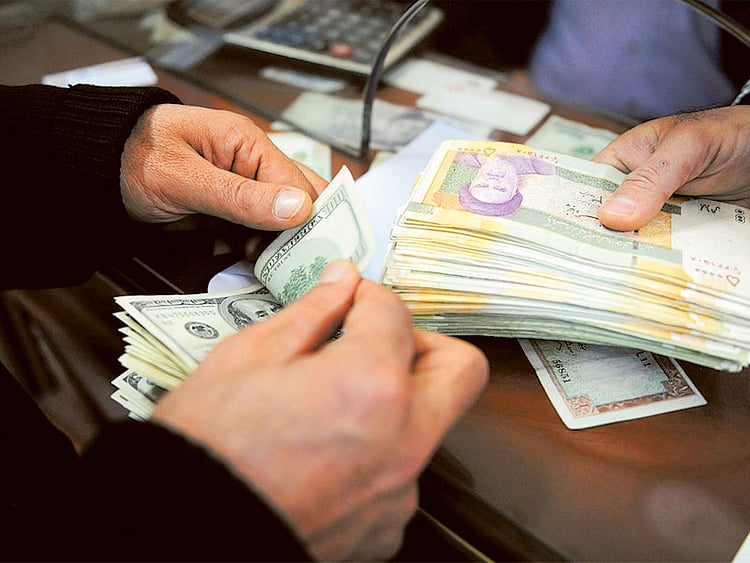
Dubai: Iran’s currency plunged to a historic low on Tuesday as Washington intensified its economic siege, prompting increasingly urgent warnings from senior Iranian officials that the months-long US naval blockade cannot continue indefinitely and that military options remain on the table.
With its oil exports choked, access to international financial networks increasingly restricted and Washington reportedly seeking to disrupt overland trade, Tehran is facing mounting economic pressure with no diplomatic breakthrough in sight.
US Treasury Secretary Scott Bessent claimed on Monday that Iran’s leaders were panicking, vowing to dismantle what Washington describes as the Islamic Republic’s last financial lifeline.
While Iranian leaders insist the country remains resilient, their latest statements reveal growing concern over the economic consequences of a prolonged state of ‘no war, no peace’.
Iran’s currency crisis deepens
The US dollar broke through the 2.8 million rial mark on Iran’s open market on Tuesday, trading at a record 2,802,000 rials, compared with 2,642,000 on November 12.
The euro climbed to 3,056,500 rials, while the British pound reached 3,653,400 rials.
The currency’s continued decline threatens to further erode household purchasing power, drive up the cost of imported goods and aggravate an inflation crisis that has already placed millions of Iranians under financial strain.
The naval blockade has also deprived Tehran of a crucial source of foreign currency, with observable seaborne crude exports falling to almost zero in recent months.
US targets Iran’s financial lifeline
The latest currency plunge came a day after Washington imposed sanctions on 22 companies and eight individuals linked to Iran’s international financial networks under its Operation Economic Outcast campaign.
“Iran’s economy is underwater, and its leaders are panicking,” Bessent wrote on X.
Among the entities targeted is the Iran Center for Exchange of Currency and Gold, which facilitates tens of billions of dollars in annual trade by connecting exporters earning foreign currency with importers.
The measures also expose foreign financial institutions and businesses to potential US penalties for certain transactions with sanctioned entities, further complicating Tehran’s efforts to maintain international trade.
Iran looks to land borders for relief
With maritime trade severely restricted, concerns are growing in Tehran over Washington’s efforts to disrupt Iran’s remaining overland commercial routes.
Foreign Minister Abbas Araghchi insisted that imposing a land blockade on Iran was “virtually impossible”, citing the country’s vast territory and extensive cross-border connections.
He said the historical, cultural and economic ties between Iranian border provinces and neighbouring countries could help reopen trade routes Washington sought to close.
His remarks underscore the growing importance of alternative trade corridors as Iran struggles to overcome restrictions on its maritime commerce.
Tehran warns blockade cannot continue
Iranian officials are also becoming increasingly explicit about the possibility of using military force to end the blockade.
Alaeddin Boroujerdi, a member of parliament’s national security committee, said on Tuesday that Iran could not tolerate the situation indefinitely and would have to resort to other methods if the blockade continued.
Referring to Iran’s warning that it would send out oil tankers, he said: “If the Americans stop them, that means a return to wartime conditions, and we will take other measures.”
Another Iranian lawmaker, Abbas Golrou, warned that the world could lose access to oil if fighting resumed, saying Iran had developed capabilities that could influence regional and global dynamics.
Meanwhile, US Central Command said the aircraft carrier USS Theodore Roosevelt was conducting round-the-clock flight operations in the Middle East.
No diplomatic breakthrough in sight
Parliament Speaker and chief negotiator Mohammad Bagher Ghalibaf reiterated on Tuesday that there would be no negotiations until Iran’s seven conditions were met.
These include lifting the naval blockade, providing sanctions relief, releasing frozen Iranian funds, ending hostilities on all fronts and formally declaring the war over.
Ghalibaf accused Washington of seeking to impose a prolonged war of attrition on Iran through a state of ‘no war, no peace’. He also warned that Tehran could shift the geography of the conflict if its adversary miscalculated.
Whether panic is setting in among Iran’s leaders remains debatable. What is increasingly evident, however, is the economic cost of the prolonged confrontation and Tehran’s growing unwillingness to accept the status quo.
Washington is betting that economic pressure will force Iran to make concessions. Tehran, however, is signalling that military action remains an option if diplomatic efforts fail.
The question is how much further the economic siege can be tightened without triggering the very military escalation that diplomacy has sought to prevent.

Sign up for the Daily Briefing
Get the latest news and updates straight to your inbox
Network Links
GN StoreDownload our app
© Al Nisr Publishing LLC 2026. All rights reserved.