Shopkeepers and traders walk over a bridge during a protest against the economic conditions in Iran.
EXPLAINER
Iran’s biggest protests in years are back. Here’s what’s driving the anger
Economic collapse and rising prices have pushed Iranians back onto the streets nationwide
Last updated:
5 MIN READ
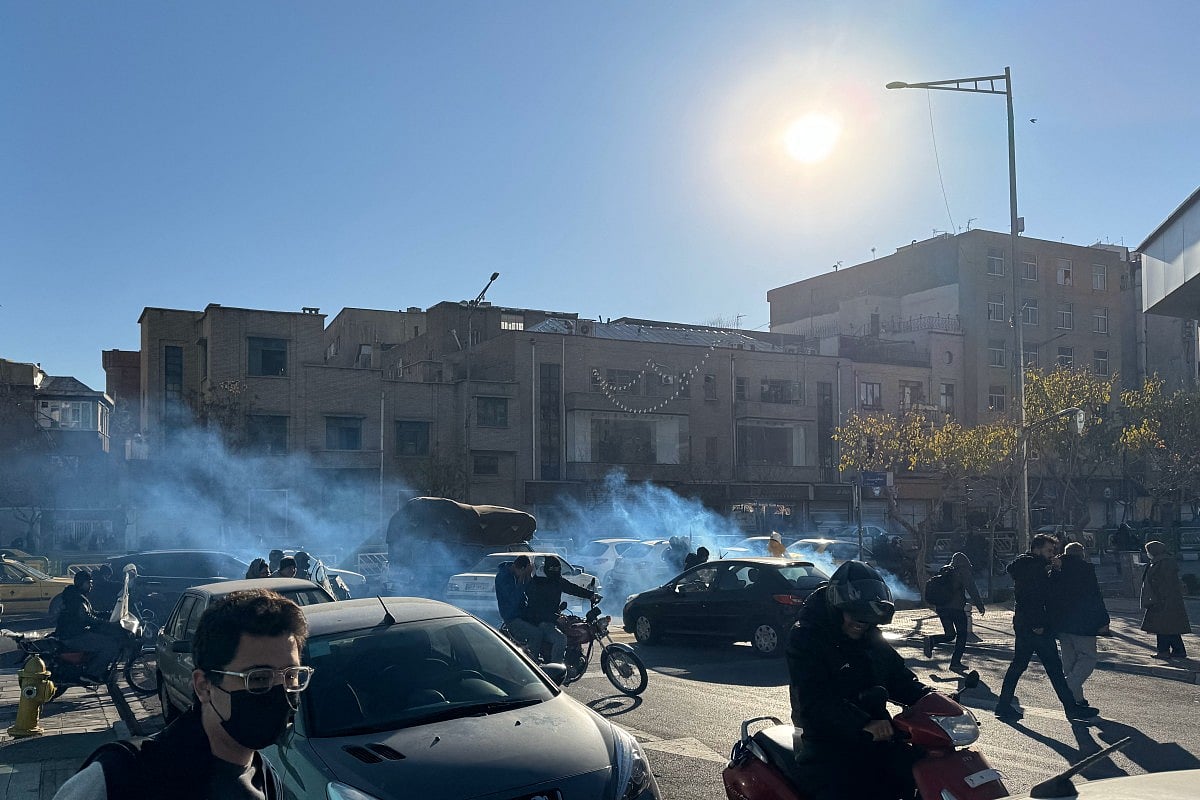
Shopkeepers and traders protest in the street against the economic conditions and Iran's embattled currency in Tehran on December 29, 2025.
AFP
Dubai: Iran is once again facing a moment of deep uncertainty as economic collapse, public anger and regional tensions converge.
In recent days, the country has seen its largest protests in three years, sparked by a sharp fall in the national currency and a steady erosion of living standards.
While the immediate trigger was economic, the unrest reflects broader pressures on the Islamic Republic — from sanctions and political fatigue to the aftershocks of last summer’s war with Israel.
The protests began on Sunday after Iran’s currency plunged to a record low against the US dollar, sending prices soaring and wiping out purchasing power.
In central Tehran, traders and shopkeepers shut their stores in protest, a powerful signal of economic distress. Demonstrations quickly spread beyond the capital to major cities including Isfahan, Shiraz and Mashhad, underlining the nationwide scale of the anger.
'Don’t be afraid, we are together'
Videos circulating on social media showed protesters chanting anti-government slogans, including “Don’t be afraid, we are together” and “Azadi” — the Farsi word for freedom. Footage also showed riot police firing teargas to disperse crowds.
The scenes evoked memories of the 2022 Mahsa Amini protests, which erupted after the 22-year-old woman died in police custody following her arrest for allegedly violating Iran’s dress code.
That earlier protest movement was met with a heavy crackdown, including internet shutdowns and the use of deadly force. This time, however, the government’s response has been notably more restrained.
President Masoud Pezeshkian has publicly acknowledged the “legitimate demands” of protesters and instructed officials to listen to public grievances.
A government spokesperson said a mechanism would be established to hold talks with protest leaders. “The livelihood of my people is my daily concern,” Pezeshkian wrote on X, adding that the government has plans to reform the monetary and banking system and protect purchasing power.
So what is driving the unrest — and what else is shaping Iran’s current crisis?
Why are people protesting?
At the heart of the protests is economic desperation. Years of US-led sanctions, structural mismanagement, corruption and heavy reliance on oil revenues have weakened Iran’s economy. Inflation has surged, wages have failed to keep pace with prices, and ordinary Iranians are struggling to afford food, housing and healthcare.
The latest currency collapse acted as a breaking point. For traders and middle-class Iranians — traditionally key pillars of social stability — the falling rial represents not just higher prices, but a loss of confidence in the state’s ability to manage the economy.
Why is the government responding differently this time?
Analysts say Tehran has scaled back domestic repression since the 12-day war with Israel in June 2025, which dealt a psychological blow to the regime’s long-cultivated image of strength and deterrence. That conflict, triggered by Israeli airstrikes on Iranian military and nuclear sites, left hundreds dead on both sides before a ceasefire ended the fighting.
The war strained Iran’s economy further and exposed vulnerabilities at a time when public trust was already fragile. Since then, authorities have appeared cautious about provoking another mass uprising. Enforcement of social rules, including dress-code laws, has at times been relaxed in Tehran, and the so-called morality police have operated less visibly.
For now, the government seems to be betting that dialogue and limited economic reforms can ease pressure without opening the door to wider political demands.
Timeline: Major protest movements in Iran
2009 – Green Movement
Triggered by allegations of fraud in the presidential election that returned Mahmoud Ahmadinejad to power.
Millions protested across Iran, demanding political reform.
The movement was crushed through arrests, violence and media restrictions, marking one of the most serious challenges to the regime since 1979.
2017–2018 – Economic Protests
Protests erupted over rising prices, unemployment and corruption.
Demonstrations spread rapidly from smaller towns to major cities.
Security forces responded with force; dozens were killed and thousands arrested.
November 2019 – Fuel Price Protests
Sparked by a sudden government decision to sharply raise fuel prices.
Turned into nationwide unrest, with protesters targeting symbols of the state.
Authorities imposed an almost total internet shutdown and used lethal force. Hundreds were killed, according to human rights groups.
2021 – Water and Power Shortages
Protests broke out in Khuzestan province over water shortages, later spreading to other regions.
Demonstrators highlighted environmental mismanagement and inequality.
Security forces again intervened to suppress unrest.
2022–2023 – Mahsa Amini Protests
Began after Mahsa Amini, 22, died in police custody following her arrest for allegedly violating hijab rules.
Evolved into the most sustained protest movement in decades, with women at its forefront.
Met with a severe crackdown, including internet blackouts, mass arrests and executions.
2025 – Economic Crisis Protests
Triggered by the collapse of the national currency and declining living standards.
Marked by shop closures, street protests and anti-government slogans.
Authorities have so far adopted a more cautious response, calling for dialogue amid broader regional and international pressures.
Regional conflict and security tensions
Iran’s domestic troubles are unfolding against a volatile regional backdrop.
In addition to the June war with Israel, tensions flared again on December 26, when Iran seized a foreign oil tanker in the Strait of Hormuz, a vital chokepoint for global energy supplies. Iranian naval forces said the vessel was carrying smuggled fuel and detained its crew. The incident revived fears about shipping security in one of the world’s most sensitive waterways.
Rhetoric has also intensified. US President Donald Trump has warned of new strikes if Iran rebuilds its nuclear or missile programmes, while Iranian leaders have threatened a “severe response” to any attack. The exchange has reinforced concerns that miscalculation could trigger another regional escalation.
International pressure and sanctions
Iran remains under heavy international pressure. The United States recently imposed new sanctions on Iranian and Venezuelan entities linked to drone and missile proliferation, part of Washington’s broader “maximum pressure” campaign aimed at curbing Iran’s military capabilities.
At the same time, Western governments continue to express alarm over Iran’s nuclear activities. While Tehran insists its programme is peaceful, many fear it could move closer to weapons capability if tensions worsen. Other global powers, including European states, have called for restraint and diplomacy, warning that further escalation could destabilise the wider Middle East.
Why this matters
For Iranians, the crisis is immediate and personal. Falling incomes, rising prices and political uncertainty have eroded hope for economic recovery, while memories of past crackdowns fuel anxiety about what may come next.
For the Middle East, instability in Iran carries serious risks. Tehran’s influence stretches across Iraq, Syria and Lebanon, and renewed confrontation could inflame proxy conflicts. Disruption in the Strait of Hormuz would have major consequences for energy shipments.
For the world, Iran’s troubles matter because they affect global oil markets, regional security and diplomatic relations between major powers. Any escalation — economic or military — could send shockwaves far beyond Iran’s borders.
What happens next?
Much depends on whether the government’s promise of dialogue leads to tangible economic relief. If living conditions continue to deteriorate, protests could intensify. If reforms stall, authorities may revert to tougher measures.
Iran’s leadership is now walking a narrow line: trying to contain unrest without reigniting the kind of nationwide uprising that once shook the foundations of the Islamic Republic.

A Senior Associate Editor with more than 30 years in the media, Stephen N.R. curates, edits and publishes impactful stories for Gulf News — both in print and online — focusing on Middle East politics, student issues and explainers on global topics. Stephen has spent most of his career in journalism, working behind the scenes — shaping headlines, editing copy and putting together newspaper pages with precision. For the past many years, he has brought that same dedication to the Gulf News digital team, where he curates stories, crafts explainers and helps keep both the web and print editions sharp and engaging.
Sign up for the Daily Briefing
Get the latest news and updates straight to your inbox
Network Links
GN StoreAbout Gulf NewsTerms & ConditionsReach by GNSitemapContact usPrivacy PolicyGN FocusHave your sayWork with usAdvertise with usGulf News epaperPrinting Services
Download our app
© Al Nisr Publishing LLC 2026. All rights reserved.