Iran-US conflict enters dangerous new phase: How close is the region to wider war?
Tankers hit, US warships targeted,missiles fired at bases as risk of miscalculation grows
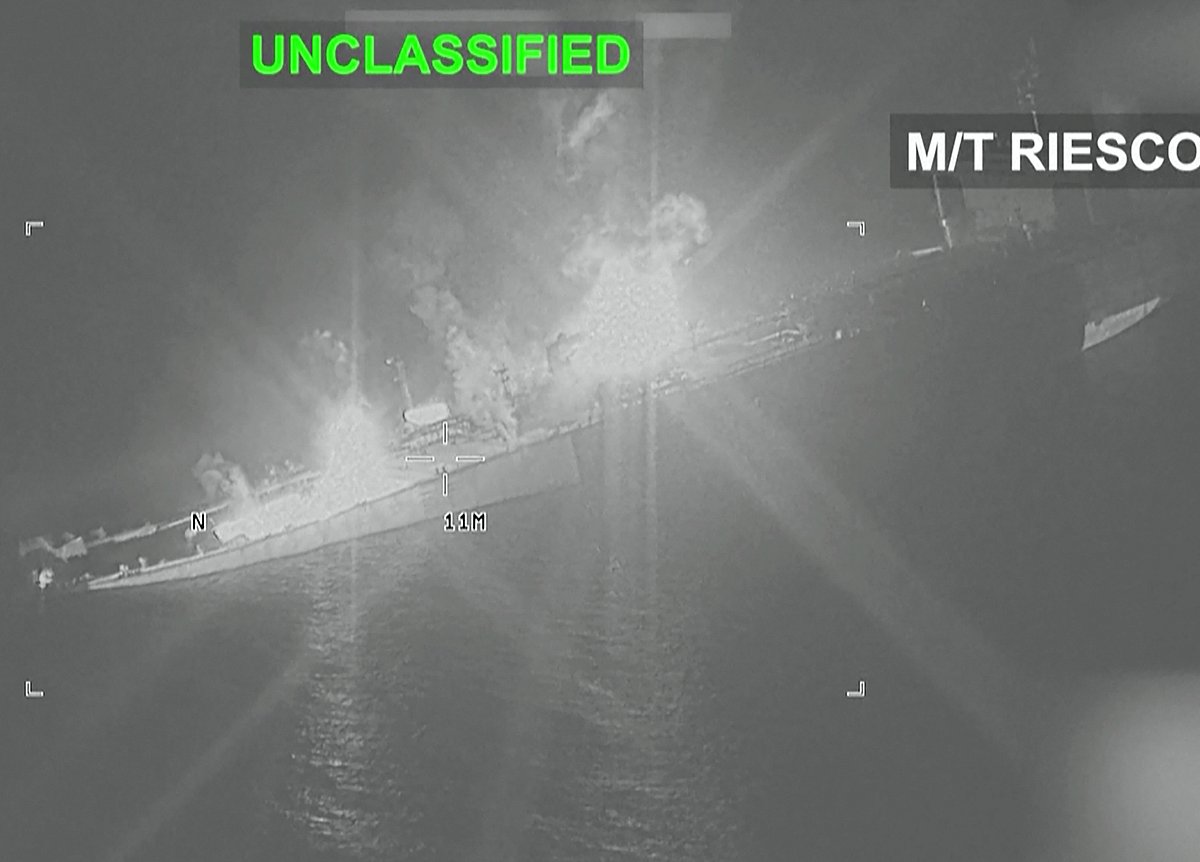
Dubai: Six months into the US-Iran war, the confrontation is entering one of its most dangerous phases yet — with Tehran attacking American vessels and bases, Washington destroying Iranian oil tankers and the battle over the Strait of Hormuz spreading deeper into the Gulf.
The immediate question is no longer simply who controls the world’s most important oil chokepoint.
It is whether the escalating cycle of attack and retaliation can still be contained.
Iran’s Revolutionary Guards said on Wednesday they had targeted two US vessels, eight oil tankers and 10 other “non-compliant” vessels attempting to pass through the Strait of Hormuz.
Tehran also launched missiles towards a US military base in Jordan, with the Jordanian military saying it intercepted 18 Iranian missiles.
Then came an even broader warning.
Iran threatened to attack oil tankers off Kuwait and Bahrain, telling crews to leave their vessels because they could become targets.
The moves followed US strikes that destroyed five Iranian oil carriers on Tuesday after Washington said Tehran had again attempted to attack an American warship.
Brent crude climbed close to $100 a barrel as markets absorbed the possibility that an already severely disrupted Strait of Hormuz could face another escalation.
Taken together, the developments point to a dangerous shift: Both sides appear increasingly willing to attack assets that were previously treated with greater caution.
Why is Iran escalating now?
For Tehran, the problem is increasingly economic as well as military.
The US campaign has made it extremely difficult for Iran to export oil, its principal source of revenue, while American naval escorts have enabled some vessels to pass through the Strait of Hormuz despite Tehran’s efforts to control the waterway.
That leaves Iran facing pressure from both directions.
Washington is trying to squeeze the Iranian economy while gradually weakening Tehran’s ability to use Hormuz as leverage over the global economy.
Iran appears to be responding by raising the cost.
Its attacks on US naval vessels represent a significant escalation because Tehran had previously appeared reluctant to risk strikes that could cause large numbers of American casualties and provoke overwhelming retaliation.
Mohammed Bagher Ghalibaf, Iran’s lead negotiator and parliament speaker, signalled that shift when he declared that the era of “proportionate responses” was over and warned that future retaliation would be faster and heavier.
Iranian security chief Mohsen Rezaei has also announced plans for a restricted shipping zone extending beyond Tehran’s existing controls in Hormuz.
The message is increasingly clear: If Iran cannot export its oil freely, it wants to demonstrate that its adversaries cannot assume their own energy flows will remain untouched.
Washington is squeezing Iran’s lifeline
The United States is pursuing almost the opposite strategy.
Rather than immediately returning to the huge opening military campaign of February, Washington has been trying to grind down Iran’s ability to sustain the confrontation.
Oil is central to that strategy.
Destroying Iranian tankers directly threatens Tehran’s capacity to generate revenue, while US sanctions announced this week against remaining unsanctioned Iranian airlines broaden the economic pressure.
US Secretary of State Marco Rubio also made clear that attacks on American naval forces would carry a direct price.
“Iran continues to try to hit US naval ships, and for every time they do that or try to do that, they’re going to lose tankers,” Rubio said on Tuesday.
That creates a potentially dangerous equation.
Iran attacks American military assets to force Washington to ease the pressure. Washington attacks Iranian oil assets to deter Tehran from attacking American forces.
Neither side has yet achieved its objective.
The Hormuz stalemate
At the centre of the confrontation remains the Strait of Hormuz.
Before the war, roughly a fifth of global oil and liquefied natural gas passed through the narrow waterway.
Iran has asserted control over Hormuz since fighting began in February, requiring vessels to obtain permission and pay transit fees, while normal traffic has been severely disrupted.
But Tehran’s control is not absolute.
US naval escorts have allowed some ships through, preventing Iran from completely shutting the waterway and limiting its ability to drive global energy prices still higher.
For Washington, however, escorting commercial shipping is expensive and potentially dangerous.
Every escorted vessel creates another opportunity for Iranian forces and US warships to come into direct contact.
Wednesday’s Iranian claim that it targeted 20 vessels attempting to pass through Hormuz shows how quickly that contest can become military.
Why Kuwait, Bahrain and Jordan matter
Perhaps the most worrying development is the widening geography.
Iran is no longer limiting its retaliation to the waters immediately around Hormuz.
Its missile attack towards a US base in Jordan extends the confrontation onto Arab territory, while its threat against tankers off Kuwait and Bahrain potentially puts commercial shipping around two US partners at greater risk.
The regional picture is becoming more complicated elsewhere too.
Yemen’s Iran-aligned Houthi militants have renewed attacks as fighting intensifies near the Bab Al Mandab Strait, another strategically important chokepoint for global shipping.
US officials have accused Tehran of being behind the renewed Houthi pressure, although the extent of Iranian coordination has not been established.
If instability simultaneously intensifies around Hormuz and Bab Al Mandab, the implications would extend far beyond Iran and the United States.
What could trigger a much bigger war?
The greatest danger may be an attack that produces casualties neither government can politically ignore.
So far, both sides have repeatedly demonstrated that they want to impose costs without necessarily unleashing another unrestricted military campaign.
But the room for miscalculation is shrinking.
A successful Iranian strike that sinks a US warship or kills significant numbers of American personnel could force Washington into a much larger response.
Likewise, a major US attack on Iranian oil infrastructure, ports or strategically important facilities could prompt Tehran to widen its attacks against American bases and regional shipping.
Commercial vessels are increasingly caught in between.
And with Iran threatening tankers around Kuwait and Bahrain, an attack causing large-scale casualties or severe damage could draw other states more deeply into the confrontation.
So, is full-scale war returning?
Not necessarily.
Both Washington and Tehran still have reasons to avoid returning to the intensity of the opening phase of the war.
A major conflict would expose US forces and allies across the region to Iranian missiles and drones, while Iran would face vastly superior American military power and further destruction of critical infrastructure.
That logic has helped impose limits on the confrontation.
But those limits are being tested.
Iran appears to believe escalation can restore leverage lost through economic pressure and US operations in Hormuz. Washington appears to believe escalating pressure on Iran’s oil trade can force Tehran to back down without requiring another massive military campaign.
The danger is that both calculations cannot indefinitely succeed at the same time.
With American ships increasingly confronting Iranian forces in Hormuz, Iranian missiles again flying towards US bases and commercial tankers becoming targets in the contest, there are now more opportunities for one strike to cross a threshold neither side intended to cross.
For the moment, the confrontation remains an escalating war of attrition.
The question is how much further it can escalate before one side decides — or is forced — to abandon restraint.
-- With AP & AFP inputs

Sign up for the Daily Briefing
Get the latest news and updates straight to your inbox
Network Links
GN StoreDownload our app
© Al Nisr Publishing LLC 2026. All rights reserved.