Iran cuts subsidies as US blockade deepens economic crisis
Food prices soar and power cuts return as Tehran faces growing public discontent
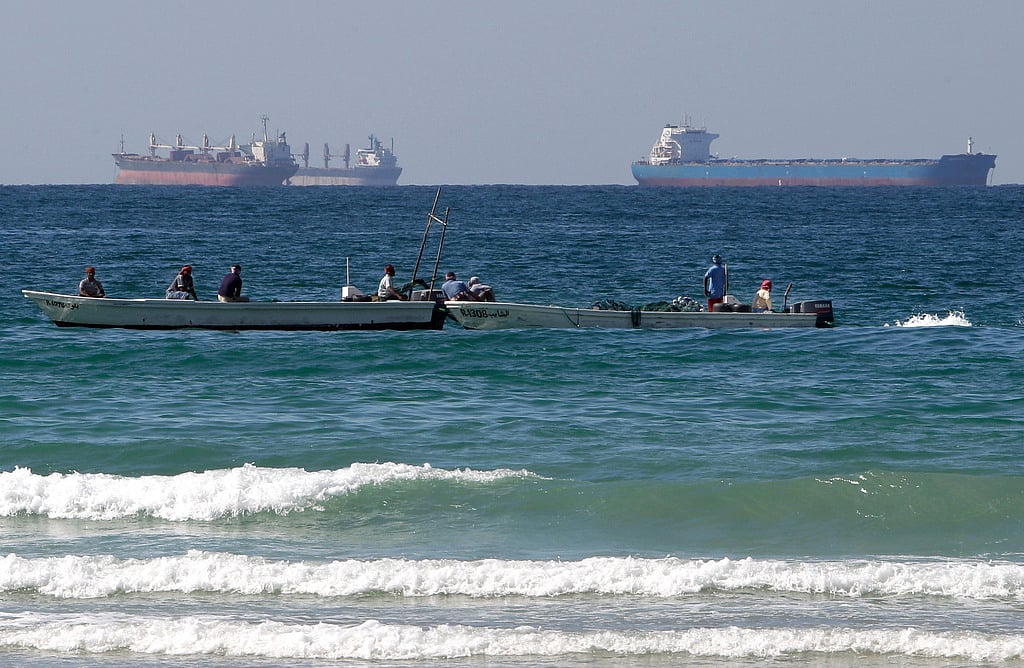
From soaring food prices and fuel restrictions to rolling power cuts, ordinary Iranians are bearing an increasingly heavy economic burden as nearly nine months of war and sustained US pressure stretch the country’s finances.
Iran has begun rolling back subsidies on essential commodities, including bread and petrol, and rationing electricity, The Washington Post reported on Thursday, as public frustration grows ahead of what could be a particularly difficult winter.
The measures come amid renewed regional tensions, with Iranian Foreign Minister Abbas Araghchi denying Tehran’s involvement in a deadly incident in Kuwait on Thursday and offering to cooperate in an investigation.
Iranian President Masoud Pezeshkian has acknowledged the severity of the country’s financial crisis.
“We have no money,” Pezeshkian said in a recent televised address, according to The Wall Street Journal.
The country’s economic difficulties have intensified since Washington reinstated its naval blockade in July following the collapse of a provisional truce.
Food prices more than double
Figures from the Statistical Centre of Iran, cited by Reuters, showed that consumer prices in October were 88.7 per cent higher than a year earlier, while annual average inflation reached 76.8 per cent.
Food and beverage prices rose by a staggering 112.6 per cent year-on-year.
The Iranian currency has also weakened sharply. According to The Wall Street Journal, the rial has fallen to 2.9 million against the US dollar, compared with 32,000 at the time of Iran’s 2015 nuclear agreement with world powers.
The Washington Post estimated that the US blockade was costing Iran between $3 billion and $4 billion in monthly revenue.
The combination of inflation, declining purchasing power and restrictions on subsidised goods has left households struggling to meet basic expenses.
Fears of a difficult winter
Iran International reported that residential and commercial electricity restrictions began on November 22 because of fuel shortages at power plants.
The country’s energy difficulties have raised concerns not only about heating homes during winter but also about industrial production, employment and the survival of small businesses.
Iran International also reported that restrictions on access to subsidised petrol have been tightened in several provinces, fuelling concerns about further increases in transportation costs and food prices.
The Washington Post quoted a Tehran resident as saying: “People are scared, but the conditions are unbearable.”
Fuel prices have historically been a politically sensitive issue in Iran, with increases triggering widespread protests in 2019.
Tehran remains defiant
Despite the mounting economic difficulties, Iranian officials insist the country can withstand Washington’s pressure.
First Vice-President Mohammad Reza Aref said on Wednesday that increased cargo movements through alternative land borders were helping Iran circumvent the impact of the naval blockade, Reuters reported.
Aref maintained that the country’s reserves of essential goods remained adequate and that the government was working to prevent further increases in the prices of basic commodities over the next three months.
Washington, however, has sought to tighten restrictions beyond Iran’s maritime trade. Earlier this month, the US announced an initiative to restrict the movement of sanctioned materials and weapons through Iran’s land borders and the Caspian Sea.
Araghchi calls Kuwait incident suspicious
Meanwhile, fresh tensions erupted after two Italian nationals were killed in an incident in Kuwait on Thursday.
Reuters reported that the victims were technicians employed by the Italian subsidiary of German defence group Rheinmetall.
Kuwait’s Defence Ministry said the men died from injuries sustained from falling debris and attributed the incident to an Iranian attack. Italy also blamed Iran, which categorically denied involvement.
Araghchi said he had spoken to his Kuwaiti and Italian counterparts to express his condolences.
“The incident is suspicious and looks like a precooked recipe for war,” Araghchi wrote on X, according to Roya News.
He added: “We stand ready to cooperate with Kuwait and Italy to determine the cause of the incident.”
The conflicting accounts come amid stalled diplomatic efforts to end the conflict, leaving Iran facing continued economic pressure at home and the prospect of further regional escalation.
Sign up for the Daily Briefing
Get the latest news and updates straight to your inbox
Network Links
GN StoreDownload our app
© Al Nisr Publishing LLC 2026. All rights reserved.