Expected key points: US, Iran edge toward 60-day 'initial framework' — deal to prevent further escalation amid uncertainty
Tehran, Washington weigh 60-day pause as mistrust clouds emerging framework toward deal
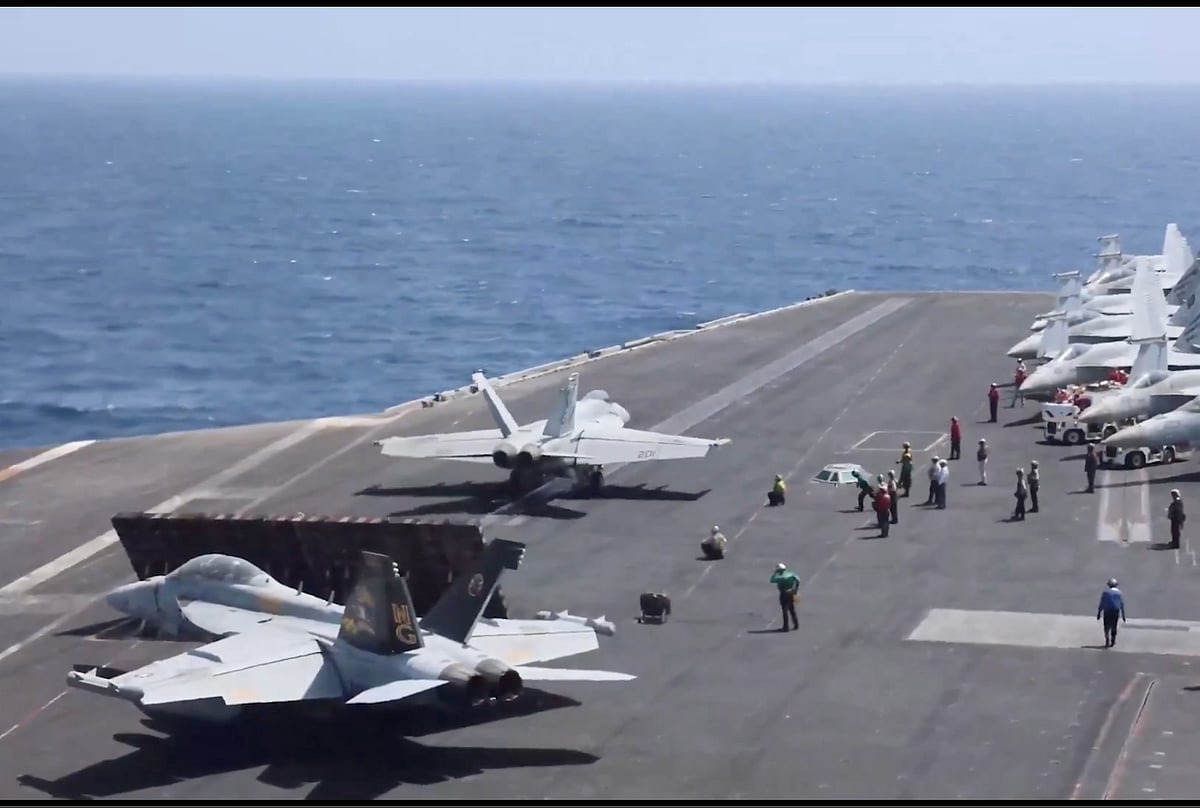
US and Iranian negotiators have reportedly agreed in principle to a framework that would extend a fragile ceasefire for 60 days and open formal negotiations over the future of Iran’s nuclear program, according to US officials familiar with the talks.
The proposed agreement, reported by the BBC, has not yet received final approval from President Donald Trump or Iran’s leadership, including Supreme Leader Ali Khamenei.
American officials described the arrangement as an "initial framework" aimed at preventing further escalation after weeks of military confrontation in the Gulf region.
Uncertainty quickly emerged from Tehran.
Divisions, mistrust
Iran’s semi-official Tasnim cited a source close to the negotiations who denied that any final agreement had been completed or formally confirmed, highlighting continuing divisions and mistrust between the two longtime adversaries.
The diplomatic manoeuvering comes amid one of the most dangerous periods of direct confrontation between the US and Iran in years.
Both sides have accused each other of violating an already shaky ceasefire announced earlier this week following US strikes on Iranian military targets and retaliatory attacks by Tehran-aligned forces.
On Thursday, Iran’s powerful Islamic Revolutionary Guard Corps said it had targeted a US military base in the region after fresh overnight American strikes hit southern Iran.
Iranian state-linked media described the attacks as retaliation for what Tehran called “continued aggression” against its territory.
The proposed agreement
According to US officials speaking to the BBC, negotiators have reached an initial memorandum of understanding (MOU) that includes:
Ceasefire extension: 60-day prolongation of the current truce
Nuclear talks: Formal negotiations on Iran's nuclear program to begin
Strait of Hormuz: Unrestricted vessel movement; US naval blockade lifted
Iran's commitment: Pledge not to pursue nuclear weapons
US concessions: Discussion of sanctions relief and unfreezing Iranian assets
Mine clearance: Iran to clear all mines in the waterway within 30 days
Expected terms of US-Iran 60-day ceasefire extension
Here's a grid on the expected terms of the proposed US-Iran 60-day ceasefire extension, based on Axios reporting and confirmed by multiple news outlets on May 27–28, 2026:
| # | Term | Source |
| 1 | The ceasefire will be extended via a 60-day Memorandum of Understanding (MOU) | Axios via U.S. officials |
| 2 | The MOU establishes a 60-day window to launch negotiations on Iran's nuclear program, specifically on highly enriched uranium disposal and enrichment future | Axios |
| 3 | During the 60 days, shipping through the Strait of Hormuz will be "unrestricted"; Iran commits to removing all mines within 30 days | Axios |
| 4 | The US Navy will lift its naval blockade proportionally as commercial shipping is restored | Axios |
| 5 | The MOU includes an Iranian commitment not to pursue a nuclear weapon | Axios |
| 6 | The MOU states nuclear issues will be discussed "first" during the 60-day window (highly enriched uranium disposal and enrichment) | Axios |
| 7 | The US will commit to discussing sanction relief and release of frozen Iranian funds during negotiations | Axios |
| 8 | The MOU includes a mechanism to help Iran begin receiving goods and humanitarian aid | Axios |
The expected MOU would mark the most significant diplomatic breakthrough since hostilities began.
Officials caution that a comprehensive nuclear agreement would require further intensive negotiations beyond the 60-day window.
The uncertainty from Tehran
Conflicting information emerged from Iran:
Iran's Foreign Ministry spokesperson Esmail Baghaei said Washington and Tehran are in the "final stage" of formulating the MOU
However, Iran's semi-official Tasnim agency cited a source involved in discussions saying "no deal has been finalised or confirmed"
Reports from Tehran present a different perspective than US officials' claims
Current status: Not yet finalised
The framework requires final approval from:
President Donald Trump (US)
Supreme Leader Ali Khamenei and Iran's leadership
Sign up for the Daily Briefing
Get the latest news and updates straight to your inbox
Network Links
GN StoreDownload our app
© Al Nisr Publishing LLC 2026. All rights reserved.