How Ghalibaf emerged as Iran’s power broker in the post-Khamenei era
He steps into spotlight as Tehran navigates war, succession and a shifting power balance
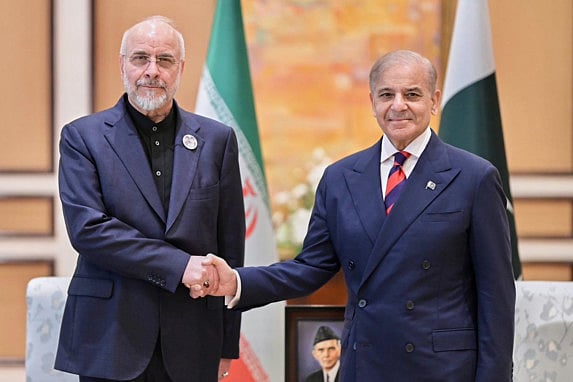
Dubai: Iran’s parliament speaker Mohammad Bagher Ghalibaf has emerged as the most visible power broker in Tehran, stepping into a central role in both the war effort and high-stakes diplomacy as the Islamic republic navigates a new phase following the US-Israel conflict.
A pillar of the Iranian establishment for more than three decades, the 64-year-old former Revolutionary Guards commander has taken on an unusually prominent role after weeks of devastating strikes that killed supreme leader Ali Khamenei and several senior officials, including top security figure Ali Larijani.
Ghalibaf reappeared publicly last weekend to lead Iran’s delegation in talks with the United States in Islamabad, marking one of the highest-level direct contacts between the two sides in decades.
Images released by Iranian missions showed him at the centre of the negotiating team, gesturing animatedly, as Foreign Minister Abbas Araghchi remained in a supporting role — a visual signal, analysts say, of shifting authority within Tehran.
“Ghalibaf has emerged as the new public face of the Islamic republic’s war effort and diplomacy,” said Farzan Sabet, a researcher at the Geneva Graduate Institute. But he cautioned that real power remains fragmented, with key decisions still shaped by the Revolutionary Guards and figures close to the late supreme leader.
The internal workings of Iran’s leadership remain opaque following Khamenei’s death. His son, Mojtaba Khamenei, has been named successor but has yet to appear publicly amid reports he was wounded in an air strike.
Ghalibaf’s rise comes amid a scramble for influence within Iran’s fractured post-Khamenei leadership, with multiple power centres competing behind the scenes. Analysts say Ghalibaf’s rise reflects both necessity and calculation — a seasoned operator stepping forward in a moment of crisis, but one who must still navigate competing power centres.
A former air force commander in the Guards, police chief and mayor of Tehran, Ghalibaf combines military credentials with political experience, making him one of the few figures able to bridge Iran’s security and civilian institutions.
Who is Mohammad Bagher Ghalibaf?
Veteran power figure: A pillar of Iran’s establishment for over three decades
Current role: Speaker of parliament and now a key face of war and diplomacy
Revolutionary Guards background: Former commander in the IRGC, including aerospace forces
Security credentials: Served as Tehran police chief during periods of unrest
Political career: Former mayor of Tehran with deep administrative experience
Presidential ambitions: Ran multiple times but never secured the presidency
War-time rise: Gained prominence after strikes killed top leaders, including Khamenei
Lead negotiator: Headed Iran’s delegation in rare direct talks with the US in Islamabad
Digital presence: Viral X posts in American-style English have drawn attention and scrutiny
Reputation: Seen as ambitious, pragmatic and a “professional bargainer” by analysts
His recent outreach has also drawn attention. Posts on his X account — written in colloquial American English — have gone viral, projecting a defiant tone amid threats of escalation, though questions remain over who authors them.
Despite the failed Islamabad talks, reports in US media suggested Ghalibaf made a strong impression on American officials, described as a “professional bargainer” capable of engaging directly after years of indirect diplomacy.
Still, his room for manoeuvre remains constrained. Iran’s hardline establishment — particularly the Revolutionary Guards — continues to wield decisive influence, and any diplomatic flexibility is likely to be tightly calibrated.
Known as both ambitious and pragmatic, Ghalibaf has long sought higher office but failed in multiple presidential bids. Analysts say those traits may now shape Iran’s approach, as he tests Washington’s red lines while seeking a way out of the conflict.
His emergence signals not just a shift in personnel, but a broader transition in how Iran projects power — balancing confrontation with cautious engagement in an increasingly uncertain regional landscape.
Sign up for the Daily Briefing
Get the latest news and updates straight to your inbox
Network Links
GN StoreDownload our app
© Al Nisr Publishing LLC 2026. All rights reserved.