EU greenhouse gas emissions fall 17 % since 2015
Most EU states slash emissions, but construction and transport buck the trend
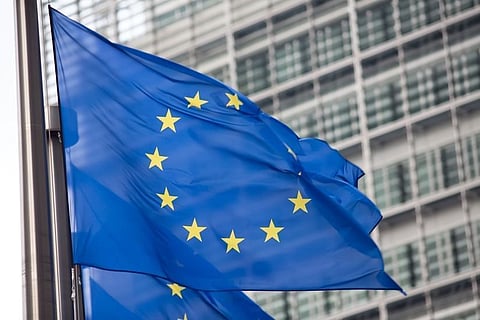
BRUSSELS: Greenhouse gas emissions in the European Union amounted to approximately 3.3 billion tonnes of carbon dioxide equivalent in 2025, marking a 17.2 percent decline compared with 2015, according to preliminary estimates released by Eurostat, the statistical office of the European Union.
This statistic means the Union is continuing to reduce its contribution to climate change, while still maintaining economic activity across its 27 member-states.
Breaking down the Numbers
3.3 billion tonnes of carbon dioxide equivalent (CO₂e) refers to the total greenhouse gases emitted across the EU in 2025.
"Carbon dioxide equivalent" is a standard measure that combines different greenhouse gases—such as carbon dioxide, methane and nitrous oxide—into a single metric based on their warming effect.
The figure represents a 17.2% decrease from 2015 levels.
In practical terms, if the EU emitted roughly 4.0 billion tonnes of CO₂e in 2015, emissions have fallen by about 700 million tonnes over the past decade.
The data showed emissions decreased across most economic sectors.
Emissions from the energy sector fell by 45.3 percent, while mining and quarrying recorded a decline of 33.3 percent.
Emissions from manufacturing decreased by 16 percent, households by 14.7 percent and the services sector by 11.9 percent.
More moderate declines were recorded in agriculture, forestry and fishing, where emissions fell by 5.9 percent, and in water and waste management activities, which registered a decrease of 2.6 percent.
By contrast, emissions increased in the construction sector by 11.4 percent and in transport and storage activities by 10.9 percent.
At the country level, emissions declined in 23 EU member states, with the largest reductions recorded in Estonia, Finland and Germany. Emissions increased in four member states, led by Malta and Cyprus.


Despite the overall decline in greenhouse gas emissions, the European Union economy continued to expand, with gross domestic product growing by 17.5 percent over the same period.
Why it matters
The decline suggests that Europe is making progress toward its climate goals, including its commitment to become climate-neutral by 2050.


