Hormuz to Red Sea: How Iran is widening the war to gain leverage against US
Tehran raises costs for Washington as widening conflict creates fresh bargaining power
Dubai: Iran is blockaded, heavily sanctioned and under enormous economic pressure. Yet after months in which Washington appeared to be tightening the screws, Tehran may have found a way to claw back leverage — by making the war more dangerous.
From the Strait of Hormuz to the Red Sea, Iran and its allies have opened new pressure points against the United States and its regional partners.
Oil briefly touched about $110 a barrel on Friday. Houthi forces have seized strategic territory on Yemen’s Red Sea coast. Saudi energy infrastructure has come under attack. And Tehran has intensified its confrontation with US warships in the Gulf.
Now Iran and Oman are expected to discuss Hormuz with other Gulf states — potentially giving Tehran an opportunity to turn military disruption into diplomatic leverage.
The shift is not decisive. Iran remains under severe economic pressure from the US naval blockade and escalating sanctions. But recent developments have improved Tehran’s bargaining position, at least for now, analysts told The New York Times.
A second chokepoint
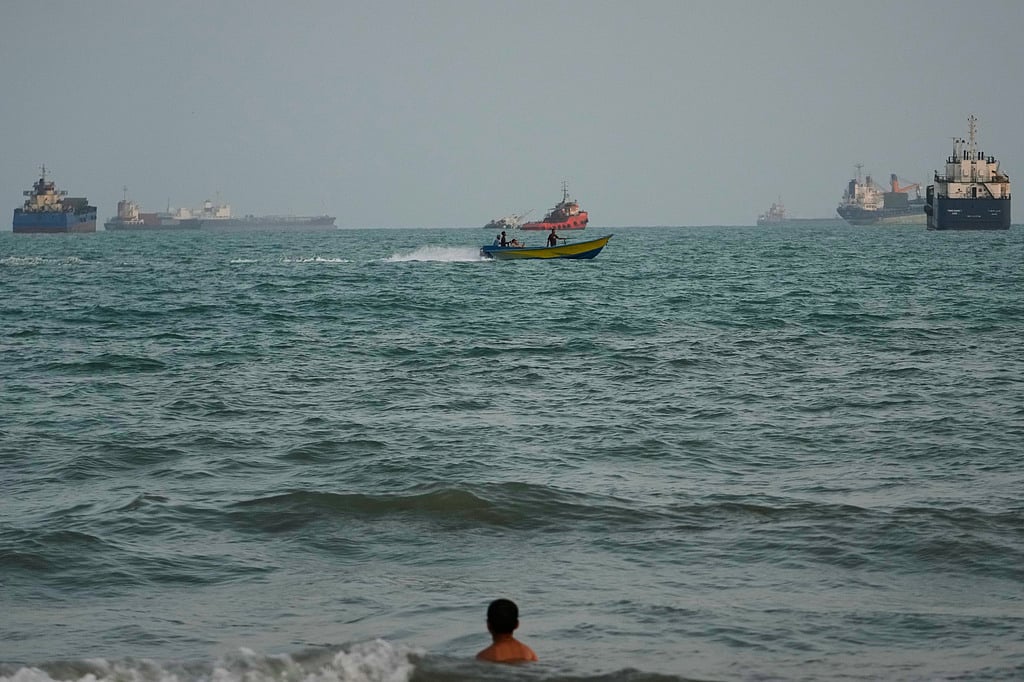
For much of the war, Iran’s biggest source of leverage has been the Strait of Hormuz.
Shipping remains far below pre-war levels, although US naval escorts have helped a limited number of vessels get through.
That had begun to reduce some of Tehran’s leverage.
Then came the Houthi advance in Yemen.
The Iran-backed militant group captured the strategic port of Mocha and then Perim Island — also known as Mayun — at the entrance to the Bab Al Mandeb Strait.
The gains potentially give the Houthis greater ability to threaten a second crucial shipping corridor at a time when Saudi Arabia has increasingly relied on the Red Sea to bypass Hormuz.
“The Houthi success in Yemen has swung the pendulum back in Iran’s favour,” Gregory Brew, a senior analyst at Eurasia Group, told The New York Times.
Iran supports the Houthis with weapons, money and logistics, although analysts stress that the group retains its own interests and is not simply controlled by Tehran.
Why $110 oil matters
Another source of leverage is the oil price.
Crude briefly climbed to around $110 a barrel on Friday, roughly 50 per cent above pre-war levels.
Higher prices increase costs for importing countries and pose a political problem for US President Donald Trump as his party heads towards the midterm elections.
Saudi Arabia is also under increasing pressure.
With Hormuz severely restricted, the world’s largest oil exporter has become more dependent on the Red Sea. But the Houthis announced a blockade of Saudi ships in July and have attacked passing vessels and energy facilities in the kingdom.
Saudi oil exports fell last month to their lowest level in at least 13 years, according to the Times.
The pressure increased on Friday when part of a pipeline carrying Saudi oil towards Red Sea ports was temporarily shut after a drone attack originating from Iraqi territory.
It was unclear who was responsible. Trump said on Saturday that Iran was “probably” behind the attack.
Iran widens the battlefield
Tehran is applying pressure elsewhere too.
Iran has stepped up attacks against US warships in the Gulf, while the US has retaliated by targeting Iranian crude carriers.
Behnam Ben Taleblu, an Iran specialist at the Foundation for Defense of Democracies, told the Times that Tehran had been losing some leverage in Hormuz but was now trying to regain it elsewhere through Iran-aligned forces in Yemen and attacks affecting Saudi Arabia.
The strategy is extremely risky. A successful Iranian strike causing heavy US casualties could provoke a much larger American response.
But it also complicates Washington’s calculations.
Saudi Crown Prince Mohammed bin Salman urged Trump to take military action against the Houthis, according to officials cited by the Times, but the US president declined.
Trump said on Saturday that the Houthis had told his administration they did not want a fight with the United States.
Can escalation become diplomacy?
The next test could come at the negotiating table.
Iran and Oman are expected to meet other Gulf states on Monday to discuss the Strait of Hormuz, according to Iran’s foreign ministry spokesman.
Iranian and Omani officials have already been discussing an arrangement for managing the strait. Tehran, however, has indicated that any agreement would not automatically mean fully reopening Hormuz to shipping.
Bahrain has said it will not participate in Monday’s proposed meeting, and it remains unclear what other Gulf states may do.
But the prospect is significant.
After months of confrontation and disruption, Tehran may now be trying to convert pressure over one of the world’s most important waterways into political influence over how it operates.
Iran is not winning the war in any conventional sense. Its economy remains under enormous strain, sanctions are tightening and the US blockade continues.
But Tehran does not need to defeat the United States militarily to gain leverage.
If it can keep Hormuz constrained, increase pressure around Bab Al Mandeb, help push oil above $100 and bring regional governments to discussions over the future of Hormuz, escalation may have improved Iran’s bargaining position — even as Washington continues trying to squeeze it.

Sign up for the Daily Briefing
Get the latest news and updates straight to your inbox
Network Links
GN StoreDownload our app
© Al Nisr Publishing LLC 2026. All rights reserved.