Much of the rubble could contain hazardous materials, posing serious risks to residents attempting to rebuild their lives amid destroyed neighbourhoods.
Gaza turned into ‘toxic wasteland’ for decades: Report
Israeli bombardment poisons Gaza’s air, soil and water, threatening lives for decades
Last updated:
3 MIN READ
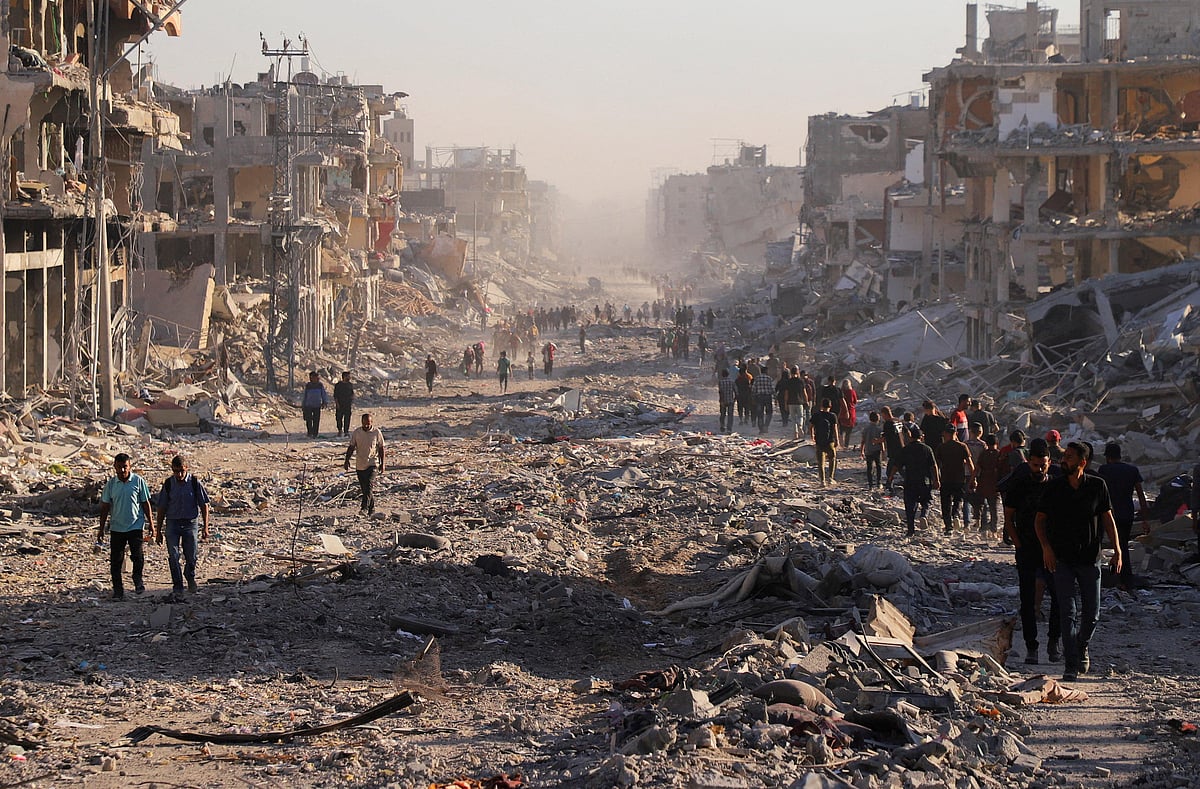
The report found that more than 99 per cent of Gaza faces potential contamination, while around 78 per cent of its landmass has been affected by the scale and intensity of Israeli military operations.
Gulf News Archives
Dubai: Gaza has been turned into a “toxic wasteland” where contaminated air, soil and water could threaten Palestinian lives for decades, according to a new report warning that the environmental devastation caused by Israeli bombardment may outlast the war itself.
The report, released on Monday by Oxfam and the Conflict and Environment Observatory (CEOBS), found that more than 99 per cent of Gaza faces potential contamination, while around 78 per cent of its landmass has been affected by the scale and intensity of Israeli military operations.
It warned that the extensive use of explosive and incendiary weapons, repeated airstrikes and widespread fires had created severe environmental hazards across the devastated territory.
“The destruction and contamination of Gaza will have fundamentally degraded the environmental conditions necessary for human safety and survival,” Oxfam International Executive Director Amitabh Behar said.
He warned that Palestinians were being exposed to toxic substances through the air they breathe, the food they eat, the water they drink and direct contact with contaminated soil and rubble.
Millions of tonnes of debris
The United Nations Environment Programme estimated last year that Israel’s military offensive had generated more than 61 million tonnes of debris — equivalent to the mass of approximately 15 Great Pyramids of Giza.
Much of the rubble could contain hazardous materials, posing serious risks to residents attempting to rebuild their lives amid destroyed neighbourhoods.
The report,according to CNN, said Gaza’s shattered infrastructure had compounded the environmental emergency, with around 85 per cent of its water facilities damaged or destroyed.
Palestinians are left with approximately 18 litres of water per person daily for drinking, cooking, washing and other essential needs.
Dust from demolished buildings, polluted groundwater and the destruction of sewage systems have increased concerns about respiratory illnesses, waterborne diseases and prolonged exposure to toxic substances.
Damage could last generations
Researchers used satellite imagery, remote sensing, scientific analysis and other publicly available evidence to assess the damage.
However, restrictions on bringing testing equipment and technical specialists into Gaza have prevented a comprehensive assessment of contamination levels.
The report warned that the destruction of healthcare and environmental monitoring systems could leave much of the resulting harm undetected for years.
Its authors said environmental destruction on such a scale could provide evidence of serious violations of international law, including war crimes.
Israel rejected the findings, with its foreign ministry describing the report as “shameful and scandalous”.
It argued that the scale of destruction reflected Hamas’s extensive tunnel network and weapons facilities embedded within civilian areas.
Israel has also restricted the entry of heavy machinery required for large-scale rubble clearance, citing concerns that Hamas could use the equipment for military purposes.
Oxfam called for unrestricted humanitarian access, urgent environmental assessments and Palestinian-led reconstruction.
More than 74,000 Palestinians have been killed since the war began following the Hamas-led October 7, 2023 attacks, with thousands more believed buried beneath the rubble.
For Gaza’s surviving population, the report raises a disturbing prospect: even when the fighting ends, the environmental consequences could continue threatening lives for generations.

A Senior Associate Editor with more than 30 years in the media, Stephen N.R. curates, edits and publishes impactful stories for Gulf News — both in print and online — focusing on Middle East politics, student issues and explainers on global topics. Stephen has spent most of his career in journalism, working behind the scenes — shaping headlines, editing copy and putting together newspaper pages with precision. For the past many years, he has brought that same dedication to the Gulf News digital team, where he curates stories, crafts explainers and helps keep both the web and print editions sharp and engaging.
Sign up for the Daily Briefing
Get the latest news and updates straight to your inbox
Network Links
GN StoreAbout Gulf NewsTerms & ConditionsReach by GNSitemapContact usPrivacy PolicyGN FocusHave your sayWork with usAdvertise with usGulf News epaperPrinting Services
Download our app
© Al Nisr Publishing LLC 2026. All rights reserved.