This handout satellite image courtesy of Vantor shows a closer view of destroyed vehicles at Pickaxe Mountain tunnel complex adjacent to the Natanz Nuclear Facility near Natanz, Isfahan province, in central Iran on March 7, 2026.
Could Trump launch a nuclear strike on Iran's Pickaxe Mountain? What an attack could look like and why November 9 matters
Experts examine nuclear strike fears as November 9 attack reports fuel uncertainty
Last updated:
6 MIN READ
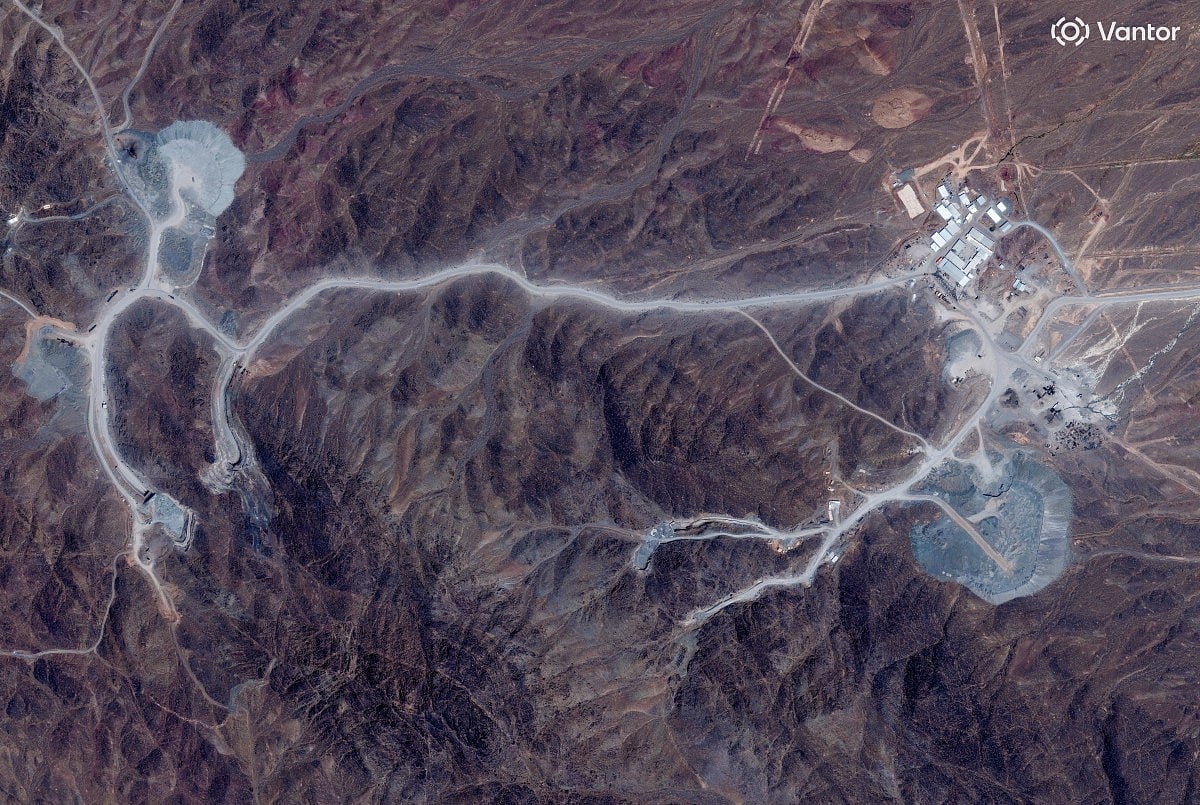
A satellite image taken on June 30, 2026, shows the Pickaxe Mountain tunnel complex near Iran's Natanz nuclear facility in Isfahan province. The underground site has drawn renewed attention amid speculation about possible US military strikes.
AFP
Dubai: Could the United States use nuclear weapons against Iran? Is President Donald Trump preparing another major military offensive, or could a last-minute diplomatic breakthrough avert further escalation?
These questions have taken on fresh urgency on Saturday, November 7, after Washington carried out another limited strike on Iranian territory, Tehran signalled that it could reconsider its nuclear doctrine, and reports emerged about preparations for possible radioactive fallout.
Trump has warned that he may have to inflict further destruction on Iran, but has also claimed progress towards a negotiated settlement.
With Qatar leading diplomatic efforts and speculation about a possible US nuclear strike gathering attention, here is what we know — and what remains uncertain.
Has the US launched fresh strikes on Iran?
Yes. Trump confirmed that American forces carried out limited strikes against Iranian air defence systems on Qeshm Island, near the strategic Strait of Hormuz.
Iranian media reported two explosions in the Suza area of the island.
Trump described the operation as minor, saying American forces had destroyed a newly built anti-aircraft installation within minutes.
The latest attack followed US strikes earlier in the week, which Washington described as defensive operations.
However, the limited attacks do not establish that Trump has ordered a broader military offensive.
Has Trump threatened to destroy Iran?
Yes. On Thursday, Trump said he would “rather not destroy the rest of the country if possible,” but added, “maybe I will have to.” He indicated that his decision would become clear “soon enough.”He told reporters that his decision would become clear soon.
The warning came after his Republican Party suffered major losses in Tuesday’s midterm elections, amid public dissatisfaction with the Iran war and rising fuel prices.
Despite the political setback, Defence Secretary Pete Hegseth has defended the military campaign as a historic effort to prevent Iran from acquiring nuclear weapons.
Is Trump planning to attack Iran on November 9?
Media reports have raised the possibility of renewed US military action against Iran as early as Monday, November 9, adding to concerns about another escalation.
A Fox News report said US military planners were considering options for resuming operations against Iran.
The report also referred to a new moon over the Middle East, suggesting that reduced moonlight could offer favourable conditions for military operations.
However, US Central Command had reportedly received no executive order authorising an attack.
The November 9 date therefore remains a reported possibility, not a confirmed military timetable.
Trump has added to the uncertainty by saying his decision on further action against Iran will become clear “soon enough”.
Has the US warned Americans of possible attacks in the Middle East?
Yes. The United States has urged its citizens across the Middle East to exercise heightened vigilance, citing an increased threat of armed attacks by Yemen's Iran-backed Houthis and alleged Iranian efforts to target American government officials in the region.
In a security alert issued on Saturday, November 7, the US Mission to the UAE also warned Americans to prepare for possible flight cancellations, airspace closures and other travel disruptions.
“Americans currently in the Middle East should exercise heightened vigilance due to the increased threat of armed attacks by Iranian-supported Houthis and Iranian efforts to target US government officials in the region,” the mission said.
The warning comes amid renewed US strikes on Iranian targets, speculation about further military operations and continuing diplomatic efforts to avert another escalation.
However, the advisory did not announce an imminent US offensive or suggest that Washington was preparing to use nuclear weapons.
What is Iran’s Pickaxe Mountain?
Pickaxe Mountain is a heavily fortified underground complex near Iran’s Natanz nuclear facility.
Experts estimate that parts of the complex could lie 80 to 100 metres beneath granite rock, making it difficult to destroy with conventional bunker-buster bombs.
Its precise purpose remains unclear because international nuclear inspectors have not been granted access to the underground facility.
Analysts believe it could potentially house nuclear equipment or enriched uranium.
Newsweek and Popular Mechanics have examined hypothetical scenarios involving a US nuclear strike on the site, warning of potentially devastating radioactive fallout.
However, experts consider nuclear use unlikely, and there is no confirmed US decision to attack the complex with nuclear weapons.
The site’s depth and uncertain contents have nevertheless made it a focus of growing concern amid renewed US-Iran tensions.
Is Trump considering using nuclear weapons?
There is no publicly confirmed decision or credible evidence establishing that Trump intends to launch a nuclear strike.
Speculation intensified after conservative commentator Tucker Carlson claimed, without providing evidence, that Washington could be preparing a nuclear attack on Iran’s underground Pickaxe Mountain facility.
The White House dismissed his suggestion that he had insight into military planning.
Trump had previously ruled out using nuclear weapons against Iran.
Experts interviewed by Newsweek and other publications have examined hypothetical nuclear strike scenarios, but such assessments should not be confused with evidence of an approved US military plan.
What could a US nuclear strike on Iran look like?
Military analysts have examined hypothetical scenarios involving Pickaxe Mountain, Iran’s heavily fortified underground nuclear complex near Natanz.
According to Newsweek, one possible scenario could involve US forces first using powerful conventional bunker-buster bombs to damage the facility before deploying a tactical nuclear weapon.
Experts estimate that parts of Pickaxe Mountain lie as deep as 100 metres beneath granite rock, making the complex extremely difficult to destroy with conventional weapons.
Popular Mechanics reported that even a nuclear explosion near the surface could send radioactive debris into the atmosphere, potentially contaminating surrounding areas and exposing civilians to dangerous fallout.
The consequences would depend on the weapon’s yield, the location of the explosion and prevailing weather conditions.
Experts have warned that nuclear weapons use could have devastating humanitarian consequences and undermine decades of international efforts to prevent nuclear proliferation.
However, these are hypothetical scenarios examined by defence analysts, not confirmed US military plans. Trump has previously ruled out using nuclear weapons against Iran.
Why is Iran talking about changing its nuclear doctrine?
Iran’s Islamic Revolutionary Guard Corps has indicated that preparations could be made if the country’s leadership decides to alter its nuclear doctrine.
IRGC spokesperson Brigadier General Hossein Mohebbi also said on Saturday (November 7) Iran was continuing to increase the range of its missiles.
Last week, Iranian security chief Mohsen Rezaei acknowledged that officials were considering possible changes to nuclear policy but said no decision had been taken.
The distinction is important: considering a policy change does not mean Iran has decided to build or deploy nuclear weapons.
Iran has long maintained that its nuclear programme is intended for peaceful purposes, although its high levels of uranium enrichment have raised international concerns.
Are people in Iran preparing for a nuclear attack?
Reports about possible nuclear fallout preparations have added to public anxiety.
The Times reported that iodine tablets were being distributed near nuclear facilities, while Popular Mechanics examined the consequences of a hypothetical strike on Pickaxe Mountain.
However, Iran’s Health Ministry has disputed the reporting about iodine distribution.
Potassium iodide tablets can protect the thyroid against radioactive iodine in certain circumstances, but they do not provide general protection against radiation.
The reports therefore require careful interpretation and do not establish that a nuclear attack is imminent.
Are Washington and Tehran still negotiating?
Yes. Despite the military exchanges and threats, diplomatic efforts remain active.
The New York Times reported that Iran was reviewing concrete proposals presented through Qatari-led mediators concerning its nuclear programme.
Trump also said on Friday that his administration was dealing with Tehran and claimed significant progress had been made.
Qatar rejected suggestions on Saturday that negotiations had collapsed.
Major differences remain, including sanctions, Iran’s nuclear activities and control of the Strait of Hormuz.
Tehran has insisted that Washington meet its conditions before a broader agreement can be reached.
What could happen next?
Several possibilities remain open: Continued negotiations, further limited military strikes, or a wider resumption of hostilities.
The immediate question is whether diplomatic proposals can bridge the differences between Washington and Tehran before another major escalation.
For now, there is no confirmed decision to use nuclear weapons, and the latest military operations have been described by Washington as limited.
But Iran’s nuclear doctrine warning, continued US military pressure and unresolved negotiations underline the risks facing the region.
The clearest conclusion is that diplomacy and military confrontation are unfolding simultaneously — and Trump’s next decision remains uncertain.

A Senior Associate Editor with more than 30 years in the media, Stephen N.R. curates, edits and publishes impactful stories for Gulf News — both in print and online — focusing on Middle East politics, student issues and explainers on global topics. Stephen has spent most of his career in journalism, working behind the scenes — shaping headlines, editing copy and putting together newspaper pages with precision. For the past many years, he has brought that same dedication to the Gulf News digital team, where he curates stories, crafts explainers and helps keep both the web and print editions sharp and engaging.
Sign up for the Daily Briefing
Get the latest news and updates straight to your inbox
Network Links
GN StoreAbout Gulf NewsTerms & ConditionsReach by GNSitemapContact usPrivacy PolicyGN FocusHave your sayWork with usAdvertise with usGulf News epaperPrinting Services
Download our app
© Al Nisr Publishing LLC 2026. All rights reserved.