Palestinians face countless forms of oppression on a daily basis. The following are among the worst hardships they face:
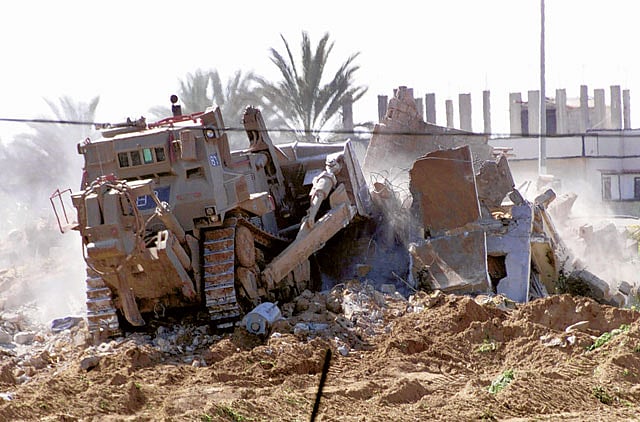
Home demolitions
Figures by the UN Office for the Coordination of Humanitarian Affairs (UNOCHA) show that between 1967 and 2011, over 26,000 Palestinian homes in the Palestinian Territories were demolished. Over 622 structures have been demolished in the last two years. Of these 222 were homes — resulting in the displacement of 1,094 people, including 609 children under the age of 18. There are tens of thousands of demolition orders still standing.
Work permits in Israel
Palestinian workers endure various hardships and hindrances when they apply for work permits in Israel. A Palestinian should apply for a magnetic card from the Israeli Security Service which allows Israelis access to the holder’s security file. The prospective employee is then called by the Israeli intelligence for interviews, which are then followed by more interviews by the Palestinian security apparatus, which summons all those interviewed by the Israelis. After the Palestinian worker secures the magnetic cards, he then applies for the work permit, which requires an Israeli employer and sponsor, and that takes a lot of effort, time and money to get one. Israeli authorities issue the workers with work permits valid for a maximum of three months and these should be renewed, meaning the worker has to go through the entire process once again. The work permits, even when issued, are not guaranteed the next time.
The Palestinian workers are not regularly paid by their Israeli employers who can easily terminate their employment with a single phone call to the management of the crossing.
Israeli checkpoints
Israel has more than 150 permanent checkpoints throughout the West Bank, restricting the freedom of movement. During the Al Aqsa uprising, Israelis installed more than 1,000 roadblocks and checkpoints. It takes several hours for a Palestinian to pass through a checkpoint. Israeli forces also delay ambulances from passing by seeking to examine all the official documents — with the patient and the ambulance driver required to produce several of them. Many Palestinians have died at the checkpoints while on their way to hospitals.
Administrative detention
Administrative detention is a procedure that allows the Israeli military to hold prisoners indefinitely without charging them or allowing them to stand trial. As of now, there are 310 Palestinians, including 24 members of the Palestinians Legislative Council, held under administrative detention. Hunger strikes to protest against the unfair and humiliating administrative detention are the only weapon at the disposal of Palestinians.
Water supplies
Israel fully controls the underground water supplies in the Palestinian Territories. Current statistics show that a Palestinian has access to 50 litres of water daily as compared to 300 litres for an Israel colonist. Agricultural conditions in the West Bank have deteriorated, resulting in a sharp decrease in farm produce. Israel is taking advantage of the situation to meet the resulting shortfall.
Gaza siege
Since 2006, Israel and the international community have imposed a blockade that has affected 1.5 million Palestinians in the Gaza Strip. Instead of lifting or easing the siege, Israel has come up with an unacceptable escalation to the siege, which has prevented the entry of humanitarian supplies to the coastal strip. Gazans are forced to endure long hours of darkness as the entry of the necessary fuel to operate the power plants is dependant on Israel’s mood and on pressure put on Israel by human rights organisations. Israel maintains full and undisputed control of what goes in and out of Gaza and maintains tight restrictions on the fuel allowed through the crossings. Hamas took over the Gaza Strip in June 2007 using force, defeating its rival Fatah and the PNA security service. However, under the siege, the lack of medicine and medical equipment has had a devastating impact on Gazans, with children bearing the brunt and paying with their lives as a result.
Land confiscation
Israel began expropriating Palestinian-owned land in occupied Jerusalem since 1948 to build colonies for Jews. Immediately after the 1948 war, Israel confiscated all Palestinian-owned land in occupied West Jerusalem, which is almost 50 per cent of the total area of occupied Jerusalem. Since 1967, Israel has expropriated 71 square kilometres of land in occupied East Jerusalem. As a result the demographic nature of occupied Jerusalem has changed, with Palestinians from 1948 areas becoming a minority.
The wall
The Israeli wall, which will stretch for 807km when complete, was built within the 1967 Green Line with the aim of expanding the occupation of the territory. As of now, 560km, or 69.4 per cent of the wall, has been completed, forcing Palestinian communities into cantons and military zones. A total of 85 Palestinian villages, ezbazs, and other smaller communities with a total population of more than 300,000 have been cut off by the wall. Palestinian farmers cannot reach their lands behind the wall and only a small percentage of them are granted occasional Israeli permits.
The border posts
Palestinian workers go through six different stages of being searched before they pass the border posts and get into Israel. The exhausted workers are required to be at the border posts by 2am in the morning to get to their workplaces by 7am. Stampedes have resulted in the deaths of two Palestinian workers in Tulkarem and Qalqilia, with several other workers sustaining severe injuries and fractures.
The PNA tired to put an end to the stampedes and recruited a team from the National Guards to restore order but the idea did not work out.
Refugee camps
Refugee camps were established after the 1948 war (Nakba) between Arabs and Israelis to accommodate Palestinians who had fled their hometowns or were forced out of their homes.
The refugee camps spread within the Palestinian Territories and the surrounding Arab states, including 28 refugee camps in the Palestinian Territories, 15 camps in Lebanon, ten refugee camps in Jordan and two others in Syria. The Nakba had resulted in 800,000 becoming refugees. This number has grown to include 4.6 million displaced Palestinians, especially with more refugees of the 1967 six-day war between the Arabs and Israel.
At least 3.7 million people are officially registered as refugees with the United Nations Relief and Works Agency for Palestinian Refugees (UNRWA). Arab states have rejected incorporating Palestinians into their countries, with the exception of Jordan which has granted Palestinians citizenship.
Sign up for the Daily Briefing
Get the latest news and updates straight to your inbox
Network Links
GN StoreDownload our app
© Al Nisr Publishing LLC 2026. All rights reserved.