Houthi supporters shout slogans during a rally against Israel and the United States
EXPLAINER
Who are Yemen’s Houthis? Militants opening a new front in a dangerous escalation
Entry into war raises fears of renewed shipping attacks, further affecting global trade
Last updated:
3 MIN READ
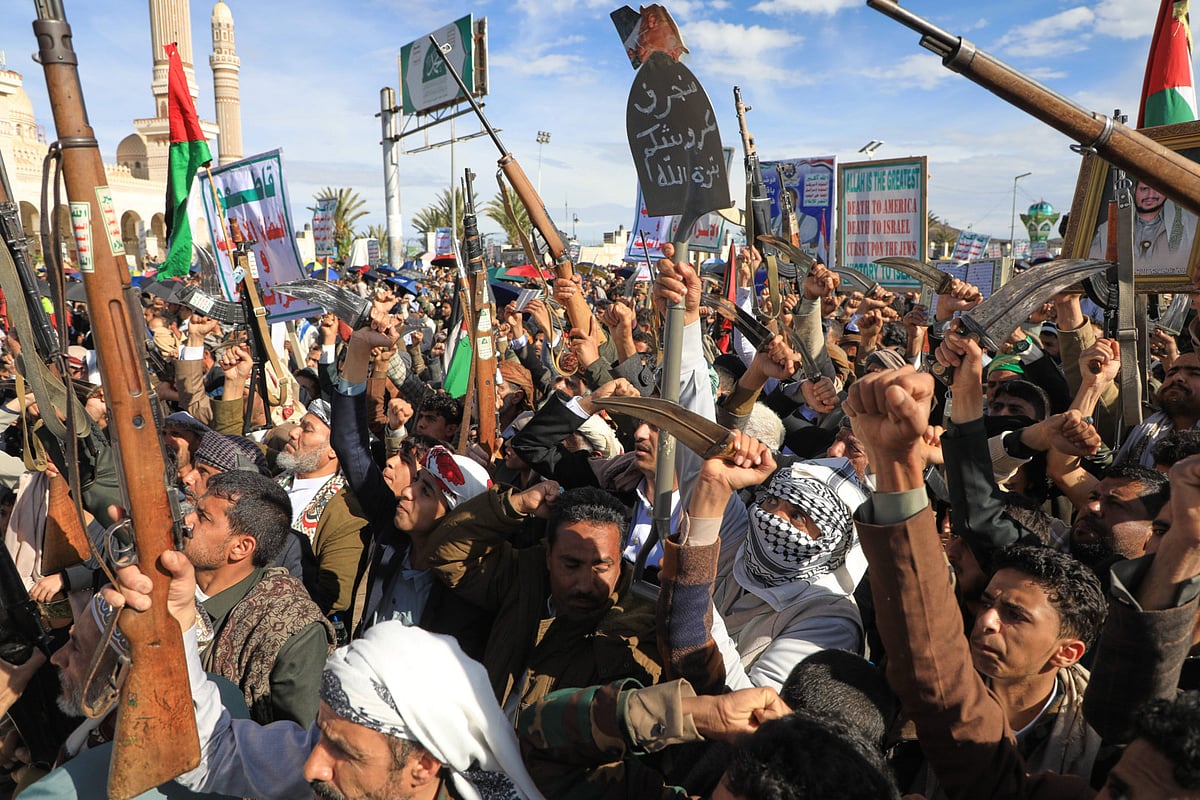
Houthi supporters shout slogans during a rally against Israel and the United States on March 27, 2026.
AFP
Dubai: Yemen’s Iran-backed Al Houthi militants have opened a new front in the widening Middle East war, claiming their first missile launch toward Israel since the conflict began.
The move marks a significant escalation, raising fears of renewed attacks on Red Sea shipping and deeper regional spillover.
With the Strait of Hormuz already roiling global energy and trade flows, their entry a month into the war marks a dangerous new escalation.
At the same time, renewed threats to Red Sea shipping raise the risk of fresh disruption to global trade
Who are the Houthis?
The Houthis, also known as Ansar Allah (supporters of God), are Iran-aligned militants who control large parts of northern Yemen, including the capital Sanaa.
They began as a local insurgent group in the 1990s but have since evolved into a powerful armed force with advanced missile and drone capabilities.
How did they come to power?
The group seized Sanaa in 2014, forcing Yemen’s internationally recognised government into exile. This triggered a civil war that drew in a Saudi-led Arab coalition in 2015.
5 things to know about Yemen’s Houthis
Iran-aligned militants: The Houthis, or Ansar Allah, are closely aligned with Iran and form part of a wider regional network that includes Hezbollah and allied militias.
Control Yemen’s capital: They have held Sanaa and much of northern Yemen since 2014 after overthrowing the internationally recognised government.
Battle-hardened force: Years of war with a Saudi-led coalition have strengthened their military, giving them experience and resilience.
Missiles and drones: The group possesses ballistic missiles, cruise missiles and drones, allowing them to strike targets far beyond Yemen.
Red Sea disruptors: They previously attacked commercial shipping in the Red Sea, forcing global trade routes to shift and raising costs worldwide.
Despite years of fighting, the Houthis have maintained control over key areas in northern Yemen and strengthened their military position.
What are their capabilities?
The Houthis possess a growing arsenal of:
Ballistic and cruise missiles
Armed drones
Naval attack capabilities
These systems are widely believed to be developed with Iranian backing. Over time, the militants have demonstrated the ability to strike targets far beyond Yemen, including Saudi Arabia and the United Arab Emirates.
What role have they played in earlier conflicts?
During the Israel-Hamas war, the Houthis:
Launched drones and missiles toward Israel
Carried out repeated attacks on commercial shipping in the Red Sea and Gulf of Aden
Targeted vessels they claimed were linked to Israel, the US or allies
These attacks disrupted one of the world’s busiest trade routes, forcing many ships to reroute around Africa, increasing costs and delays.
Why is the Red Sea so important?
The Red Sea is a critical global shipping corridor:
Handles roughly $1 trillion in goods annually
Connects Asia, Europe and the Middle East
Vital for oil, gas and food supply chains
Any disruption in this route has immediate global economic consequences.
Why had they stayed out of this war until now?
The Houthis had largely held back due to:
A fragile ceasefire with Saudi Arabia
The risk of reigniting full-scale conflict in Yemen
Strategic timing within the broader Iran-aligned network
Their restraint appears to have shifted with the latest escalation involving Iran.
What does their entry into the war mean?
Their involvement opens a new front from Yemen, far from the main conflict zones. Even limited missile launches:
Force Israel to stretch its air defences
Increase pressure on US and allied military assets
Signal deeper coordination among Iran-aligned groups
Could this impact global trade again?
Yes. One of the biggest concerns is a return to:
Red Sea shipping attacks
Drone and missile threats to vessels
Rising insurance and freight costs
If sustained, this could disrupt global supply chains already under strain.
How does this affect US military strategy?
The US may face:
Increased naval threats in the Red Sea
The need to protect commercial shipping
A risk of being drawn into direct confrontation with the Houthis
Past operations have shown that defending against repeated drone and missile attacks can strain even advanced naval forces.
What should be watched next?
Whether the Houthis escalate attacks on Israel
Any renewed targeting of Red Sea shipping
US and allied military responses
Signs of broader coordination with other Iran-aligned groups
Bottom line: The Houthis’ entry underscores a key shift — the conflict is no longer contained to a few fronts. With Yemen now in play, the war is becoming more regional, more complex, and potentially more disruptive to global trade and security.

A Senior Associate Editor with more than 30 years in the media, Stephen N.R. curates, edits and publishes impactful stories for Gulf News — both in print and online — focusing on Middle East politics, student issues and explainers on global topics. Stephen has spent most of his career in journalism, working behind the scenes — shaping headlines, editing copy and putting together newspaper pages with precision. For the past many years, he has brought that same dedication to the Gulf News digital team, where he curates stories, crafts explainers and helps keep both the web and print editions sharp and engaging.
Sign up for the Daily Briefing
Get the latest news and updates straight to your inbox
Network Links
GN StoreAbout Gulf NewsTerms & ConditionsReach by GNSitemapContact usPrivacy PolicyGN FocusHave your sayWork with usAdvertise with usGulf News epaperPrinting Services
Download our app
© Al Nisr Publishing LLC 2026. All rights reserved.