Emboldened Houthis advance in Yemen, widen attacks on Saudi Arabia: What can stop them?
Air power has repeatedly failed to defeat the group, while a ground war carries huge risks
Dubai: Years of bombing by some of the world’s most powerful militaries have failed to defeat Yemen’s Houthis.
Now the Iran-backed militant group is advancing again, seizing strategic territory along the Red Sea coast while demonstrating that it can still threaten Saudi cities and energy infrastructure.
Its latest gains have brought an old military problem back into sharp focus: If airstrikes have repeatedly failed to eliminate the Houthis, what can actually stop them?
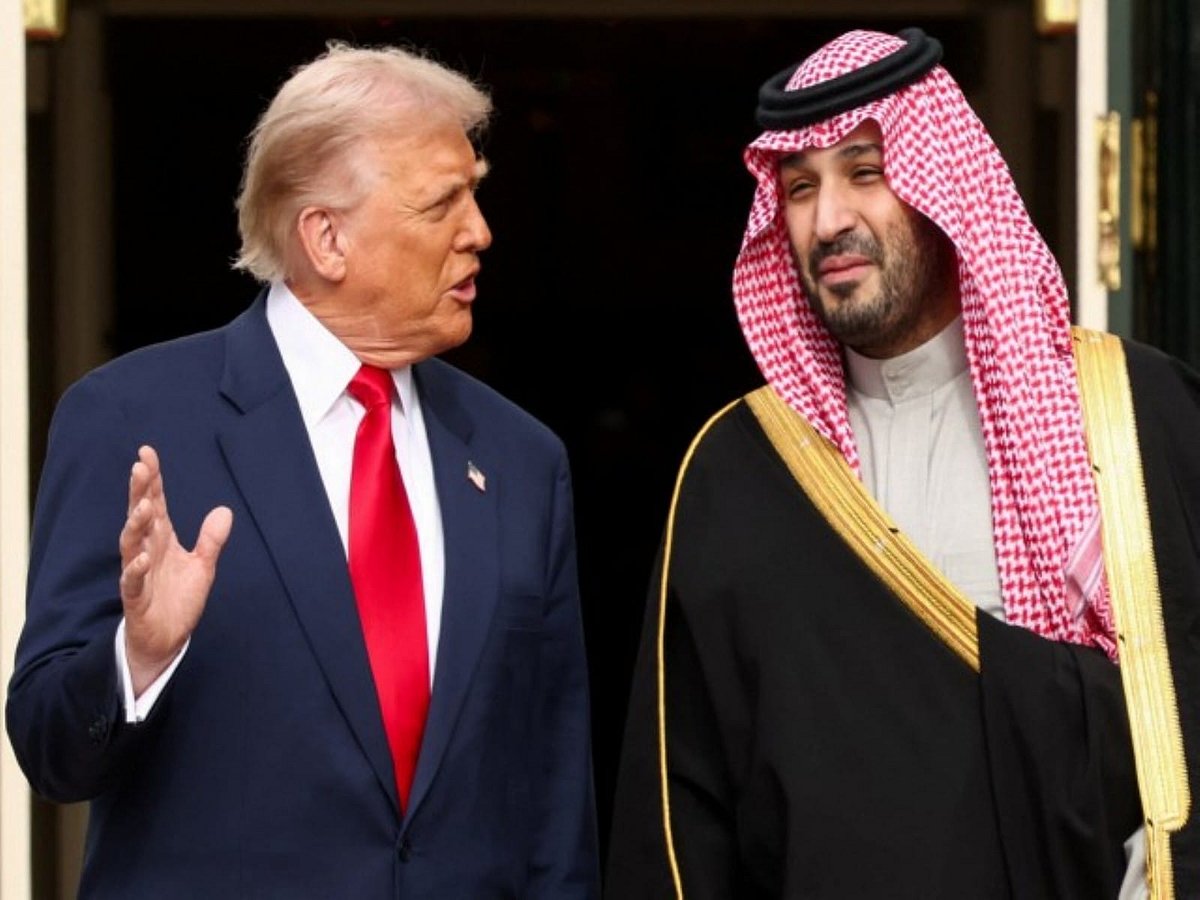
The mounting tensions were underscored on Saturday when US President Donald Trump unexpectedly cut short his weekend at Camp David and returned to the White House a day earlier than scheduled. The White House gave no explanation for the change in plans.
Trump’s return came as Saudi Arabia said it had intercepted a Houthi ballistic missile targeting Riyadh and the US State Department warned that the Saudi-Houthi conflict could “escalate rapidly”. It also urged Americans outside the Middle East to seriously reconsider travel to and through the region.
There are few easy answers to this escalating conflict.
Saudi Arabia has launched scores of strikes against Houthi-held territory since fighting intensified, but the group has continued to advance. The United States is providing intelligence and targeting assistance to Riyadh, while stopping short of directly joining the campaign.
CNN reported, citing multiple sources, that the Houthis’ recent gains have frustrated Gulf and American officials, with doubts over whether Saudi Arabia and Yemeni government forces can halt the advance on their own.
The problem goes far beyond the latest offensive.
Why bombing has not worked
The Houthis have survived repeated military campaigns since Saudi Arabia intervened in Yemen’s civil war in 2015.
Saudi forces carried out years of airstrikes. The United States and Britain later bombed Houthi targets after the group began attacking Red Sea shipping. Israel has also struck Houthi-controlled territory.
Yet the group has endured.
One reason is geography. The Houthis operate across large, mountainous areas where fighters, missiles and military infrastructure can be dispersed, concealed and moved.
They have also built an increasingly sophisticated arsenal of ballistic missiles, cruise missiles, drones, anti-ship weapons and naval drones capable of threatening targets well beyond Yemen.
Iran denies arming the Houthis, but UN experts have documented extensive military ties between the group, Tehran and other Iranian allies.
And the Houthis have grown dramatically.
A UN experts’ report estimated their forces had expanded from about 30,000 fighters in 2015 to as many as 350,000 by 2024.
Huge firepower, limited results
The scale of previous attempts to weaken the group illustrates the challenge.
During an intensified US air campaign, around 2,000 munitions were dropped on more than 1,000 targets, according to AP. The munitions alone cost more than $750 million.
The Houthis also destroyed seven US MQ-9 Reaper drones, each costing more than $30 million.
After weeks of US strikes, the group agreed to stop attacking American ships, but it retained its military capabilities and later resumed attacks on Saudi Arabia.
Airstrikes can destroy missile launchers, weapons depots and command centres. What they have not done is remove the Houthis from the territory they control.
That requires something much harder.
Would a ground offensive work?
Taking territory back normally requires ground forces capable of moving in after airstrikes and holding it.
That is where the anti-Houthi coalition faces perhaps its biggest weakness.
Yemen’s anti-Houthi forces are fragmented. They include troops aligned with the internationally recognised government and southern factions with their own political ambitions. Some have fought one another in the past.
Saudi Arabia has spent years training and supporting Yemeni government forces, but they have struggled to contain the latest Houthi advance.
AP cited analysts as saying Houthi strength is partly explained by Iranian support — but also by the weakness and divisions among their opponents.
A much larger ground campaign could potentially change the military balance, but it would bring enormous risks.
Saudi Arabia fought the Houthis for years after intervening in Yemen in 2015. The conflict inflicted heavy casualties and caused widespread destruction without producing a decisive military victory.
Riyadh now appears reluctant to return to another prolonged full-scale ground war, while Washington remains heavily focused on its wider confrontation with Iran.
Can better air defences contain them?
Another option is containment rather than outright defeat.
Saudi Arabia possesses sophisticated US-supplied air and missile defence systems and has intercepted numerous incoming threats.
But defence carries its own challenge.
The Houthis can launch comparatively inexpensive drones and missiles against Saudi cities, oil facilities and other infrastructure, forcing Riyadh to use costly interceptors to destroy them.
AP reported that supplies of high-end interceptors are under pressure as Saudi Arabia confronts threats not only from Yemen but also from Iran-backed militias elsewhere in the region.
The latest attacks demonstrate why that matters.
Saudi Arabia said a Houthi ballistic missile aimed at Riyadh on Saturday was intercepted and destroyed. The Houthis also claimed attacks on sensitive sites in the capital and Aramco facilities in Yanbu.
Preventing such attacks, however, is different from stopping the Houthis from gaining territory inside Yemen.
What about diplomacy?
That leaves negotiations.
Diplomatic efforts helped produce a UN-brokered truce in 2022 that sharply reduced fighting for several years.
But the environment is now considerably more difficult.
The Houthis are demanding that Saudi Arabia lift its blockade, while Riyadh would have to weigh the security consequences of allowing greater flows of goods into Houthi-controlled territory.
And the Yemen conflict has become increasingly intertwined with the wider confrontation between Iran and the United States.
As long as those tensions remain unresolved, analysts cited by AP see limited room for a broader Saudi-Houthi settlement.
So what can stop them?
There is no single military solution evident from the campaigns of the past decade.
Airstrikes can degrade Houthi capabilities but have repeatedly failed to defeat the group. Missile defences can protect Saudi territory but cannot recapture ground in Yemen. A major ground offensive could challenge Houthi territorial control, but at the risk of another long and costly war.
Diplomacy could freeze or reduce the conflict, but the widening regional confrontation makes compromise harder.
That combination — military resilience, difficult terrain, Iranian support and divided opponents — helps explain why the Houthis have survived years of attacks and emerged capable of launching another major offensive.
For Saudi Arabia and its allies, therefore, the challenge is no longer simply how to hit the Houthis.
It is how to stop their advance without being drawn back into the kind of prolonged war that failed to defeat them before.

Sign up for the Daily Briefing
Get the latest news and updates straight to your inbox
Network Links
GN StoreDownload our app
© Al Nisr Publishing LLC 2026. All rights reserved.