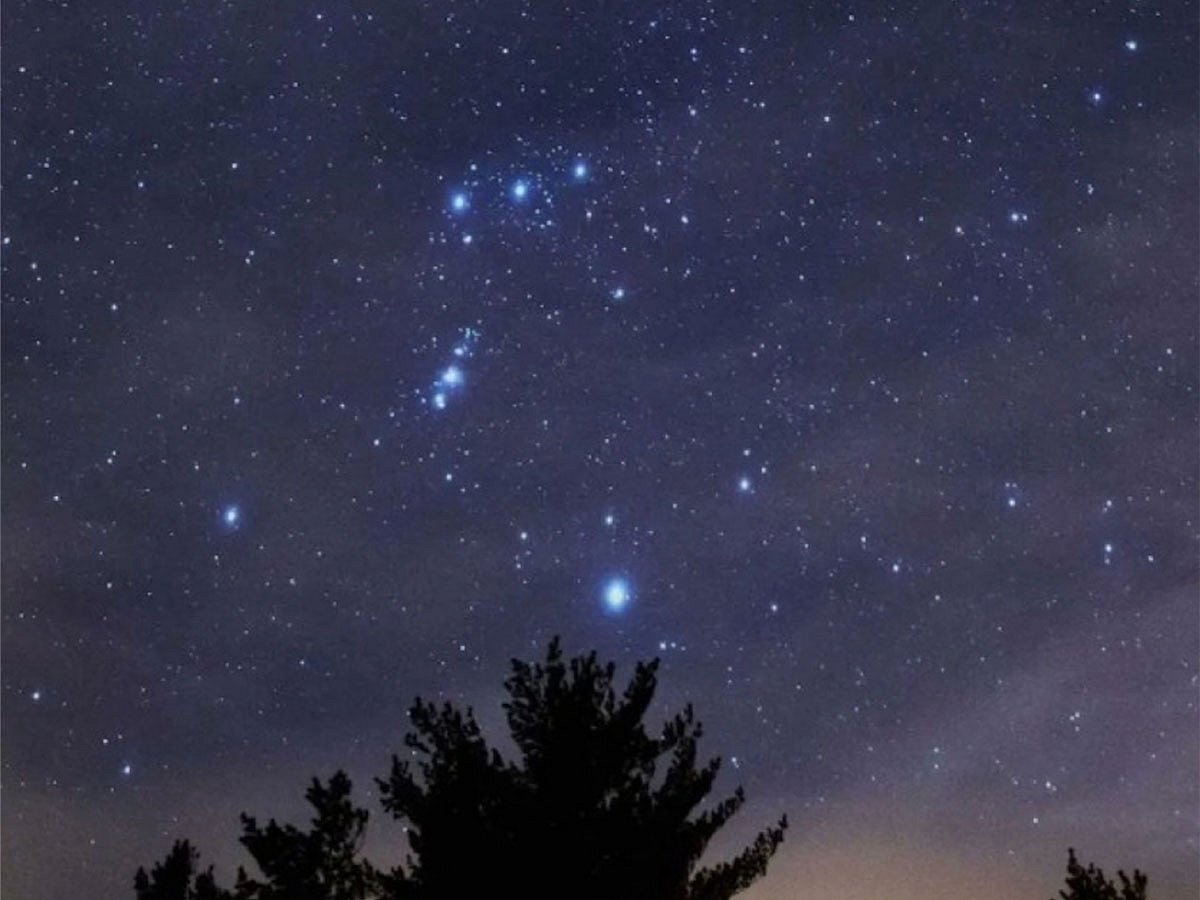
Dubai: On a cold winter evening, when the air is still and the sky feels especially clear, the stars often seem to shine a little brighter. It is not just imagination. Astronomers say winter really does offer some of the sharpest and most striking views of the night sky.
According to the Jeddah Astronomical Society, the effect is most noticeable between December and February, when stars appear clearer and more defined, even to the naked eye. The reason lies in where Earth is pointing as it moves through space.
Majed Abu Zahra, president of the society, explains that during winter nights we are looking away from the crowded heart of the Milky Way and towards its quieter outer regions, the part of the galaxy where our Sun resides. With fewer stars in the background, the sky grows darker, allowing individual stars to stand out, according to Sabaq newspaper.
“When the background light is lower, stars appear sharper and brighter,” Abu Zahra said. “They simply have more room to shine.”
The experience is very different in summer. During June, July and August, Earth’s night side faces the centre of the Milky Way, a region packed with billions of stars. Their combined glow brightens the sky, scattering light and softening the outlines of individual stars.
Despite the abundance of stars in summer, the increased glow makes individual stars harder to distinguish, Abu Zahra noted, creating the impression that the night sky is less crisp.
The Milky Way itself stretches about 100,000 light years across, with its centre some 25,000 to 28,000 light years from Earth. The galactic core, however, cannot be seen directly in visible light, as dense clouds of interstellar dust obscure the view.
The Solar System lies within a smaller spiral structure known as the Orion Arm, which is around 3,500 light years wide and about 10,000 light years long. Earth sits near the inner edge of this arm, roughly halfway along its length.
Astronomers also point to the constellation Gemini as a standout feature of the winter sky. Its bright stars, which belong to the same spiral arm as the Solar System, further enhance the clarity and brilliance that make winter nights a favourite season for skywatchers.
Sign up for the Daily Briefing
Get the latest news and updates straight to your inbox
Network Links
GN StoreDownload our app
© Al Nisr Publishing LLC 2026. All rights reserved.