Houthi missiles near Mecca, Medina trigger Saudi ‘red line’ warning as fresh attacks rock Riyadh
Al Sudais: Attacks reveal Houthis’ criminal approach, malicious intent towards holy sites
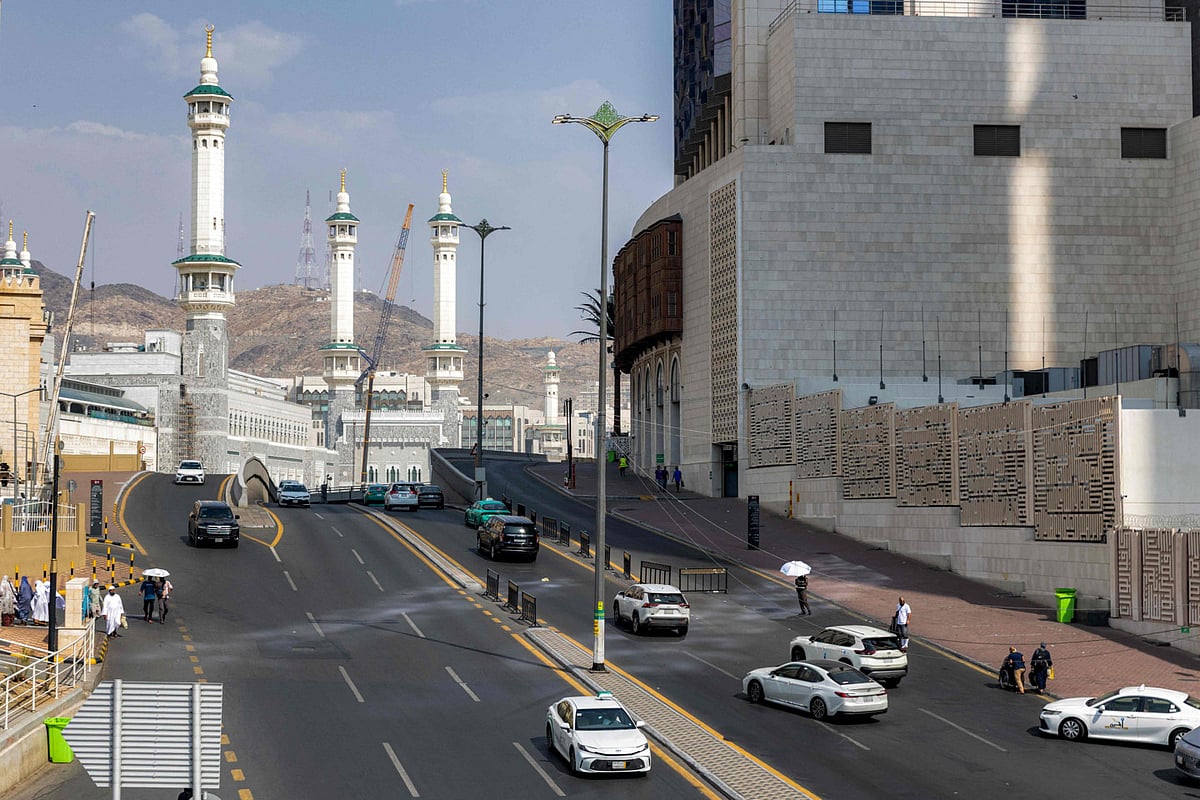
Dubai: The head of religious affairs at Islam’s two holiest mosques has strongly condemned repeated Houthi missile and drone attacks on Saudi Arabia, warning that the security and sanctity of Mecca and Medina are a “red line that must not be breached”, the Saudi Press Agency (SPA) reported on Sunday.
Sheikh Abdulrahman Al Sudais, president of Religious Affairs at the Grand Mosque and the Prophet’s Mosque, said the attacks reflected the Yemeni militia’s “criminal approach” and malicious intentions towards Muslims and their sacred sites.
He described the strikes as a flagrant violation of Islamic law, which requires the protection of holy places, as well as international humanitarian norms.
His condemnation followed a fresh wave of Houthi attacks across Saudi Arabia, with air defences intercepting ballistic missiles and drones targeting several regions, including Mecca, Medina and the capital Riyadh.
Saudi authorities said two ballistic missiles launched towards the Mecca and Medina regions were intercepted on Saturday. Civil Defence teams responded to falling debris in several western locations, including Wadi Al Mughammas in Mecca, Al Nuzha in Jeddah, Wadi Jalil in Taif and Masturah in Rabigh.
The Houthis denied targeting the two holy cities, describing Saudi Arabia’s allegations as a “huge lie”.
Al Sudais praised the Kingdom’s defensive capabilities, saying the attacks would not undermine Saudi stability but would strengthen its determination to protect the holy sites and millions of pilgrims.
Explosions rock Riyadh
Explosions shook Riyadh early Sunday as Saudi air defences intercepted another wave of Houthi missiles and drones, AFP reported.
An AFP journalist heard three explosions in the capital, while residents received emergency alerts warning of a “hostile aerial threat” and urging them to seek shelter.
The Saudi-led coalition said its forces intercepted and destroyed two armed drones targeting the Riyadh region shortly after 1am and around 5am.
A ballistic missile launched towards the capital was also intercepted, coalition spokesman Maj. Gen. Turki Al Maliki said.
“Air defences intercepted and destroyed a ballistic missile launched by the terrorist Houthi militia toward Riyadh,” the coalition said in a statement posted on X.
Later Sunday morning, Saudi forces intercepted a cruise missile targeting Khamis Mushait in the south. Air raid warnings were also issued for Abha and Namas Governorate.
“The bombardment has been very heavy since this morning — may God keep us safe. Everything is shaking because of the explosions,” a Khamis Mushait resident told AFP.
The latest strikes followed an intense Saturday barrage in which Saudi defences intercepted missiles targeting Taif, Yanbu and Riyadh, along with a drone approaching the Eastern Region.
Riyadh airport reopening under threat
The attacks coincided with Saudi Arabia’s planned partial reopening of King Khalid International Airport in Riyadh after a two-week closure following deadly Houthi strikes.
Airport authorities announced the resumption of limited services on Sunday, with Terminal 1 designated for domestic flights and Terminal 2 for international flights operated by national carriers.
However, AFP reported that it remained unclear how extensively the airport was operating amid continuing attacks.
The airport had been closed following an October 10 Houthi strike that killed 13 people and wounded more than 300, the deadliest attack in Saudi Arabia in more than a decade.
Houthi military spokesman Yahya Saree warned airlines and passengers against using the airport, declaring it an unsafe facility and a continuing military target.
“The Saudi regime shall bear the consequences of any operations at the airport,” he said.
The warning raised fresh concerns about aviation safety as Saudi authorities sought to restore normal operations despite the continuing missile and drone threat.
Wider attacks threaten regional stability
The Houthis said they had targeted three Saudi airports, energy installations, a pipeline and an air base within 24 hours, signalling an expansion of their campaign against the Kingdom.
The militia also claimed attacks on military facilities in Aden, the interim seat of Yemen’s internationally recognised government, saying it had targeted a naval base and a military camp associated with Saudi forces.
The latest escalation follows the collapse of a years-long truce between the Houthis and Yemen’s Saudi-backed government.
Last month, Houthi forces seized control of Yemen’s entire Red Sea coastline in a rapid offensive, further complicating regional security and threatening vital maritime trade routes.
The renewed fighting has also become increasingly intertwined with the wider US-Iran conflict, raising concerns over energy supplies, shipping and aviation across the Gulf.
Saudi Arabia, the world’s largest crude oil exporter, has faced mounting disruption to businesses, air travel and daily life as the attacks continue.
With missiles targeting major cities, airports and areas surrounding Islam’s holiest sites, the latest escalation underscores the growing challenge facing Saudi air defences and the risks of a prolonged regional confrontation.

Sign up for the Daily Briefing
Get the latest news and updates straight to your inbox
Network Links
GN StoreDownload our app
© Al Nisr Publishing LLC 2026. All rights reserved.