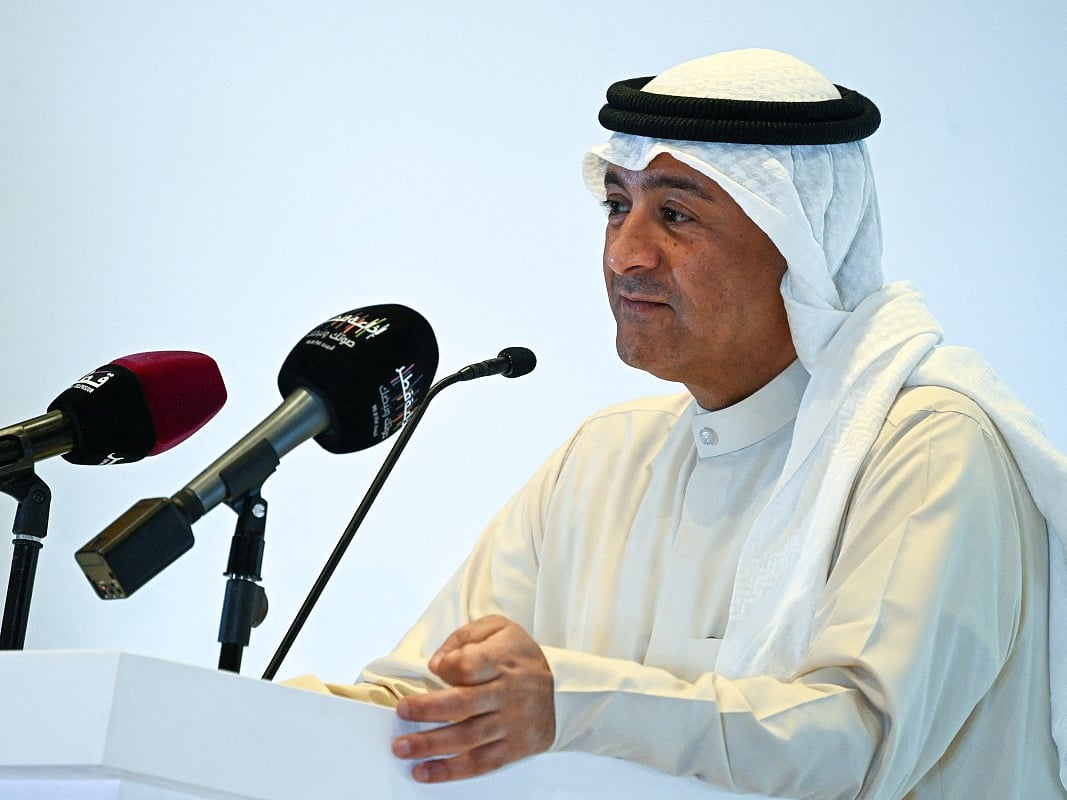
Abu Dhabi: Gulf Cooperation Council (GCC) Secretary-General Jassim Mohammed Al Budaiwi has strongly condemned and rejected what he described as false and unacceptable allegations contained in a statement issued by the Iranian Ministry of Foreign Affairs against the United Arab Emirates.
In a statement issued in Riyadh, Al Budaiwi said these “misleading allegations” reflect “the escalatory and provocative approach pursued by Iran towards the countries of the region.” He added that Iran “has not only carried out reckless attacks targeting the territory of the United Arab Emirates, but has also continued its attempts to distort facts, in clear violation of international norms and laws.”
Get updated faster and for FREE: Download the Gulf News app now - simply click here.
Al Budaiwi stressed that the Iranian statement reflects “a clear insistence on fuelling tensions and undermining regional security and stability,” and reinforces what he described as a hostile approach that threatens the security of the region and the safety of its people.
He added that GCC states stand united with the UAE and support all measures it takes to preserve its security, stability and sovereignty, stressing that the security of the UAE is an integral part of the security of all GCC member states.
The UAE also condemned the Iranian Foreign Ministry’s statement, rejecting any allegations or threats targeting its sovereignty, national security or independent decision-making.
International relations are a sovereign matter: UAE
The Ministry of Foreign Affairs said the UAE’s international relations and defence partnerships are an exclusively sovereign matter, and no party has the right to use them as a pretext for threats, interference or incitement.
It added that any rhetoric involving direct or indirect threats to the country’s security, or to its civilian and vital facilities, or to citizens, residents and visitors, is unacceptable and violates the principles of good neighbourliness, international law and the United Nations Charter.
The ministry said the UAE reserves all its sovereign, legal, diplomatic and military rights in responding to any threat, allegation or hostile act. It added that attempts at pressure, accusations or the spread of false claims will not affect its positions or deter it from protecting its national interests and sovereignty.

Sign up for the Daily Briefing
Get the latest news and updates straight to your inbox
Network Links
GN StoreDownload our app
© Al Nisr Publishing LLC 2026. All rights reserved.