Venus to shine at peak brightness over Oman skies on September 22
Planet will be easily visible to naked eye after sunset, even under city lights
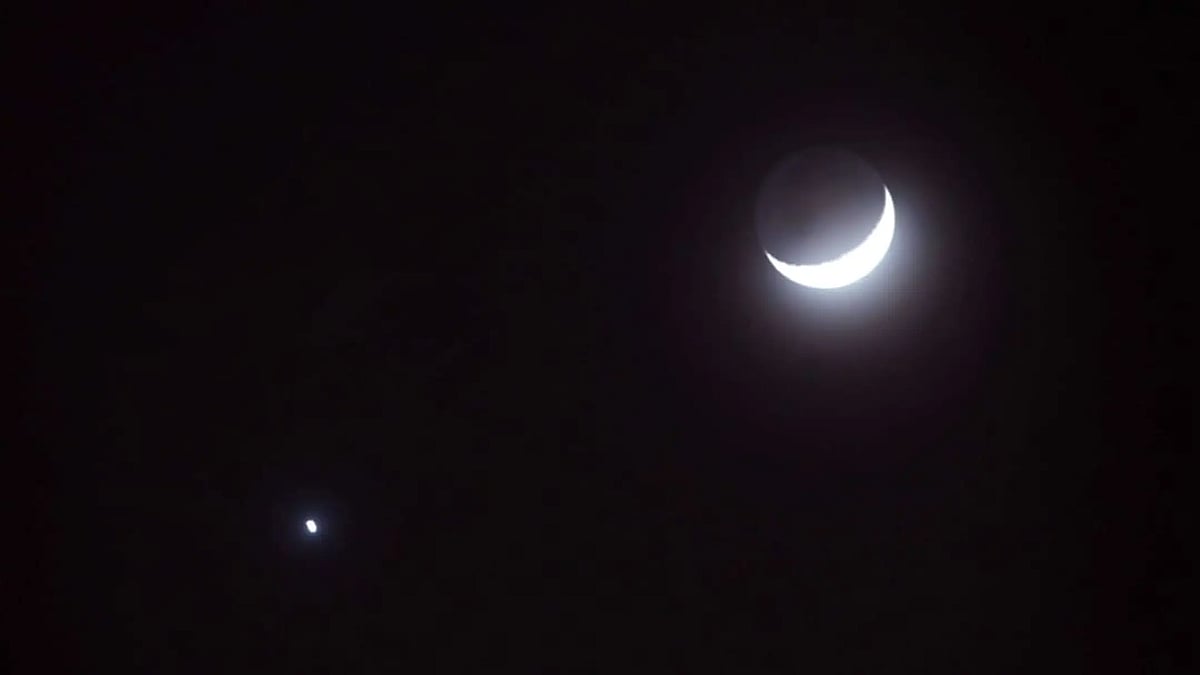
Dubai: Venus will put on a spectacular display over Oman on Tuesday evening, September 22, when it reaches peak brightness during its current appearance in the evening sky, shining brightly enough to be easily seen with the naked eye.
At an apparent magnitude of around minus 4.8, Venus will be the brightest planet in the night sky and the third brightest celestial object visible from Earth after the Sun and Moon, according to local media reports.
Get updated faster and for FREE: Download the Gulf News app now - simply click here.
Wisal bint Salem Al Hinai, Head of the Community Outreach Committee at the Omani Society for Astronomy and Space, said Venus should be clearly visible even from areas affected by light pollution.
Its exceptional brilliance is caused by a combination of its relative proximity to Earth and its dense atmosphere, which strongly reflects sunlight, she said.
Venus reached its greatest eastern elongation in August, when it appeared at its maximum angular distance east of the Sun. However, its greatest apparent brightness occurs under different conditions.
Because Venus orbits between Earth and the Sun, it displays phases similar to those of the Moon. Its brightness peaks when it is relatively close to Earth, making its apparent size larger while enough of its sunlit surface remains visible.
Through a telescope, Venus will currently appear as a thin crescent rather than a fully illuminated disc.
The planet will remain visible after sunset over the coming weeks but will gradually move closer to the Sun from Earth's perspective and appear lower above the western horizon, shortening the viewing window.
Venus is expected to reach inferior conjunction on October 24, when it will pass almost between Earth and the Sun and become difficult to see because of the Sun's glare. It will later reappear as a “Morning Star” before sunrise.
Al Hinai advised stargazers to choose locations with an unobstructed western horizon. No special equipment is needed, although a telescope can reveal Venus's distinctive crescent phase.
Network Links
GN StoreDownload our app
© Al Nisr Publishing LLC 2026. All rights reserved.