Three attacks in five days: Why is Iran targeting US radar systems in Bahrain?
US blockade squeezes Iran’s oil industry as Tehran steps up military pressure in Gulf
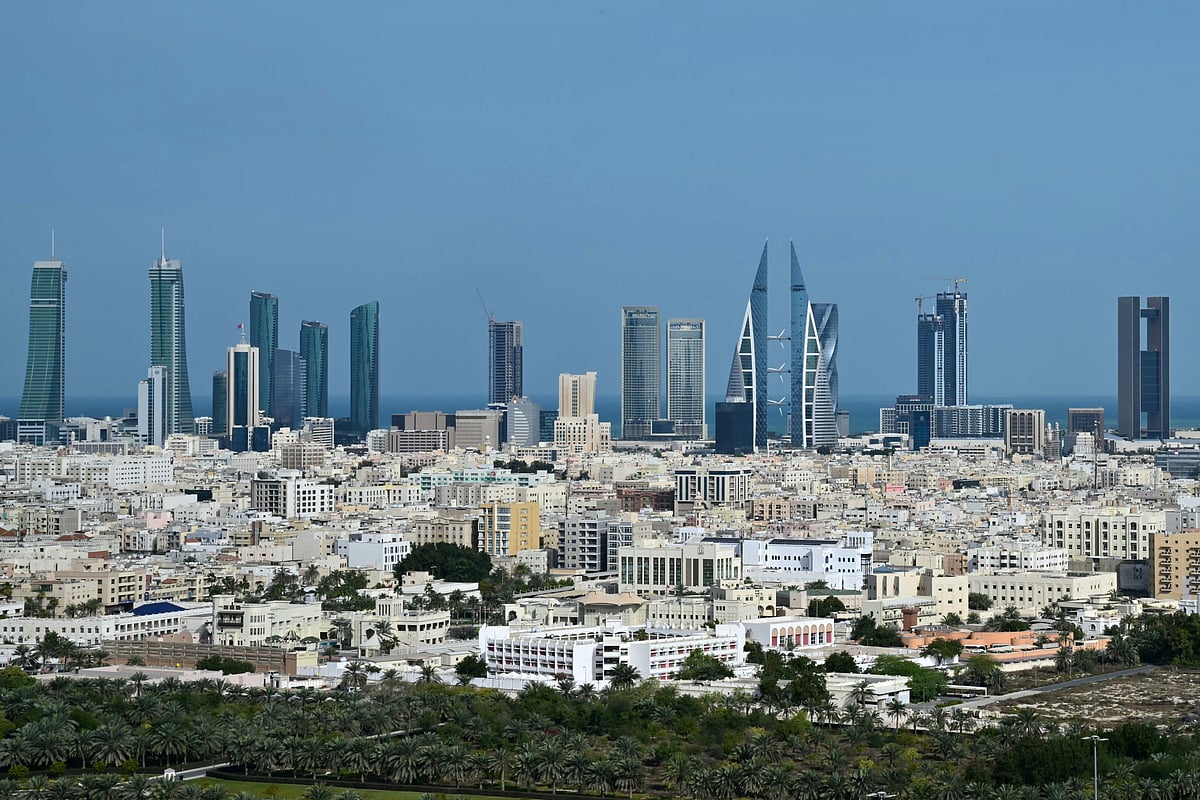
Dubai: Iran’s repeated attempts to strike US radar installations in Bahrain are raising a crucial question: Why is Tehran targeting the kingdom as Washington tightens its economic blockade and reinforces its military presence?
The Islamic Revolutionary Guard Corps (IRGC) on Tuesday claimed another drone attack on a US-operated radar system at Sheikh Isa Air Base, citing repeated American violations of Iranian airspace.
Bahrain said its forces intercepted and destroyed the incoming drones before they reached their targets. There was no independent confirmation of damage to the radar installation.
It was the third Iranian drone attack targeting Bahrain in five days, suggesting Tehran may be shifting towards a strategy of imposing greater military and economic costs on Washington.
Three attacks in five days
On Friday, November 13, the IRGC claimed it attacked a US early-warning radar installation in Bahrain in retaliation for an American strike on a communications tower at Sirik, overlooking the Strait of Hormuz.
US Central Command said two Iranian drones were intercepted without causing injuries or damage.
On Sunday, the IRGC claimed it launched six drones against a US radar system at Al Riffa helicopter base. Bahrain said the attacks were intercepted.
Tuesday’s operation carried a different justification. Rather than citing a specific US strike, Tehran said it was responding to continued violations of Iranian airspace.
That distinction suggests Iran may be broadening the circumstances under which it considers attacks on American installations justified.
The renewed attacks come as Washington reinforces its military presence in the region. The arrival of the USS Theodore Roosevelt brings the number of US carrier strike groups to three, alongside more than a dozen destroyers.
The military buildup comes despite signs that President Donald Trump has stepped back from threats of renewed large-scale strikes following his party's midterm election losses.
Why target radar systems?
Radar installations are vital to military surveillance and air defence, detecting aircraft, drones and missiles and providing early warning of potential attacks.
Targeting them could weaken American surveillance capabilities while signalling that strategically important US military infrastructure remains vulnerable.
Bahrain's strategic importance also makes it particularly exposed. The kingdom hosts the US Navy's Fifth Fleet, while its small geographical size leaves major military installations concentrated within a limited area.
"Bahrain is the most vulnerable because of its geographic exposure," Andreas Krieg of risk consultancy MENA analytica told AFP, noting that the country lacks strategic depth.
He described the renewed confrontation as a deliberate effort by Washington and Tehran to test each other's limits without triggering another full-scale war.
For Tehran, repeated strikes may also be intended to demonstrate that maintaining pressure on Iran carries risks beyond its borders.
However, without independently verified damage, the military effectiveness of the operations remains unclear.
Iran has previously targeted radar and air-defence infrastructure in other Gulf countries, including Qatar and the UAE.
The latest attacks on Bahrain therefore appear to be a renewed application of an established wartime tactic rather than an entirely new military strategy.
Oil output plunges as blockade tightens
Iran’s military escalation comes amid mounting economic pressure from the US naval blockade, which has severely disrupted oil exports.
According to the International Energy Agency, Iranian crude production fell to 1.86 million barrels per day in October, nearly 46 per cent below pre-war levels.
That is slightly below the 1.873 million barrels consumed daily by Iranian refineries before the war, according to Oil Ministry data reviewed by Iran International. Actual refinery requirements may have changed because of wartime disruptions.
Energy intelligence firm Kpler reported that Iranian crude loadings effectively stopped in mid-August, forcing Tehran to reduce production towards domestic consumption levels.
The loss of oil exports has sharply restricted a major source of foreign exchange, adding to the government’s economic difficulties.
On Tuesday, President Masoud Pezeshkian acknowledged the hardship facing Iranians, saying the country’s leaders shared responsibility.
“These people deserve a much better life than the situation they are trapped in now. We are to blame,” he said.
With its own exports severely constrained, Tehran may now be seeking to make the blockade economically costly for Washington and its allies.
Hardliners demand tougher response
The attacks follow growing calls from Iranian hardliners to prevent the US blockade from becoming permanent.
At a state television roundtable on Saturday titled “How to Break the Blockade?”, participants argued that Washington was increasingly relying on economic pressure rather than another full-scale war, according to local media.
Military analyst Vahid Khazab advocated operations to disrupt oil shipments through the Strait of Hormuz and increase economic pressure on the United States and Europe.
Mohammad Imani, a member of the editorial board of the hardline Kayhan newspaper, similarly urged Tehran to make the blockade costly for Washington rather than wait for another American attack.
Their arguments reflect growing concern that the current neither-war-nor-peace situation could allow the US to maintain pressure indefinitely.
Is Iran changing its strategy?
The repeated attacks suggest Tehran may be moving beyond retaliation towards imposing continuing costs on the American military presence in the region.
Such a strategy would align with hardliners’ demands to challenge the blockade rather than allow it to become a permanent instrument of pressure.
But escalation carries risks.
Former Iranian diplomat Kourosh Ahmadi has warned that a more confrontational approach could leave Iran facing prolonged economic restrictions without securing a political breakthrough. He argues that negotiations and flexibility remain essential.
For now, it remains unclear whether the attacks represent a formal shift in Iran’s military doctrine or limited operations intended to strengthen its bargaining position.
What is increasingly apparent is that Tehran is seeking ways to challenge a blockade that is placing its economy under severe strain, even as the risk of renewed confrontation with Washington grows.

Sign up for the Daily Briefing
Get the latest news and updates straight to your inbox
Network Links
GN StoreDownload our app
© Al Nisr Publishing LLC 2026. All rights reserved.