View of the San Juan Reservoir after a wildfire in Pelayos de la Presa, Madrid Community, Spain, in July 27, 2026.
Is it safe to travel to France or Spain as wildfires spread? What tourists need to know
Heat wave and ‘monster’ fires disrupt holidays, with safety advice shifting fast
Last updated:
4 MIN READ
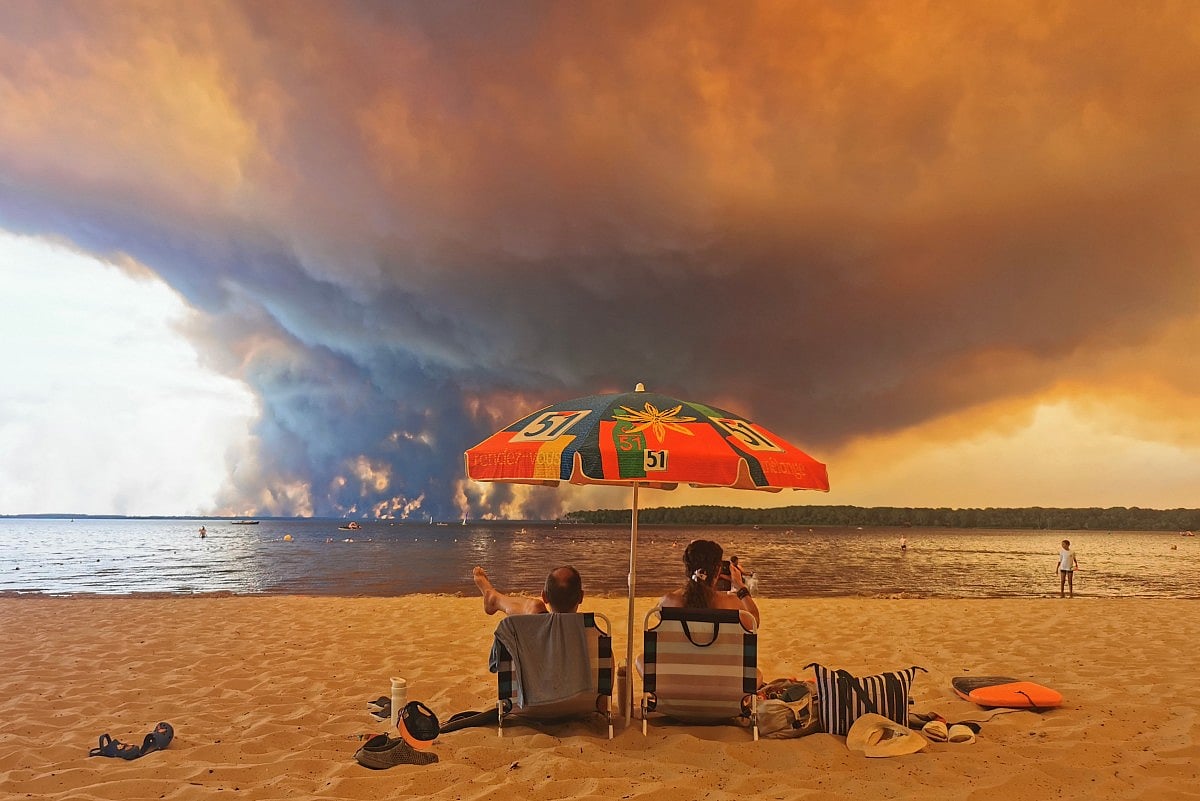
Beach goers sit on the beach of Moutchic in Lacanau, France on July 24, as clouds of smoke rise into the sky from a wildfire. Authorities urge tourists to avoid blaze-hit regions but stop short of bans
AFP
Wildfires sweeping across France and Spain have forced more than 300,000 people to evacuate their homes, with many residents and tourists taking shelter in sports halls and temporary accommodation.
Authorities are battling fires intensified by extreme heat, strong winds and dry conditions, with some regions facing their worst wildfire situations in years.
Madrid regional president Isabel Díaz Ayuso described the blaze affecting the region as the “worst fire in the history of the region”, saying conditions had worsened due to high temperatures, strong winds and merging fire fronts.
French Prime Minister Sébastien Lecornu said the fires affecting the country had reached “a level that has never been seen before”.
Get updated faster and for FREE: Download the Gulf News app now - simply click here.
Tourists urged to avoid wildfire-hit areas
French authorities have warned tourists against travelling to wildfire-affected areas in the country’s southwest, while stressing that most regions remain unaffected.
Sophie Brocas, prefect of the badly affected Gironde region, urged tourists not to visit the area and advised those already there to consider alternative destinations, according to CNN affiliate BFMTV.
However, France’s minister for international partnerships, Éléonore Caroit, said visitors should not cancel their holiday plans, highlighting that much of the country remains safe.
Should you travel to France or Spain?
Neither the UK government nor other major authorities have issued a blanket travel ban for France or Spain.
However, travellers are being advised to avoid wildfire-affected areas, follow local instructions and check updates before travelling.
The UK government has warned of active wildfires in Spain’s Madrid and Ávila regions and parts of France, including Gironde and Landes.
Travellers should check with airlines, accommodation providers and travel operators before departure, as roads may close and access restrictions could change at short notice.
Travelling from the UAE? UAE travellers planning trips to France or Spain are advised to monitor official government channels, local authority updates and airline information before departure, as wildfire conditions and travel restrictions can change at short notice.
Spain travel advice
Spain has declared a national emergency over wildfires affecting Madrid and Ávila, while other inland areas have also reported fires.
Travellers in Spain are advised to:
Follow instructions from local authorities and emergency services
Avoid travelling to or through affected areas
Monitor updates from emergency services
Call 112 for emergency assistance
People travelling through Spain from France are advised to check the latest travel guidance before starting their journey. Visitors travelling from Gibraltar to Spain should also check local advice.
Wildfires near Madrid have forced more than 63,000 people to leave their homes, although local authorities said the situation was gradually improving.
Madrid’s regional government has advised against trips to affected areas, including reservoirs near wildfire zones, but no nationwide travel restrictions have been announced.
Officials in eastern Spain have also warned that unexploded ordnance left from the country’s civil war nearly a century ago could pose an additional danger during firefighting operations.
The owner of a professional hardware store destroyed during a wildfire inspects the premises in a business park in Biscarrosse, south-western France on July 28, 2026.
France travel advice
France has issued warnings for wildfire-hit areas in Gironde, including Saumos, Le Porge and Lège-Cap-Ferret.
French authorities have evacuated campsites, tourist accommodation and some residential areas. A separate wildfire has also affected parts of Landes, including Biscarrosse and surrounding areas.
Access to affected areas may be restricted and roads could close without notice.
Travellers in affected areas or those planning to visit are advised to:
Follow local authority guidance.
Monitor local media updates.
Check with accommodation providers or travel companies before travelling.
A public information line has been opened for wildfire updates in Gironde from 9am to 5pm at +33 (0)9 70 80 90 40 (select option 1).
## Heat wave increases wildfire risks across Europe
France and Spain are facing soaring temperatures this week as Europe experiences its fourth heat wave of the summer.
France’s weather service Meteo-France said an “intense heat wave” would peak on Wednesday, with temperatures in Bordeaux forecast to reach 40°C.
Spain’s national weather agency AEMET warned that the heat wave would continue until at least Sunday, with wildfire risks reaching “extreme levels”.
The European Forest Fire Information System said both countries could face “very extreme conditions” for fires.
France wildfire situation
A major wildfire in France’s southwest Gironde region remained stable overnight, according to local authorities, as firefighters and military engineers continued efforts to contain the blaze.
Air pollution concerns have also prompted the distribution of face masks in affected areas.
A French Civil Security Canadair CL-415 aircraft flies past flames burning a forest surrounding Cotignac, southeastern France on July 23, 2026 during a wildfire.
UK and US issue travel guidance
The UK Foreign Office has advised travellers in affected areas, including Spain’s Ávila and Madrid regions and France’s Gironde and Landes regions, to follow instructions from local authorities and emergency services.
It has not advised against travel to France or Spain but recommends visitors check with accommodation providers and travel companies before departure.
The US Embassy in Spain issued updated guidance for citizens in wildfire-affected areas, advising against “unnecessary travel” near Madrid.
Authorities have urged residents and visitors in affected zones to stay indoors with doors and windows closed, avoid outdoor exercise, stay hydrated and consider wearing masks when outside.
Does travel insurance cover wildfire disruption?
Whether travel insurance covers wildfire-related disruption depends on the policy.
BBC Travel reports that experts have warned that only some travel insurance policies include “catastrophe” cover, leaving many travellers potentially without protection against wildfire-related losses.
Travellers should check their policy details or contact their insurer to understand whether they are covered for additional accommodation costs, cancellations or disruption.
According to BBC Travel, if an airline, tour operator or accommodation provider cancels a booking, passengers should first contact the provider directly to seek a refund or alternative arrangements.
Experts advise travellers not to cancel trips immediately without checking insurance terms and cancellation rights.
With inputs from AFP, AP
Network Links
GN StoreAbout Gulf NewsTerms & ConditionsReach by GNSitemapContact usPrivacy PolicyGN FocusHave your sayWork with usAdvertise with usGulf News epaperPrinting Services
Download our app
© Al Nisr Publishing LLC 2026. All rights reserved.