Cornell University rape investigation: Key allegations and new evidence as probe reopens
Grand jury to review reopened Cornell fraternity rape case after new evidence emerges
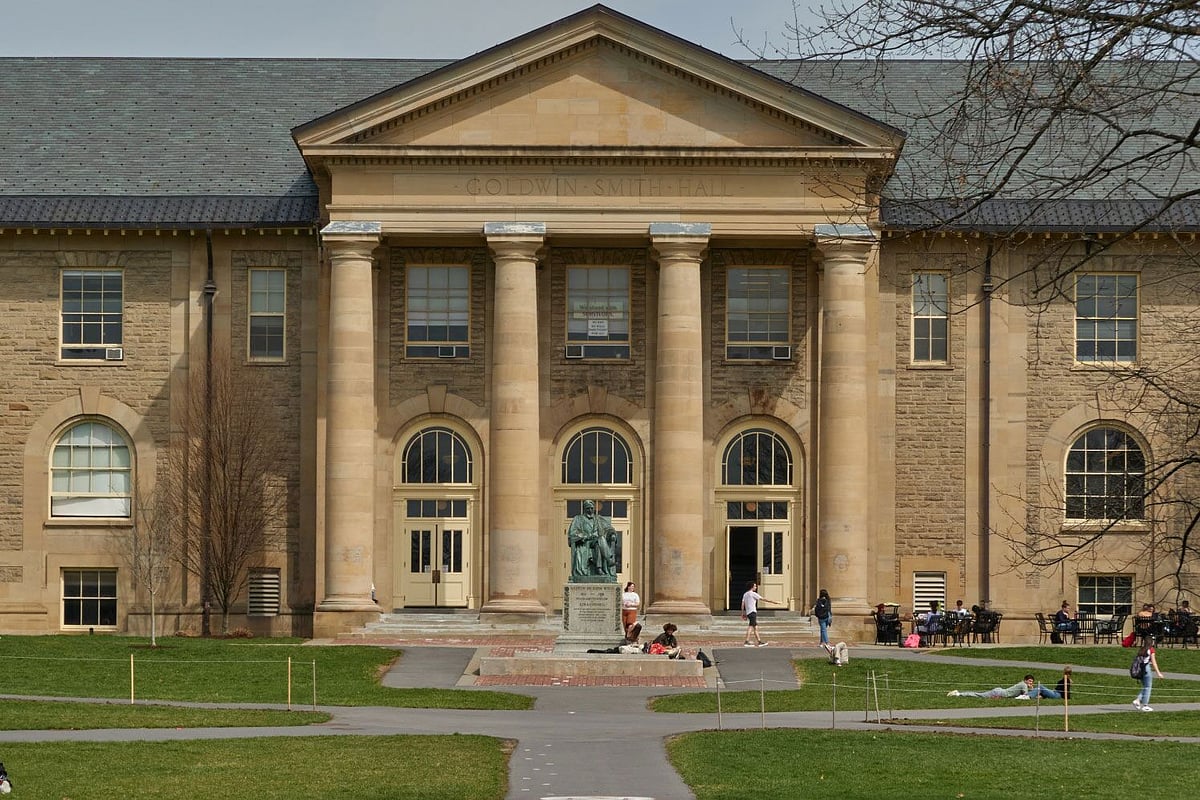
For almost two years, the Tompkins County District Attorney's Office treated the matter as closed. In late 2024, prosecutors reviewed what a Cornell undergraduate had told campus police about a night at the Chi Phi fraternity house in Ithaca, New York, and decided there was not enough evidence to charge anyone.
It took less than a fortnight of public pressure to change that.
On 16 September, the woman, identified in court papers as Jane Doe, filed a 101-page civil lawsuit. It alleges that seven men raped her at the fraternity on the night of 19 October 2024, when she was 20. Five days later, Cornell's student newspaper published the defendants' names under the headline "Cornell Won't, We Will". On Monday, District Attorney Matthew Van Houten announced he was reopening the criminal investigation and taking it to a grand jury. By Wednesday, New York Governor Kathy Hochul had secured the university's agreement to an independent outside investigation.
The grand jury will not be weighing a single story but three: the account in the lawsuit, the account prosecutors say Doe gave under oath in 2024, and the one that emerges from police transcripts and her own messages.
The lawsuit
According to the lawsuit, Doe had been drinking with her sorority sisters before going alone to the Chi Phi house to see a male friend. There, it alleges, she was drugged, and seven men assaulted her over several hours while she was too intoxicated on alcohol and ketamine to consent. The men have since been nicknamed the "Cornell Seven".
The suit names the men, the fraternity and the university. Its claims include sexual assault and battery, negligence, breach of contract and violations of New York's Human Rights Law. It also includes an image from a fraternity group chat in which, it says, members were alerted to the possibility of a sexual encounter with her.
Her lawyer says she was left traumatised and unable to function in the days that followed. He has told CBS that she later dropped out of Cornell.
The statement
Van Houten's caution rests on what Doe told investigators at the time. She reported the incident to Cornell University Police on 8 November 2024, nearly three weeks after that night.
"Jane Doe's sworn statement in November of 2024 did not allege that she was drugged against her will or gang raped," he said. "On the contrary, Jane Doe's statement described her participation in drug use and sexual conduct as voluntary, conscious, and consensual."
He told the New York Times that the lawsuit's allegations alone did not meet the legal bar for charges. But, he added, their significance "means that she believes that crimes were committed, and we want to get to the bottom of that". He also said he wanted to speak with Doe about "new evidence that exists".
The transcripts
The police record, as reported by US media, does not fit neatly into the prosecutor's summary.
According to a transcript obtained by CBS News New York, in interviews with campus police beginning on 14 November, Doe drew a line between the start of the night and what came later. Of the first encounter, she said: "I was pretty OK with all of this." Of what followed, she said: "I can say with 100% confidence I was raped."
A police report from 15 November, obtained by ABC News, records her saying she felt unable to make any decision because of how intoxicated she was. "To me, that felt like coercion," she said, adding that the men "should have known how intoxicated I was based on how I was slurring my words."
Van Houten told CBS he had never seen the transcript. Cornell told the BBC that its police department had shared a "lengthy police investigation report" with his office. That gap raises an obvious question: what exactly was in front of prosecutors when they declined to bring charges?
The messages
Two sets of messages complicate the picture further.
The first is an image of a Snapchat group called Chi Phi Actives, which campus police provided to prosecutors in November 2024. In it, shortly before 2am on 20 October, members discussed a potential sexual encounter with Doe in crude terms.
The second, published by CBS News New York, appears to be an exchange between Doe and one of the defendants two days later. In it, the man seemed to apologise for "how things went down". He said his memory was "kinda fuzzy" and that he and another man regretted being too drunk to "shut it down and kick people out before it got way out of hand".
She replied that her memory was "super clouded too". She also wrote that "non(e) of the sexual stuff was illegal", and suggested they smoke together again, without "the extra five billion men and ketamine".
The university and the fraternity
The lawsuit's most disputed claim was that the men were "afforded the opportunity to mitigate their conduct by submitting essays".
Cornell says that misrepresents what happened. When the allegations surfaced, it says, it suspended the chapter and a number of students, and opened both an internal inquiry and a Title IX investigation. A panel of trained faculty and staff then imposed sanctions, including expulsions and suspensions. The university has not denied that essays formed part of some students' punishments, but it insists: "None of the individuals charged were offered the opportunity to write essays as a sole consequence of their involvement." Doe's lawyer has said two of the men were expelled.
"The events that took place on our campus in 2024 were appalling then and remain so now," the university said. Announcing the independent review, Hochul wrote on X that "this culture has to stop".
Chi Phi says its Cornell chapter voted unanimously to remove the accused members three days after Doe went to police, and that the national fraternity later expelled them permanently. The chapter, known as Xi, was shut down in 2024 and remains barred from campus.also said it supports taking the criminal case to a grand jury.
What happens next
The two proceedings ask different questions. Doe's civil case asks whether Cornell and others failed to protect her and mishandled what followed. The criminal inquiry asks whether the evidence supports charges against any of the men.
Van Houten has said his office will proceed "in the most objective and impartial means possible", leaving the evidence to a grand jury.
No criminal charges have been announced.
Sign up for the Daily Briefing
Get the latest news and updates straight to your inbox
Network Links
GN StoreDownload our app
© Al Nisr Publishing LLC 2026. All rights reserved.