Who is Raffy Tulfo? Senator emerges as a serious presidential contender in the Philippines
Senator balances public service, controversy amid survey showing shot at Malacañang
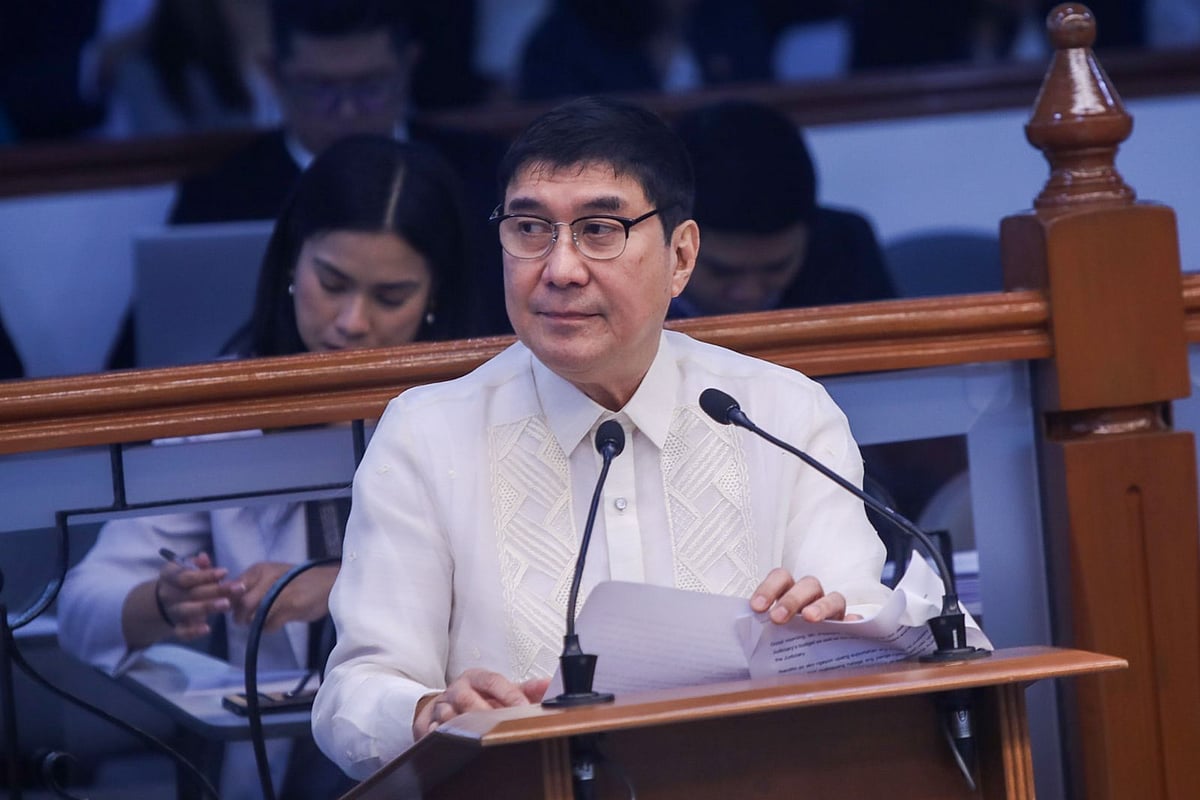
Manila: Philippine Senator Raffy Tulfo, 66, says he has no intention to run for president despite poll results showing he's tied with Vice President Sara Duterte at 46% voters' pick for the country's next leader.
The next presidential election, held every 6 years, is due in 2028. Under the 1987 Constitution, the president's watch is limited to six years.
2028 presidential outlook
As of May 2026, Vice-President Sara Duterte-Carpio remains the frontrunner in early polling for the 2028 presidential elections.
A March 2026 survey by WR Numero placed her at 36% support, maintaining a significant lead over other potential contenders such as Senator Raffy Tulfo (19%) and former Vice-President Leni Robredo (16%).
The numbers changed based on a survey released on May 4, 2026 showing Duterte tied with Senator Raffy Tulfo.
The Pulse Asia survey revealed that Sen. Raffy Tulfo and Vice President Sara Duterte are "statistically tied" in a head-to-head race, according to results from the firm’s March 2026 Ulat ng Bayan survey.
While these surveys provide an early snapshot, political analysts note that shifting alliances and the impact of ongoing political developments — such as current legislative proceedings — could influence the final landscape as the election date approaches.
'Not running for president in 2028'
On Tuesday, Tulfo has firmly declared he has no presidential ambitions for 2028.
“Ako’y nagpapasalamat sa tiwala, pero (I thank the people for the trust but) I said it before, and I’ll say it again: wala po akong balak na tumakbo (I have no plans to run) as president sa 2028,” Tulfo said.
Tulfo said that he does not want to follow in the footsteps of senators who, after serving for one term, aspired for the highest seat of power in the country and failed.
“I’m very happy as senator. So ba’t pa ako aakyat sa (why should I aspire for a) higher office. And then, I don’t want to commit the same mistakes that others committed by elected officials — na first term palang sila, and then after first term, tumatakbo agad sila sa higher office or position, and they failed,” he said.
The senator said he was content with his work in the Senate and will run for reelection as senator in 2028.
“However, I believe I’m doing very well as senator and I can do a lot more as senator. Therefore, asahan niyo, reelectionist ako sa 2028,” Tulfo told local media.
While expressing his gratitude for the trust the public has placed on him, Tulfo brought up a number of other names, including former Vice President Leonor “Leni” Robredo, who currently serves as Naga City’s mayor, Senator Benigno “Bam” Aquino IV, Senator Risa Hontiveros, former Senator Antonio Trillanes, Department of the Interior and Local Government (DILG) Secretary Juanito Victor “Jonvic” Remulla, among others.
Tulfo said he may endorse a presidential candidate if they share the same advocacies.
Who is Raffy Tulfo?
Rafael "Raffy" Teshiba Tulfo (born March 12, 1960) is a Filipino politician and renowned broadcaster, serving as a Senator since 2022. Popularly known as "Idol Raffy," he won a Senate seat as an independent in 2022, placing third with over 23 million votes.
Key aspects of Senator Tulfo:
Media Career: Famous for Wanted sa Radyo (TV5) and Raffy Tulfo in Action on YouTube, he built a reputation for providing "rapid justice" and public service, often confronting officials on behalf of citizens.
Senate Focus: He chairs the committees on Energy and Migrant Workers, focusing on labor rights, OFW protection, and energy affordability.
Background: He is a college dropout who studied various fields, including economics and political science.
Controversies: His confrontational media style has faced criticism for acting as a "judge, jury, and executioner," and he has faced past libel cases.
Future Outlook: As of mid-2026, he has ruled out a 2028 presidential or vice-presidential bid, opting to run for re-election to the Senate.
He is part of a prominent broadcasting family, including his brothers Ramon, Ben, and Erwin.
Under the 1987 Constitution, the President and Vice-President of the Philippines are elected through a direct popular vote for a single, non-renewable six-year term.
The President is prohibited from seeking reelection, ensuring a transfer of power at the end of every six-year cycle.
Voting patterns, preferences
Historical voting patterns in the Philippines are deeply influenced by regional-linguistic affiliations, political culture, and a tendency toward "personality politics" rather than strictly party-based platforms.
Research indicates that voters often favour candidates with established "vertical" relationships or those from dominant regional strongholds.
Voter turnout has historically remained high — often exceeding 75% —demonstrating a robust, if sometimes volatile, commitment to the democratic process.
TULFO VS DUTERTE VS ROBREDO: In the matchup asked of respondents from Feb. 27 to March 2, Tulfo and Duterte each drew 46% when voters were asked who they would choose for president “if the May 2028 elections were held today.” The figures came from rider questions commissioned by the office of Juan Miguel Zubiri, Pulse Asia president Ronald D. Holmes confirmed. A separate pairing in the same survey showed Duterte leading Leni Robredo, now mayor of Naga City, 51% to 43%. The survey interviewed 1,200 adults nationwide and has a margin of error of ±2.8 percentage points.
Regional splits
Tulfo and Duterte were tied at 42% each in the National Capital Region. Tulfo dominated in the rest of Luzon, 72% to Duterte’s 19%. Duterte, however, posted commanding leads in the Visayas (64% to 32%) and in Mindanao (90% to 9%).
In the Duterte-Robredo pairing, Robredo narrowly led in Metro Manila, 42% to 41%, and led decisively in the rest of Luzon, 67% to 26%. Duterte led in the Visayas, 67% to 31%, and overwhelmingly in Mindanao, 93% to 6%.
Sign up for the Daily Briefing
Get the latest news and updates straight to your inbox
Network Links
GN StoreDownload our app
© Al Nisr Publishing LLC 2026. All rights reserved.