In December 2025, Executive Secretary Ralph Recto said the government has set aside ₱113 billion ($1.84 billion) for the Philippine Health Insurance Corp. (PhilHealth) under the 2026 national budget. His announcement came a day after the Supreme Court rebuffed his previous order diverting ₱60 billion in PhilHealth's "idle" funds. Critics said the allocation is not enough since the Manila government transferred ₱60 billion and zeroed out the subsidy for 2025. They point out that the correct number should be least ₱260 billion.
'Sin tax' dispute: Why PhilHealth is at the centre of a new controversy in the Philippines
Health advocates warn tiered PhilHealth benefits could erode universal healthcare promise
Last updated:
5 MIN READ
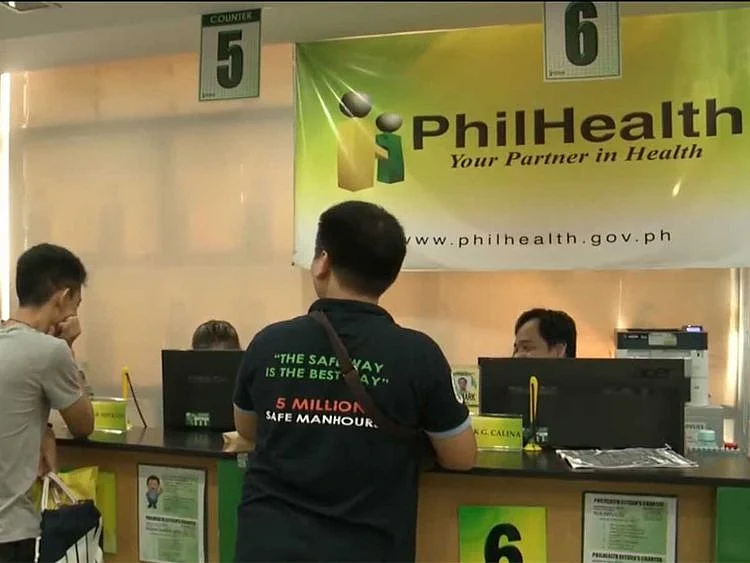
A PhilHealth service counter.
Screengrab
Manila: A proposal to give bigger Philippine Health Insurance Corp. (PhilHealth) benefits to members who pay monthly premiums has ignited a nationwide debate over fairness, universal healthcare and the government's funding obligations.
More than 70 medical and healthcare organisations have rejected the proposal, arguing that it would undermine the country's universal health insurance system.
They warn that the move could create a two-tier healthcare system favoring paying members over poor Filipinos whose premiums are subsidized by the government.
Here's what you need to know.
What sparked the controversy?
The debate began after Executive Secretary Ralph Recto suggested that Filipinos who regularly pay PhilHealth premiums should receive higher benefit packages than those whose premiums are paid by the government.
Recto made the remarks following the viral story of Marvin Sulit, whose widow said he had contributed to PhilHealth for more than two decades but died without receiving any insurance benefits because he was hospitalized for less than 24 hours.
The case prompted widespread criticism from paying contributors who questioned whether they were receiving sufficient value for their monthly premiums.
What exactly is Recto proposing?
Recto said he wants PhilHealth to study expanding benefits specifically for its more than 33 million direct contributors — workers, professionals and other members who personally pay monthly premiums.
He argued that many paying members believe their benefits are not proportional to what they contribute.
Recto also cited Section 9 of the Universal Health Care (UHC) Act, which states that PhilHealth may provide "additional program benefits for direct contributors, where applicable."
In a radio interview, Recto argued that indigent members already receive full coverage without paying premiums, saying contributors who pay regularly should receive greater benefits.
₱113 billion ($1.84 billion)
The amount allocated for the Philippine Health Insurance Corp. (PhilHealth) under the 2026 national budget, as per Executive Secretary Ralph Recto.
Who opposes the proposal?
More than 70 healthcare organisations, including the Philippine Medical Association, Philippine College of Physicians, Philippine College of Surgeons, Philippine Nurses Association, Philippine Association of Medical Technologists and the Philippine League of Government and Private Midwives, have publicly opposed the proposal.
The Universal Health Care (UHC) Act (Republic Act No. 11223) in the Philippines provides all Filipinos with automatic enrollment into the National Health Insurance Program and equitable access to quality, affordable health services without financial hardship. Every Filipino is automatically registered under PhilHealth as either a direct contributor (employed/paying members) or indirect contributor (subsidised members).
In an open letter, they warned that creating different levels of PhilHealth benefits would violate the principle of universal healthcare and divide Filipinos based on their ability to pay.
As healthcare professionals, we do not see direct or indirect contributors — we see patients.Statement of Philippine healthcare professionals
What are direct and indirect contributors?
Under the Universal Health Care law, every Filipino is automatically enrolled in PhilHealth.
There are two main categories:
Direct contributors are workers, professionals, self-employed individuals and others who pay PhilHealth premiums.
Indirect contributors include indigent families, senior citizens, persons with disabilities and other vulnerable groups whose premiums are paid by the national government.
Healthcare groups argue that both groups are entitled to equitable health coverage because the system is designed as social health insurance — rather than private insurance.
In 2025, the Philippine the Supreme Court rebuffed a previous order by the Marcos government diverting ₱60 billion in PhilHealth's "idle" funds.
Why do doctors say the proposal is 'problematic'?
Health experts argue that PhilHealth operates on the principle of solidarity rather than individual returns on contributions.
Dr. Antonio Dans of the National Academy of Science and Technology said healthcare financing works because healthier and wealthier members help support those who are poorer or sicker.
"The sick are helped by those who are not. The poor are helped by the rich. The elderly are helped by the youth," Dans said during a press briefing.
He argued that social insurance is not meant to function like a personal savings account where benefits directly correspond to individual contributions.
Doctors and health advocates say the issue is not that poor Filipinos receive too many benefits. Instead, they argue the national government has failed to provide PhilHealth with the level of funding required under existing laws.
If paying members are dissatisfied, what do healthcare groups say is the real problem?
Doctors and health advocates say the issue is not that poor Filipinos receive too many benefits. Instead, they argue the national government has failed to provide PhilHealth with the level of funding required under existing laws.
According to the groups, this funding gap forces paying contributors to shoulder a larger share of healthcare costs than lawmakers originally intended.
What is the dispute over PhilHealth's funding?
The controversy centers on revenues collected from so-called "sin taxes" on tobacco and sweetened beverages.
Under the Sin Tax Reform Law and the Universal Health Care Act, a substantial portion of those revenues is intended to support PhilHealth and finance healthcare for indirect contributors.
Dr. Dans said PhilHealth has repeatedly received government subsidies below what should have been available based on sin tax collections.
For 2026, he said about P69.78 billion in sin tax revenues should have gone to PhilHealth, but the approved national budget provided only P53.13 billion in subsidies for the National Health Insurance Program.
He also pointed to similar shortfalls in previous years:
2025: No subsidy for the National Health Insurance Program despite roughly P69.81 billion in available sin tax revenues.
2024: PhilHealth received P40.28 billion, compared with about P79.02 billion that advocates say should have been allocated.
2023: PhilHealth received P79 billion instead of roughly P83.9 billion.
Health groups contend these repeated funding gaps weaken PhilHealth's ability to improve benefits for all members.
How is this connected to last year's legal battle over PhilHealth funds?
The dispute revives tensions over the transfer of P60 billion in PhilHealth's so-called excess funds to the national treasury in 2024, when Recto served as finance secretary.
Medical organisations challenged the transfer before the Supreme Court.
In 2025, the high court ordered the funds returned to PhilHealth, ruling that the transfer violated provisions of the Universal Health Care Act and the country's sin tax laws.
The same healthcare groups now argue that instead of reducing PhilHealth's resources or creating separate benefit tiers, the government should fully comply with the law by providing the agency its mandated funding.
Why does this matter to ordinary Filipinos?
The debate affects virtually every Filipino because PhilHealth membership is mandatory under the Universal Health Care Act.
The outcome could determine whether PhilHealth remains a universal social insurance system that provides broadly similar benefits to all members or gradually evolves toward a system where benefits increasingly depend on how much individuals contribute.
For healthcare groups, the larger issue is preserving universal access while ensuring PhilHealth has enough government funding to expand benefits without creating disparities among members.
For paying contributors, meanwhile, the debate reflects growing concerns over whether years of premium payments are translating into meaningful financial protection during medical emergencies.
The government has yet to announce whether Recto's proposal will be formally adopted by PhilHealth.
Network Links
GN StoreAbout Gulf NewsTerms & ConditionsReach by GNSitemapContact usPrivacy PolicyGN FocusHave your sayWork with usAdvertise with usGulf News epaperPrinting Services
Download our app
© Al Nisr Publishing LLC 2026. All rights reserved.