Road scene in Metro Manila: Department of Energy (DOE) data shows total petroleum product consumption is around 486,000 barrels/day — roughly equivalent to 77 million litres (using an average barrel-to-litre conversion of ~159 litres).
33 million litres/day: Diesel consumption in the Philippines — a data-driven look at diesel dependence and the electrification challenge
Electrification: A solution to the Philippines' diesel dilemma?
Last updated:
6 MIN READ
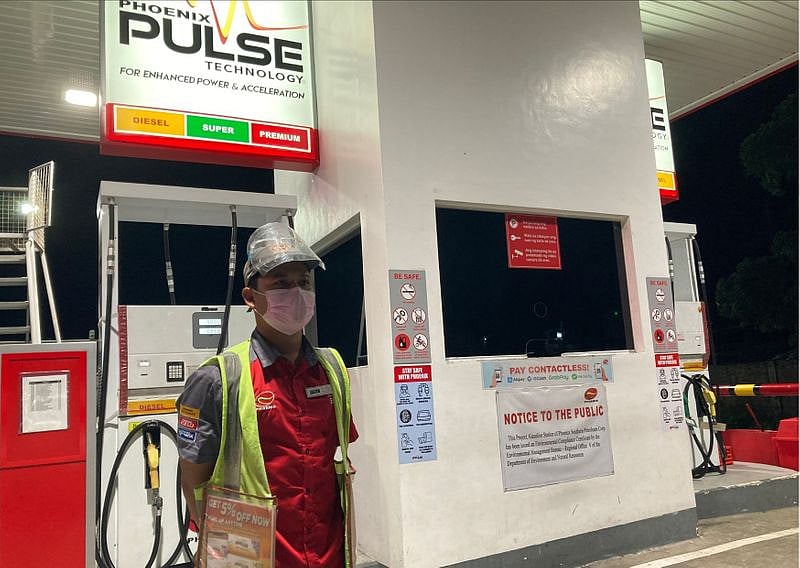
The Philippines consumes a staggering 33 million litres of diesel per day, which marks total total dependence on imports of fossil fuel. This now poses a practical transport electrification challenge.
Gulf News / Jay Hilotin
Manila: The Philippines faces ongoing energy security pressures.
This was highlighted by recent government actions amid global oil market volatility induced by the Mideast war.
According to data from the Philippine National Oil Co (PNOC) and the Department of Energy references cited in recent analyses, the country consumes roughly 33 million litres of diesel daily.
Stark reality
On March 26, 2026, the Department of Energy (DOE) announced the arrival of the first diesel shipment under the "Emergency Energy Security Program", approximately 22.58 million litres (or 142,000 barrels).
This single shipment was coverred all over the local media.
What's not so clear was the context: 22.58 million litres would cover national diesel needs for only ≈0.684 days (22,578,000 / 33,000,000) — or about 16.4 hours.
In other words, it wouldn’t even last a full day.
This stark reality underscores the scale of daily fuel consumption in the Asian nation of 116 million inhabitants — and its vulnerability of relying on imported fossil fuels.
The numbers are staggering. Let's have a closer look:
Daily fuel consumption: A snapshot
Diesel is a cornerstone of the Philippine energy mix.
It powers trucks, buses, utility vehicles, generators, industry, and some marine transport.
At 33 million litres/day, it accounts for a major share of petroleum demand.
Transport remains the dominant user. Diesel and gasoline together driving the bulk of road fuel demand.
While exact daily gasoline figures fluctuate, transport-sector estimates place gasoline consumption in the range of 19–25 million litres/day in recent years (derived from annual transport volumes of ~44–45 million barrels for gasoline).
Combined, road transport fuels (diesel + gasoline) represent the largest slice of fossil fuel use, far outpacing other sectors.
The recent shipment news puts this into sharp perspective: even large emergency imports provide only marginal relief against steady daily burn rates.
A gas pump is used to fill up a car with diesel fuel at a gas station on March 12, 2026.
Electrifying truck fleet: Megawatts scale
Electrifying the vehicle and truck fleet offers a path to reduce oil import dependence, cut emissions, and improve energy security.
What it means in electricity terms:
Based on the computations directly on the provided daily diesel consumption data (33 million litres/day), and treating it as the primary fuel for heavy-duty vehicles and trucks (the dominant diesel users), then extending the logic to light EVs where gasoline data informs a parallel estimate.
Step-by-step energy conversion (with efficiency adjustment)
Thermal energy content of diesel
Diesel has an approximate lower heating value of ~10 kWh per liter (standard engineering approximation based on ~36 MJ/L; precise value is 9.9–10.0 kWh/L).
Daily thermal energy from diesel: 33,000,000 L/day×10 kWhL=330,000 MWh/day = 330 GWh/day
Tank-to-wheel efficiency of diesel vehicles/trucks
Internal combustion engines (especially diesel trucks) convert only about 30–35% of thermal energy into useful mechanical work (real-world fleet average accounts for traffic, idling, and load factors).
Using a conservative 30% for the mixed fleet, we find out that:
Grid-to-wheel efficiency of electric trucks/EVs
Battery EVs achieve ~85% efficiency from grid electricity to wheels (including ~10% charging losses and high motor efficiency).
Electricity needed (GWh/day)
Translating diesel consumption into its electric equivalent, the numbers reveal just how much more efficient electric mobility can be.
Starting with the total thermal energy demand and accounting for the relatively low efficiency of internal combustion engines (ICE), then applying an approximate efficiency factor, the calculation becomes: 330 × 0.30 × 0.85 ≈ 116.5 GWh per day.
This adjustment reflects a key reality: electric vehicles deliver roughly three times the useful energy output compared to ICE vehicles, thanks to far less energy lost as heat.
From there, converting daily energy demand into continuous power gives a clearer systems-level picture.
Spread across 24 hours, 116.5 GWh per day translates to about 4,854 MW, or roughly 4.85 gigawatts (GW), which can be rounded off to 5GW.
5 GW: In practical terms, that means replacing the entire diesel fleet with electric trucks and EVs would require a steady, around-the-clock power supply of nearly 5 GW.
This is substantial amount, and poses the next challenge for the country's energy policy makers.
But given the modern grid-scale generation and renewable energy expansion, it's within reach, achievable target.
What about light EVs (gasoline replacement)?
Gasoline-powered cars and motorcycles consume roughly 20 million litres/day (scaled from transport-sector data).
Using the same methodology (gasoline 9 kWh/L thermal, ~25% ICE efficiency, 85% EV efficiency), the additional electricity demand would be on the order of 2.5–3 GW.
Combined fleet switch (diesel trucks + gasoline vehicles): roughly 7–8 GW average power —still a significant but manageable addition to the national grid when phased in alongside renewable expansion.
Key caveats, real-world considerations
This is average power, not installed capacity.
Actual generation capacity needed would be higher to handle peak charging (evenings), transmission losses, and renewable intermittency.
A 50–100% buffer for firm capacity or storage might push total new build to 8–15 GW, depending on the rollout timeline and grid upgrades.
Charging infrastructure and timing: Smart charging, vehicle-to-grid, and off-peak incentives could flatten the load curve dramatically.
Efficiency gains are conservative — real-world EV trucks often achieve 3–4× better energy use than diesel equivalents.
Philippines installed power generating capacity: Currently exceeds 30 GW, with peak demand historically in the 15–20 GW range. Adding 5 GW for diesel trucks (or 8 GW total) aligns with planned renewable and baseload growth targets.
The math: Why it matters
The 22.58 million-litre diesel shipment lasting less than a day is not just a headline — it’s a data point.
It illustrates the Philippines' systemic exposure to global oil shocks.
Replacing 33 million litres of daily diesel requires roughly ~4.85 GW of average electricity.
In practical terms, this is just a fraction of the energy currently wasted as heat in internal combustion engines.
With targeted policy, incentives for EV adoption, and renewable scaling, the Philippines can turn its high fuel consumption from a vulnerability into a catalyst for a cleaner, more secure energy future.
What are we to do?
Every crisis, rightly understood, carries within it the seed of a greater good yet to be realised.
At such an hour, it becomes the duty of government — acting with unity of purpose and steadiness of will alongside its citizens and corporate entities — to marshal its full strength toward a common aim.
The electrification of trucks and vehicles, alongside other practical and necessary reforms, is a challenge to be tackled with a "whole-of-nation approach".
What it means
This means: aligning government, industry, finance, and citizens to accelerate transport electrification.
It means agencies like the DOE and the Department of Transportation must coordinate policy, grid upgrades, and charging networks.
It means utilities, local governments, and private firms must invest in infrastructure, while banks, coops are corporate entities expand financing for fleets and operators.
This is the best time, too, to drive the Public Utility Vehicle Modernisation Program by integrating e-jeepneys and e-trucks into public transport.
For the education and industrial sectors, it means training for service crew, incentives for local manufacturing.
These would enable greater public adoption of electrification of transport.
When all things work together — it would help ensure cleaner air, lower fuel imports, and stronger energy security.
In so doing, the Asian nation would not only lessen its total dependence upon imported fuel, but would also bring greater stability and predictability to energy cost.
More importantly, it would clear the air of its cities, reduce the burden of emissions, and fortify the nation’s resilience against the uncertainties of the world beyond its shores.
[Note: Data sources for computations are based on the Department of Energy/PNOC daily diesel figure of ~33M litres for diesel, and up to 25 million litres/day for gasoline in recent years. This is derived from annual transport volumes of ~44–45 million barrels for gasoline in the Philippines. Real-world data would require detailed modeling of fleet composition, duty cycles, and grid integration.]
Sign up for the Daily Briefing
Get the latest news and updates straight to your inbox
Network Links
GN StoreAbout Gulf NewsTerms & ConditionsReach by GNSitemapContact usPrivacy PolicyGN FocusHave your sayWork with usAdvertise with usGulf News epaperPrinting Services
Download our app
© Al Nisr Publishing LLC 2026. All rights reserved.