Pakistan’s Supreme Court annuls all actions taken by Imran Khan government on April 3
Parliament restored; no-confidence vote against Imran Khan remains valid
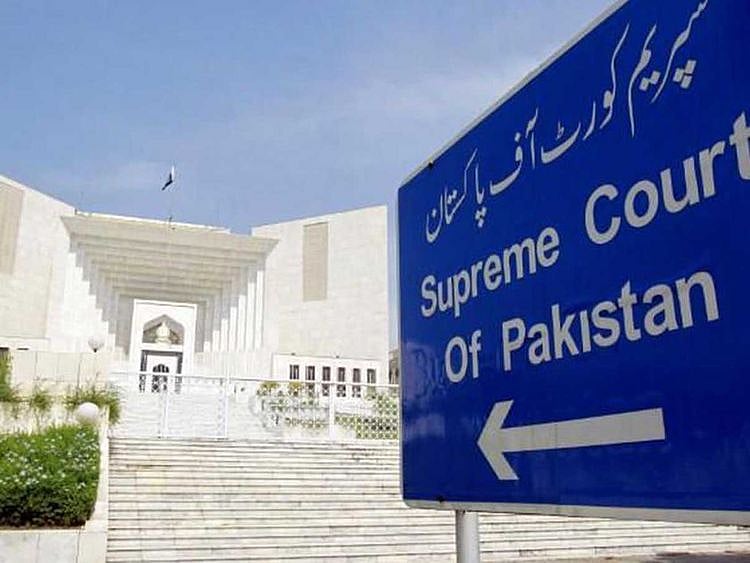
Islamabad: Pakistan’s top court on Thursday annulled all actions taken by Prime Minister Imran Khan’s government on April 3. The Supreme Court in its anticipated verdict announced that the deputy speaker’s ruling was in contradiction with the constitution, restored the parliament and said the no-confidence vote against the prime minister remained valid. The voting will now be held in the parliament on April 9.
The opposition leaders and supporters hailed the Supreme Court’s decision as their “victory”. Extra police force was deployed in the surroundings of courtroom 1 ahead of the verdict as the court announced a ruling on the legality of the dismissal of the no-trust vote against the prime minister and called for fresh elections.
The verdict was announced on the fourth day of the hearing on one of the most significant cases in the country’s political history.
Pakistani Supreme Court Chief Justice Umar Ata Bandial said the deputy speaker’s ruling not to allow voting on a no-confidence motion last week was “erroneous” but the court’s decision would “be based on law and constitution.”
The five-member bench, headed by the chief justice, included Justice Ijazul Ahsan, Justice Mohammad Ali Mazhar, Justice Munib Akhtar and Justice Jamal Khan Mandokhail.
April 7 hearing
On the last day of the hearing, the chief justice was quoted as saying by the media that “Prima facie the speaker’s ruling was in violation of Article 95 of the constitution” which means the “ruling is erroneous.” However, he added: “We want stability in the country,” referring to the political and economic chaos in Sri Lanka.
Attorney-General Khalid Jawed argued that he would not defend the speaker’s ruling and urged that fresh elections should be allowed to be held in the country.
Key opposition leaders Pakistan Muslim League-Nawaz (PML-N) President Shehbaz Sharif and Pakistan People’s Party (PPP) Chairperson Bilawal Bhutto-Zardari also appeared in the court and requested to restore parliament. Opposition parties have termed the dismissal of the no-trust motion without a vote as “unconstitutional”.
The chief justice commented that the opposition was earlier demanding new elections then why are they shying away now? Shehbaz Sharif responded that “how can opposition leaders go for elections with the accusation of being traitors?”
Court’s review questioned
The government lawyers contended that the court would exceed its jurisdiction by intervening on the matter of the deputy speaker’s ruling under Article 69, which says proceedings in parliament shall not be called in question by any court. However, the court said that parliamentary proceedings can be reviewed in case there was a violation of the constitution.
What led to the political crisis?
On the day the Pakistani prime minister was to face the no-confidence vote, he outmanoeuvred it in a way that caught the opposition off guard. The much-awaited session ended within minutes as the National Assembly Deputy Speaker Qasim Khan Suri dismissed the vote of no confidence against the prime minister which he appeared to lose.
The deputy speaker called the motion “unconstitutional” under Article 5 which deals with loyalty to the state.
The ruling also mentioned “a nexus between no-confidence motion and the foreign interference” to oust the country’s elected leader and cited the National Security Committee’s (NSC) meeting which termed the document (believed to be diplomatic cable) amounted to “blatant interference in the internal affairs of Pakistan.” The president then dissolved the lower house of parliament on Khan’s advice and the prime minister called for early elections.
Opposition parties say the deputy speaker’s dismissal of the motion without a vote and the subsequent dissolution of the assembly are both “unconstitutional” actions. Supreme Court took up the matter on the same day (April 3) and announced its decision on April 7. No prime minister has ever completed a full term in Pakistan’s 75-year history.
Sign up for the Daily Briefing
Get the latest news and updates straight to your inbox
Network Links
GN StoreDownload our app
© Al Nisr Publishing LLC 2026. All rights reserved.