Pakistan offers Rs100-a-litre petrol relief for bikes, small cars: Who qualifies?
Scheme covers monthly fuel quotas as petrol hits Rs375.82 amid Middle East tensions
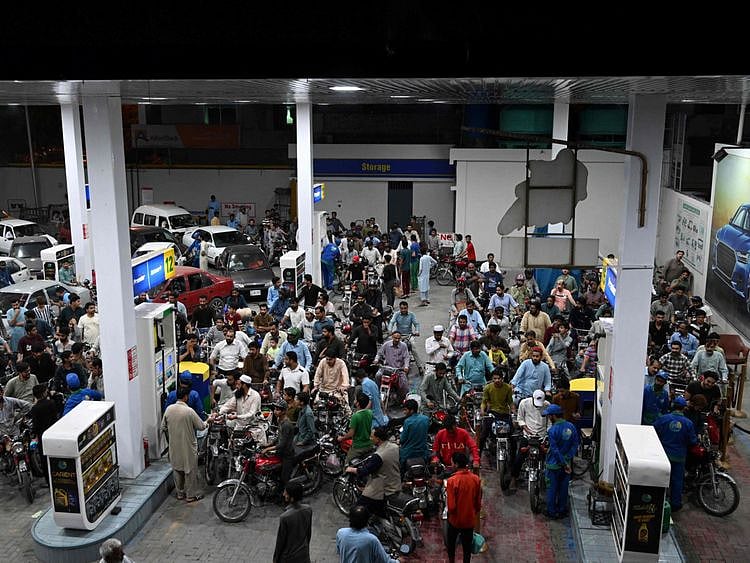
Dubai: Pakistan Prime Minister Shehbaz Sharif on Sunday announced a major fuel relief scheme offering a Rs100-per-litre discount to millions of motorcycle, rickshaw and small-car users as surging global oil prices pile pressure on households.
The targeted subsidy will cover motorcycles, rickshaws, Qingqis and other two- and three-wheelers, as well as cars with engines of up to 800cc, according to reports in Dawn and Geo News.
The relief comes as petrol in Pakistan has climbed to Rs375.82 per litre and high-speed diesel to Rs403.32 per litre following the latest increase announced on Friday.
Under the scheme, motorcycle, rickshaw and other eligible two- and three-wheeler users will receive a Rs100-per-litre discount on a monthly quota of up to 20 litres.
Owners and users of cars with engine capacities of up to 800cc will receive the same Rs100-per-litre relief on up to 30 litres a month.
At the current petrol price of Rs375.82, eligible consumers would effectively pay Rs275.82 per litre for fuel covered by their quota.
That means the maximum monthly relief would amount to Rs2,000 for eligible two- and three-wheelers and Rs3,000 for qualifying small cars if their full quotas are used.
“The government is fully aware of the burden being placed on the public due to the increase in oil prices,” Shehbaz was quoted as saying in a statement from the Prime Minister’s Office.
“In this hour of difficulty, we will not leave the public alone.”
Who gets Rs100-a-litre relief?
Relief: Rs100 per litre
Motorcycles/rickshaws/Qingqis: Up to 20 litres a month
Maximum monthly saving: Rs2,000
Cars: Vehicles with engines up to 800cc
Small-car quota: Up to 30 litres a month
Maximum monthly saving: Rs3,000
Current petrol price: Rs375.82 per litre
Effective subsidised price: Rs275.82 per litre within the quota
Islamabad rollout: September 15
Rest of Pakistan: September 17
Registration: Already opened
When does the scheme begin?
The programme will be introduced in stages.
In Islamabad, the subsidy takes effect at midnight at the start of September 15.
Across the rest of Pakistan, it will take effect at midnight at the start of September 17.
Registration for the programme began on Sunday, with the government saying details of the process would be communicated through a public awareness campaign.
Shehbaz thanked provincial governments for providing information on motorcycles, rickshaws and small vehicles to help implement the programme.
Petrol crosses Rs375 a litre
The relief comes after another increase pushed petrol to Rs375.82 per litre and high-speed diesel to Rs403.32.
Pakistan’s government currently levies Rs114 per litre in taxes and duties on petrol and Rs100 per litre on diesel, according to Dawn.
Fuel prices have risen sharply since the US-Iran war erupted on February 28 and disrupted energy flows through the Strait of Hormuz.
Petrol, which was around Rs266 per litre in the first week of March, reached a peak of Rs458.41 on April 3, while diesel climbed from around Rs281 to a peak of Rs520.35 on the same date.
Although prices subsequently eased, renewed Middle East tensions have again driven international oil prices higher.
Middle East crisis drives oil fears
The pressure on global energy markets has intensified as disruptions threaten two of the world’s most strategically important oil routes.
The Strait of Hormuz has been severely affected by the US-Iran conflict, while growing Houthi threats around Bab Al Mandab have raised concerns about another key route increasingly used for Saudi oil exports.
Saudi Arabia’s East-West oil pipeline has also been shut following an aerial attack, with oil buyers and traders warning that prolonged disruption could remove as much as 4 per cent of global supply, Dawn reported.
The International Energy Agency has warned that global oil supply and demand could fall more sharply than previously expected this year as the continuing Iran conflict delays the restoration of normal Middle East energy flows.
The volatility has already forced Pakistan to repeatedly change the way it sets domestic fuel prices.
Before the Middle East war, petroleum prices were generally revised every fortnight. The government moved to weekly revisions in March and, amid renewed volatility, switched to daily fuel-price reviews in July.
The latest subsidy marks a return to targeted relief, concentrating government support on motorcycles, rickshaws and small cars that are widely used by lower- and middle-income households.

Sign up for the Daily Briefing
Get the latest news and updates straight to your inbox
Network Links
GN StoreDownload our app
© Al Nisr Publishing LLC 2026. All rights reserved.