Pakistan and Afghan officials agree to address threat of terrorism
Pakistani delegation led by defence minister visits Kabul to discuss security issues
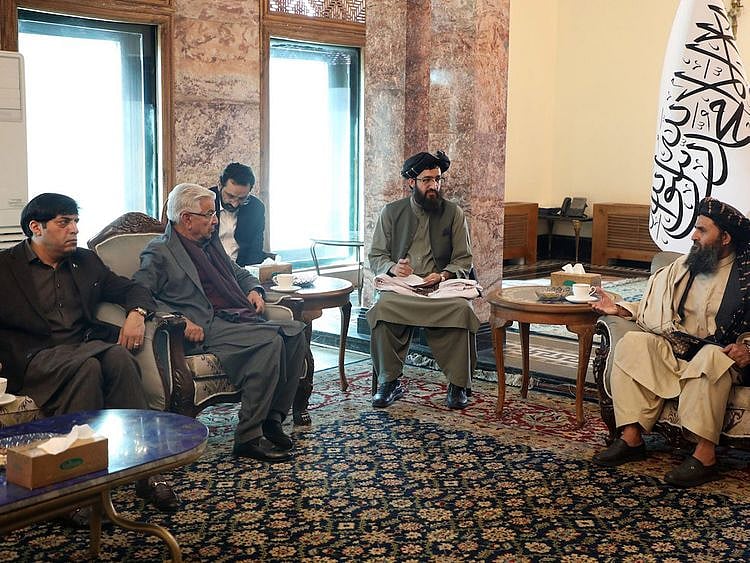
Islamabad: Pakistani and Afghan officials met in Kabul on Wednesday to discuss the growing threat of terrorism in the region, particularly from the banned militant groups Tehreek-i-Taliban Pakistan (TTP) and Islamic State Khorasan Province (ISKP).
“The two sides agreed to collaborate to effectively address the threat of terrorism posed by various entities and organisations” according to Pakistan Foreign Office.
The official media release added that both sides “agreed to strengthen bilateral cooperation in various fields to further enhance the fraternal relations between the two countries.”
Pakistani delegation included defence minister Khawaja Muhammad Asif, ISI chief Lt Gen Nadeem Anjum, Foreign Secretary Asad Majeed Khan, Chargé d’Affaires (CdA) to Afghanistan Ubaidur Rehman Nizamani and Pakistan’s special representative for Afghanistan Mohammad Sadiq.
The delegation met senior leadership of the Afghan government including Deputy Prime Minister Mullah Abdul Ghani Beradar Akhund, Defence Minister Mawlavi Mohammad Yaqoob Mujahid, Interior Minister Sirajuddin Haqqani, and Foreign Minister Amir Khan Muttaqi.
Peshawar killings
Security and border-related issues dominated the talks in Kabul. Pakistani side raised the issue of increasing terrorist attacks in its territory in recent months which Islamabad believes are carried out by Afghanistan-based TTP militants.
Pakistan has seen an uptick in bombings from across the border since August 2021 when the Taliban seized power in Afghanistan. More than 80 policemen were killed in a suicide bombing at a mosque inside a police compound in Peshawar city last month.
The official statement from Afghan Taliban said that the two sides discussed economic cooperation, regional connectivity, and trade.
“Afghanistan emphasises the development of commercial and economic ties with Pakistan as they are in the interest of both countries” Ghani Baradar, the Afghan deputy prime minister, said. Baradar also called for the release of Afghan refugees who are currently in Pakistan prisons, and to facilitate travel through Torkham and Spin Boldak border crossings, especially those seeking emergency medical care,” according to Afghan media.
Key border crossing opens
Afghanistan’s Taliban rulers reopened a key border crossing with Pakistan on Thursday, allowing thousands of trucks carrying desperately needed food and other items to creep forward for the first time in days, officials said. The jam at the Torkham crossing between the two nations began to ease after Islamabad sent a high-level delegation to Kabul to discuss a range of issues, including the Taliban’s closure of the border on Sunday. Taliban-appointed officials in Afghanistan’s Nangarhar province confirmed the reopening of the Torkham border. The Afghan embassy in Pakistan also posted news of the reopening on Twitter. Thousands of vehicles, some carrying fresh produce like vegetables and fruit, began moving along the Khyber Pass in northwest Pakistan Thursday, said Ziaul Haq Sarhadi, a director at the Pakistan-Afghanistan joint Chamber of Commerce and Industry. For Pakistan, the Torkham border crossing is a vital commercial artery and a trade route to Central Asian countries. The reopening of Torkham was a relief for the traders and others on both sides who were jammed at the border for four days. It was also an indication of easing tensions between the two neighbours.
Network Links
GN StoreDownload our app
© Al Nisr Publishing LLC 2026. All rights reserved.