Islamabad: After one removal and two resignations, Prime Minister Imran Khan’s recently constituted Economic Advisory Council (EAC) formed for expert advice on matters relating to the economy, stands without any expert of international repute.
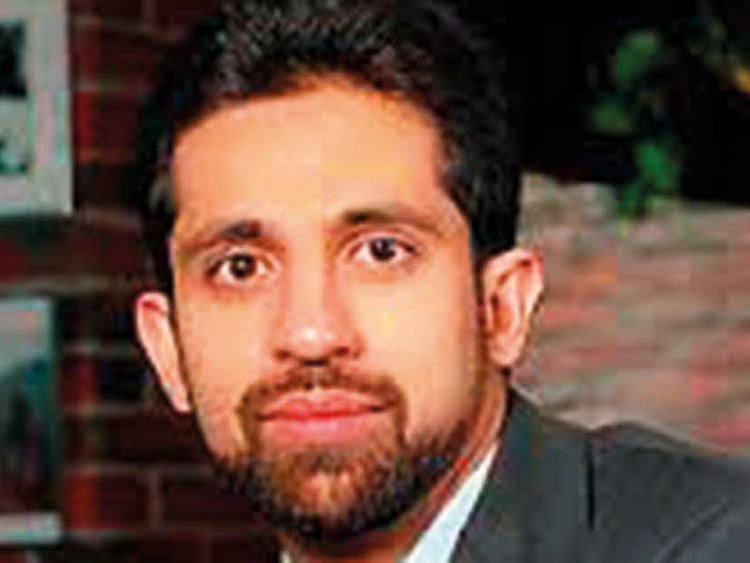
The controversy leading to embarrassment has hit the PTI-government when on Friday it decided to remove US-based Dr Atif Mian, the top-ranked world economist from the EAC on the pretext that he belonged to the minority Ahmadi community often subjected to persecution in the country.
A government senator Faisal Javed and later Information Minister Fawad Chaudhry admitted on social media that keeping him in the council after religious bigots’ opposition was becoming difficult for the government.
Interestingly, the same information minister on Tuesday last had vehemently dismissed the religious extremists’ criticism saying Pakistan also belonged to minorities and Dr Atif Mian was appointed for advice on economic matters and not for religious issues.
Now the government is once again under fire, this time by liberal and educated class that has expressed their strong opposition and condemned the decision.
The recent resignation came on Saturday when London-based economist Dr Imran Rasul announced his decision on social media expressing his “profound” disagreement with the circumstances in which Dr Atif Mian was asked to step down.
Two resignations in two days show that the government is going to see further backlash after caving in to religious extremists over exclusion of a renowned economist from its council.
According to Dr Inam Rasul: “If there was one academic on the EAC that Pakistan needs, it was Atif Mian”. “Resolving the macro and fiscal mess the country is in will lay the bedrock for social protection, poverty alleviation policies and other economic reforms the country also needs,” he tweeted.
Dr Rasul has wished the government and the EAC luck for future undertakings adding he remains willing to offer “non-partisan, evidence-based advice” that could help improve economic policymaking in Pakistan.
Dr Rasul has further expressed his resolve that while Pakistan is full of talent, it “needs leaders willing to draw on all this talent, and that are willing to appeal to our better sides, for the common good and not sow division.”
After three exits, now out of the remaining 15 members of EAC, seven belong to the government and eight are from the private sector.
The members of the council from the private sector are: Dean and Director of the Institute of Business Administration, Dr Farrukh lqbal; Principal and Dean of School of Social Sciences and Humanities, National University of Sciences and Technology (NUST) Dr Ashfaque Hassan Khan; Professor of Economics, Lahore University of Management Sciences (LUMS), Dr ljaz Nabi; Executive Director of Sustainable Development Policy Institute (SDPI), Dr Abid Qaiyum Suleri; Vice-Chancellor of Pakistan Institute of Development Economics (PIDE), Dr Asad Zaman; Professor of Economics at Lahore School of Economics (LSC), Dr Naved Hamid; former governor of State Bank of Pakistan (SBP), Syed Salim Raza and economist Sakib Sherani.
The government-named members are: Minister for Finance, Revenue and Economic Affairs Asad Umer, Minister for Planning Development and Reforms Division Khusro Bakhtiar, Secretary of Finance Division Arif Ahmad Khan, Governor of SBP, Tariq Bajwa, Adviser on Institutional Reforms Dr Ishrat Hussain, Adviser on Commerce Abdul Razaq Dawood and the Deputy Chairman Planning Commission.
Sign up for the Daily Briefing
Get the latest news and updates straight to your inbox
Network Links
GN StoreDownload our app
© Al Nisr Publishing LLC 2026. All rights reserved.