Japan radiation over Chernobyl resettlement levels, groups say

Soil radiation 60km from Japan's stricken nuclear plant is above Chernobyl resettlement levels

Last updated:
1 MIN READ
1.833319-360129324
Reuters
Reuters

Tokyo: Soil radiation in a city 60km from Japan's stricken nuclear plant is above levels that prompted resettlement after the Chernobyl disaster, citizens' groups said Tuesday.

The survey of four locations in Fukushima city, outside the nuclear evacuation zone, showed that all soil samples contained caesium exceeding Japan's legal limit of 10,000 becquerels per kilogram, they said.

The highest level was 46,540 becquerels per kilogram, and the three other readings were between 16,290 and 19,220 becquerels per kilogram, they said.

Pregnant women

The citizens' groups - the Fukushima Network for Saving Children from Radiation and five other non-governmental organisations - have called for the evacuation of pregnant women and children from the town.

The highest reading in the city of 290,000 people far exceeded the level that triggered compulsory resettlement ordered by Soviet authorities following the 1986 Chernobyl nuclear disaster in Ukraine, they said.

Survey

Kobe University radiation expert professor Tomoya Yamauchi conducted the survey on June 26 following a request from the groups.

"Soil contamination is spreading in the city," Yamauchi said in a statement. "Children are playing with the soil, meaning they are playing with high levels of radioactive substances. Evacuation must be conducted as soon as possible."

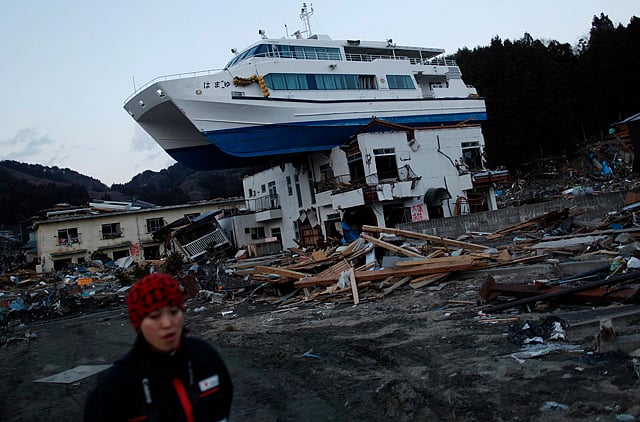
The coastal Fukushima Daiichi plant has been spewing radiation since the March 11 earthquake and tsunami knocked out its cooling systems.

Police officers in protective suits observe a moment of silence for those who were killed by the March 11 earthqauke and tsunami, as they search for bodies at a destroyed area in Minamisoma, Fukushima prefecture, about 18km from the damaged Fukushima nuclear power plant on April 11, 2011. Tokyo: Soil radiation in a city 60km from Japan's stricken nuclear plant is above levels that prompted resettlement after the Chernobyl disaster, citizens' groups said Tuesday July 5, 2011
The access road to the Fukushima Daiichi nuclear power plant is flooded after the tsunami hit last month. The GCC can focus on solar energy production and re-direct a portion of investments — allocated for nuclear energy — to developing clean solar energy, which is safe and renewable. Tokyo: Soil radiation in a city 60km from Japan's stricken nuclear plant is above levels that prompted resettlement after the Chernobyl disaster, citizens' groups said Tuesday July 5, 2011
An official from Thailand's Food and Drug Administration takes a sample from a shipment of frozen fish imported from Japan to test for possible radiation contamination at Ladkrabang customs in Bangkok March 29, 2011. Japan has stopped shipments of vegetables and milk from near the stricken Fukushima nuclear plant in the country's northeast.
A protester rallies against nuclear plants in front of the Tokyo Electric Power Co (TEPCO) headquarters in Tokyo on Sunday, March 27 after the company's nuclear power plant was hit by a massive earthquake and tsunami. Tokyo: Soil radiation in a city 60km from Japan's stricken nuclear plant is above levels that prompted resettlement after the Chernobyl disaster, citizens' groups said Tuesday July 5, 2011.

Sign up for the Daily Briefing

Get the latest news and updates straight to your inbox