India Supreme Court puts revised Aravalli definition on hold, considers fresh expert panel
Top court pauses November order amid fears mining could harm fragile mountain ecosystem
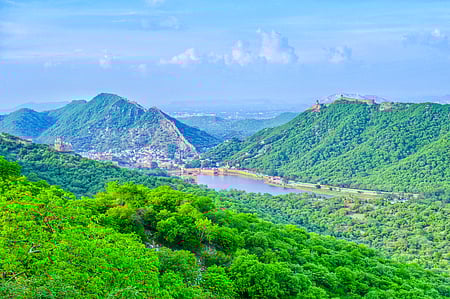
New Delhi: The Supreme Court of India on Monday put in abeyance its earlier order accepting a revised definition of the Aravalli Hills, after mounting concerns that the move could open large swathes of the ecologically sensitive range to mining activity.
A three-judge Bench headed by Chief Justice of India Surya Kant, along with Justices J.K. Maheshwari and A.G. Masih, said that the expert committee’s report as well as the court’s own observations were being “misconstrued” and required further clarification before any implementation.
“We deem it necessary that the committee recommendation and directions of this court be kept in abeyance. This stay shall remain in effect till the constitution of the (fresh) committee,” the Bench said.
The court issued notice in its suo motu writ petition titled “Definition of Aravalli Hills and Ranges and Ancillary Issues”, making it returnable on January 21. Notices were also issued to the Centre and the four Aravalli states — Rajasthan, Gujarat, Haryana and Delhi.
Height-based definition triggers backlash
The controversy stems from a November 20 order in which the apex court accepted the Union environment ministry’s revised definition of the Aravalli range. Under the revised framework, only landforms with an elevation of 100 metres or more were classified as Aravalli hills.
Environmental groups and opposition parties warned that the height-based criterion could exclude large portions of the ancient mountain system from protection, potentially allowing regulated mining in low-lying but ecologically vital areas.
The ruling sparked protests across several districts of Rajasthan, including Udaipur, Jodhpur, Sikar and Alwar, with demonstrators arguing that the revised definition diluted long-standing safeguards for the Aravallis.
Centre halts mining activity
During the hearing, Solicitor General Tushar Mehta told the Bench that the Centre had already issued directions to Aravalli states to halt all mining activity in the region. He also clarified that no fresh mining licences would be granted in the Aravallis.
Separately, the Union Ministry of Environment, Forest and Climate Change (MoEF&CC) issued directions on December 24 imposing a complete ban on the grant of new mining leases across the entire Aravalli landscape. The prohibition applies uniformly across states and is aimed at preserving the integrity of the range as a continuous geological ridge.
The ministry has also tasked the Indian Council of Forestry Research and Education (ICFRE) with identifying additional no-mining zones and preparing a comprehensive management plan for sustainable mining across the region.
Court weighs fresh expert committee
The Supreme Court said it was considering the formation of a new high-powered expert committee to holistically examine the recommendations of all previous panels that have worked on defining the Aravalli range.
The proposed committee will assess whether regulated mining can be permitted in the 500-metre gaps between hills and, if so, what structural and environmental safeguards would be required to ensure ecological continuity. The Bench also questioned whether the 100-metre elevation threshold was scientifically sound and whether a more detailed geological inquiry was necessary.
The court requested assistance from Attorney General R. Venkataramani and senior advocate P.S. Parmeswar, including on the composition of the proposed expert panel.
Why the Aravallis are crucial
The Aravalli range stretches about 670 km across north-western India, running from Gujarat through Rajasthan and Haryana to the National Capital Region. It is among the oldest fold mountain systems in the world, dating back nearly two billion years.
The range plays a critical role in groundwater recharge, climate regulation, and preventing the eastward spread of the Thar desert, making its protection central to environmental stability in northern India.
What is the Aravalli issue?
A revised definition classified only landforms above 100 metres as Aravalli hills
Critics warned this could permit mining in large low-lying areas
Protests erupted across Rajasthan over ecological risks
The Centre imposed a blanket ban on new mining leases
The Supreme Court has paused its earlier order and may form a fresh expert panel
- with inputs from IANS, ANI
Sign up for the Daily Briefing
Get the latest news and updates straight to your inbox
Network Links
GN StoreDownload our app
© Al Nisr Publishing LLC 2026. All rights reserved.