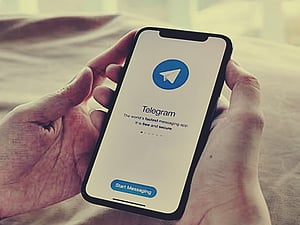
New Delhi: The Ministry of Information and Broadcasting (I&B) has issued a notice to instant messaging platform Telegram over concerns of widespread piracy on its service, sources said on Saturday.
The ministry has directed the platform to take immediate measures to curb the illegal distribution of pirated films and OTT content. Telegram has also been asked to submit a comprehensive Action Taken Report (ATR) within 15 days, detailing steps taken to address these violations.
According to sources, the move is aimed at safeguarding India’s growing creator economy and protecting the interests of the film industry, broadcasters, OTT platforms, producers, and distributors who continue to face significant financial losses due to digital piracy.
Get updated faster and for FREE: Download the Gulf News app now - simply click here.
Government widens scrutiny
In parallel, the Ministry of Electronics and Information Technology (MeitY) has issued notices to Telegram, Signal, and Meta regarding the rollout of the “username” feature.
Both Telegram and Signal have been asked to explain the feature and outline safeguards against impersonation and misuse.
Telegram had recently faced a week-long ban in India ahead of the NEET-UG re-examination in June.
On Wednesday, the Centre also issued a notice to Meta over the rollout of the “usernames” feature on WhatsApp in India, stating that it could increase the risk of online fraud, phishing, and digital arrest scams.
According to Meta, a username is an “optional unique identifier you can choose for your WhatsApp account.” It begins with the @ symbol (for example, @Name123) and can be used to message or call others while keeping phone numbers private.
Centre flags risks of impersonation and cyber fraud
The government has raised concerns that the usernames feature may enable impersonation and identity spoofing. It has asked Meta to provide a detailed explanation within three days.
The notice stated that the feature could “materially increase the incidence of online fraud, phishing, digital arrest scams and impersonation attacks,” by enabling bad actors to target users. It further warned that usernames resembling genuine individuals or institutions could be misused to deceive people.
The Centre has also directed Meta not to roll out the feature until consultations are completed to the government’s satisfaction.
Meta responds, says safeguards are in place
In response, Meta said it has built “multiple layers of defence against scams.”
A WhatsApp spokesperson said the platform has announced the option for users to reserve their preferred usernames, although the feature is not yet live and will be rolled out gradually later this year.
“To protect against impersonation, we’ve held the highest-profile names — including public figures, government entities, celebrities and verified Meta accounts — so they can only be claimed by their legitimate owners. Lookalike derivatives of known names are also being restricted,” the statement added.
Network Links
GN StoreDownload our app
© Al Nisr Publishing LLC 2026. All rights reserved.