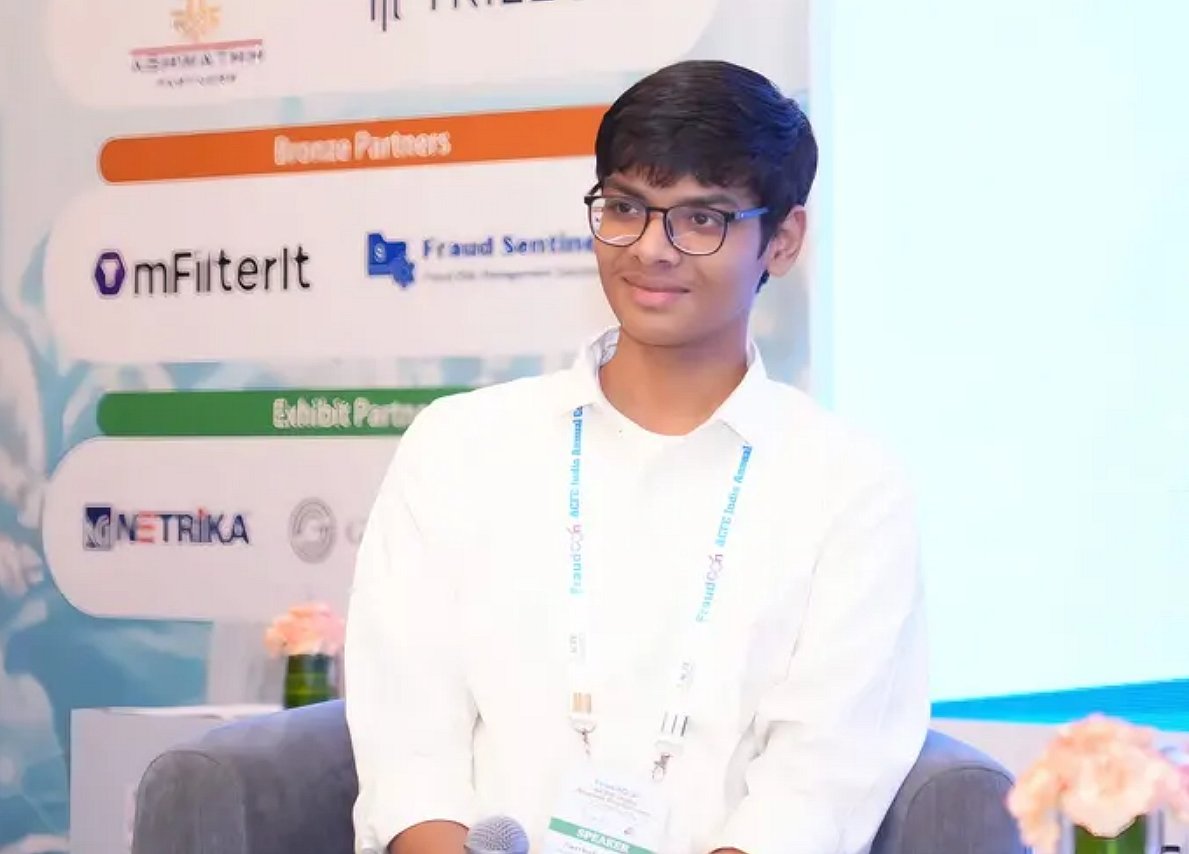
A student's attempt to understand discrepancies in his Class 12 examination results has turned into a wider investigation into India's education system and government procurement. Ranchi-based computer science enthusiast Sarthak Sidhant, who raised questions over the Central Board of Secondary Education's (CBSE) digital evaluation system, has been named in TIME100 Next India 2026.
According to media reports, Sidhant first came into the spotlight after raising concerns over discrepancies in his CBSE Class 12 marks. What began as an attempt to understand his own results soon evolved into a wider investigation into the board's On-Screen Marking (OSM) system and the tendering process through which the contract for digital evaluation was awarded.
Get updated faster and for FREE: Download the Gulf News app now - simply click here.
He examined government documents, compared successive versions of tender conditions and presented his findings before the Parliamentary Standing Committee on Education.
His work has since expanded beyond education. In June 2026, he launched a public database containing approximately 1.66 crore government procurement records, aiming to make information about public spending more accessible.
How a marks dispute became a CBSE investigation
Sidhant's investigation began when he noticed discrepancies in the marks awarded to him in his CBSE Class 12 examinations.
Seeking clarification, he obtained scanned copies of his evaluated answer sheets and began examining the board's digital assessment mechanism.
His investigation subsequently extended to CBSE's tender documents for the OSM system. By comparing different versions of the bidding conditions, he identified changes to eligibility requirements, technical specifications and security-related provisions across successive rounds of the tender process.
According to Mint, Sidhant alleged that these changes raised questions over the selection of Hyderabad-based Coempt EduTeck, which eventually won the contract to manage CBSE's digital evaluation system.
His findings brought the procurement process under scrutiny. However, the allegations have not been established as wrongdoing, and both CBSE and the company have denied any irregularities.
What is the CBSE OSM controversy?
The On-Screen Marking system is a digital method of evaluating examination answer scripts. Instead of checking physical answer booklets, examiners assess scanned copies on a computer through a digital platform.
Under the system:
Students continue to write examinations in conventional answer booklets.
Answer scripts are scanned and uploaded to a secure digital platform.
The scripts are anonymised and assigned electronically to examiners.
Evaluators assess the scanned answers on screen.
The system was introduced to streamline assessment and improve the efficiency of the evaluation process.
However, its rollout attracted criticism from students and parents, who raised concerns about marking discrepancies, technical glitches, blurred answer sheets and missing pages.
The controversy gained further attention amid complaints about the evaluation process and CBSE Class 12 results, with the pass percentage standing at 85.2%.
The dispute also brought the contract awarded to Coempt EduTeck under scrutiny, with Sidhant questioning changes to the tender conditions.
Findings presented before parliamentary panel
Taking his investigation beyond social media, Sidhant presented his findings before the Parliamentary Standing Committee on Education.
His work gained national attention amid wider debates over education reforms and concerns about the transparency of examination and evaluation systems.
TIME, in its profile of Sidhant, noted that his findings resonated in a year marked by nationwide protests over education reform. It also reported that the CBSE chairman and secretary were transferred hours after Sidhant presented his findings to the parliamentary committee.
The report did not establish that the transfers were a consequence of his presentation.
Student opens 1.66 crore government records
Sidhant's transparency efforts have since extended to public procurement.
In June 2026, he launched a public database containing approximately 1.66 crore records collected from the Centre's Central Public Procurement (CPP) Portal.
Announcing the initiative on X, he wrote: "Transparency needs to be accessible. From today, it is."
He said the records had been collected over approximately two weeks and made publicly available, encouraging citizens, journalists and researchers to download the database and examine the information independently.
"Download the database and start diving deeper. This is the beginning. More things to come," he added.
The initiative aims to make government procurement information easier to access and analyse, potentially helping users examine public spending, contracts and patterns in government purchasing.
Why TIME recognised Sidhant
TIME100 Next India 2026 recognises emerging individuals whose ideas and work are helping shape the country's future across different fields.
Sidhant's inclusion highlights the growing role of young people in using technology, research and publicly available information to question established systems and push for greater accountability.
Reflecting on the potential of his generation, he told TIME that young people today have access to technology that they can use to make the world a better place.
From questioning his own examination results to investigating a national education system and opening millions of government procurement records to public scrutiny, Sidhant's journey demonstrates how an individual concern can develop into a wider public-interest initiative.
With inputs from Agencies
Network Links
GN StoreDownload our app
© Al Nisr Publishing LLC 2026. All rights reserved.