A voice of courage: How a young Kerala singer is breaking stigma around Tourette syndrome
Elizabeth S. Mathew blends talent, therapy and hope in fight against a lifelong disorder
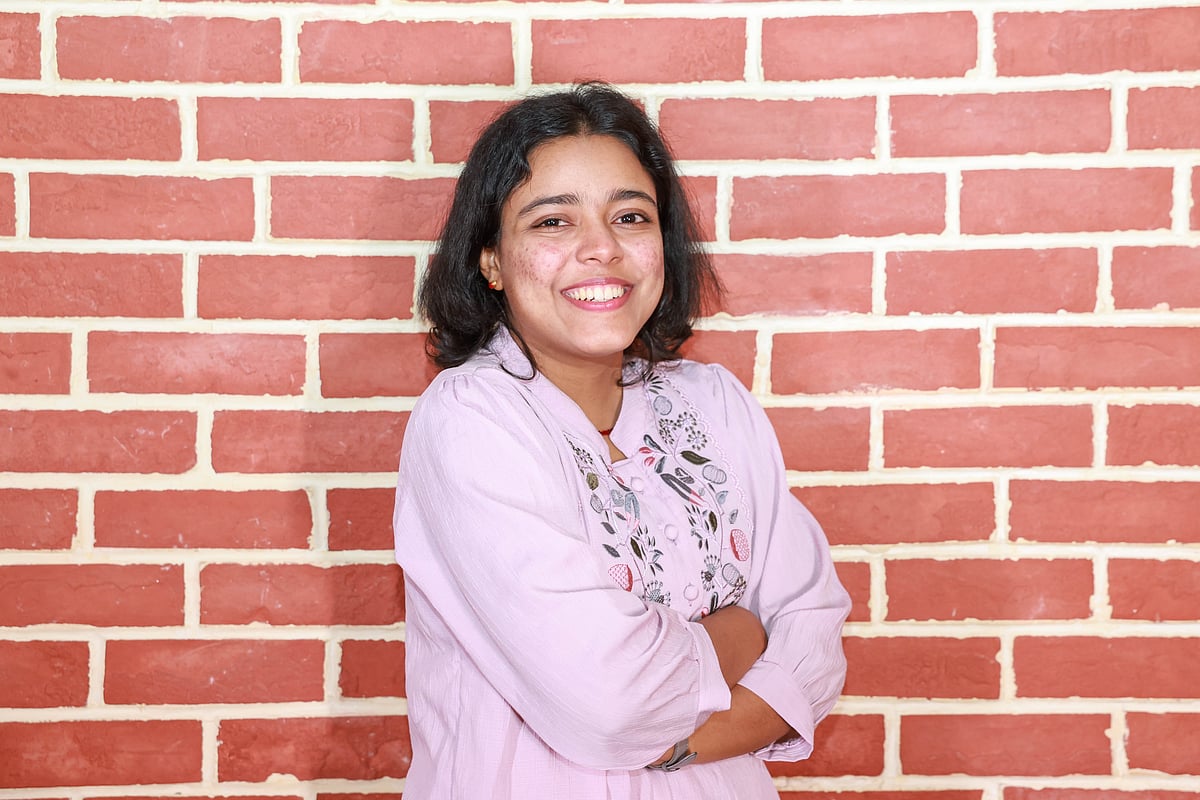
Elizabeth S. Mathew is many things at once — a singer, counsellor, therapist, and a voice of courage for thousands who follow her online.
She is also a person living with Tourette syndrome, a neurological disorder marked by involuntary movements and sounds called tics. These sudden, repetitive impulses are often beyond control. Yet, they have never stopped her from stepping onto a stage or in front of a camera. If anything, they have made her an instantly recognisable figure on social media — a young woman refusing to let a diagnosis define her art.
“I was not aware that I had Tourette’s, but my parents noted it,” says Elizabeth, who was on a visit to Dubai recently. “In the place I stayed in Kerala, the doctors felt it was a major condition, and found it difficult to accept.”
For 16 years, Elizabeth has lived with Tourette syndrome with a mix of resilience and deep faith. “Some people have this disorder but it eases off when they grow up, but not for me. It’s the other way round for me - it’s getting worse,” she says matter-of-factly. “As we grow, our anxieties and emotions grow and I am not able to control them. When I am tense or anxious or excited this increases. It’s difficult to stay relaxed.”
What is Tourette syndrome?
Tourette syndrome is a disorder that involves repetitive movements or unwanted sounds (tics) that can’t be easily controlled.
Tics typically show up between ages 2 and 15, with the average being around 6 years of age. Males are about three to four times more likely than females to develop Tourette syndrome.
Although there’s no cure for Tourette syndrome, treatments are available. Many people with Tourette syndrome don’t need treatment when symptoms aren’t troublesome. Tics often lessen or become controlled after the teen years.
Determined to sing
But Tourette’s has never stood in the way of her determination to sing. Over the years, Elizabeth has released several songs, building a strong online presence and a loyal audience who see her not just as a performer but as a source of strength. “My parents say I used to sing when I was young. I trained in classical music from the age of 6 and I sing today because I want to praise God and also comfort others. It’s a kind of therapy.”
Born in Kerala’s Kannur district, Elizabeth had a spirited childhood. A champion swimmer trained by her father, she says, “I never had any health issues then.” After completing a degree in Carnatic Music, she pursued an MSc in Counselling Psychology in Bangalore — a choice that would later define her second calling.
It took time for her family and doctors to fully understand what she was dealing with. “Later we understood that it was a tics disorder,” she says. “Now it is stress related – especially when I have programmes. My posture itself is a coping mechanism — the body adjusts to control the tics.”
Deep brain stimulation surgery
In 2022, Elizabeth underwent deep brain stimulation surgery, a procedure that has helped many. For her, however, the relief was limited. Yet she remains hopeful. “I still have hope. Even though others have benefitted, I feel there is a special reason why I am like this – to walk close to God.”
Elizabeth now follows psychotherapy to help manage her breathing, and she has also been diagnosed with mild OCD — a known co-morbidity of Tourette syndrome. Despite everything, she speaks about her life without hesitation and without self-pity.
Passion for psychology
And although her music has brought her fame, Elizabeth says her true passion lies in psychology. “What makes me sing is that I have a talent to sing, to praise God and also to comfort others. It’s a kind of music therapy.”
Today, Elizabeth works as a music therapist in Thiruvananthapuram, supporting children with special needs — Autism, ADHD, Down syndrome — blending her training, her voice, and her lived experience to help others heal.
"I am like a fish swimming against the tide. I don't just live with Tourettes syndrome, but I am fighting with Tourette's," she says.
Asked what she would tell those facing Tourette’s, her response is heartfelt. “Trust the process – trust, pray and have hope in your life. Don’t be depressed about what you are going through. As human beings we are vulnerable. But if we have the motivation and live with people who are motivated, that’s a blessing of God. Surround yourself with positive people. We will have ups and downs, but just overcome them.”
And then she adds one last, simple request. “I just want the world to be aware of Tourette syndrome. Just accept me the way I am.”
Also In This Package
Network Links
GN StoreDownload our app
© Al Nisr Publishing LLC 2026. All rights reserved.