Japan earthquake death toll rises to 28 after powerful 7.1-magnitude quake
Japan counts mounting losses while search teams comb devastated areas
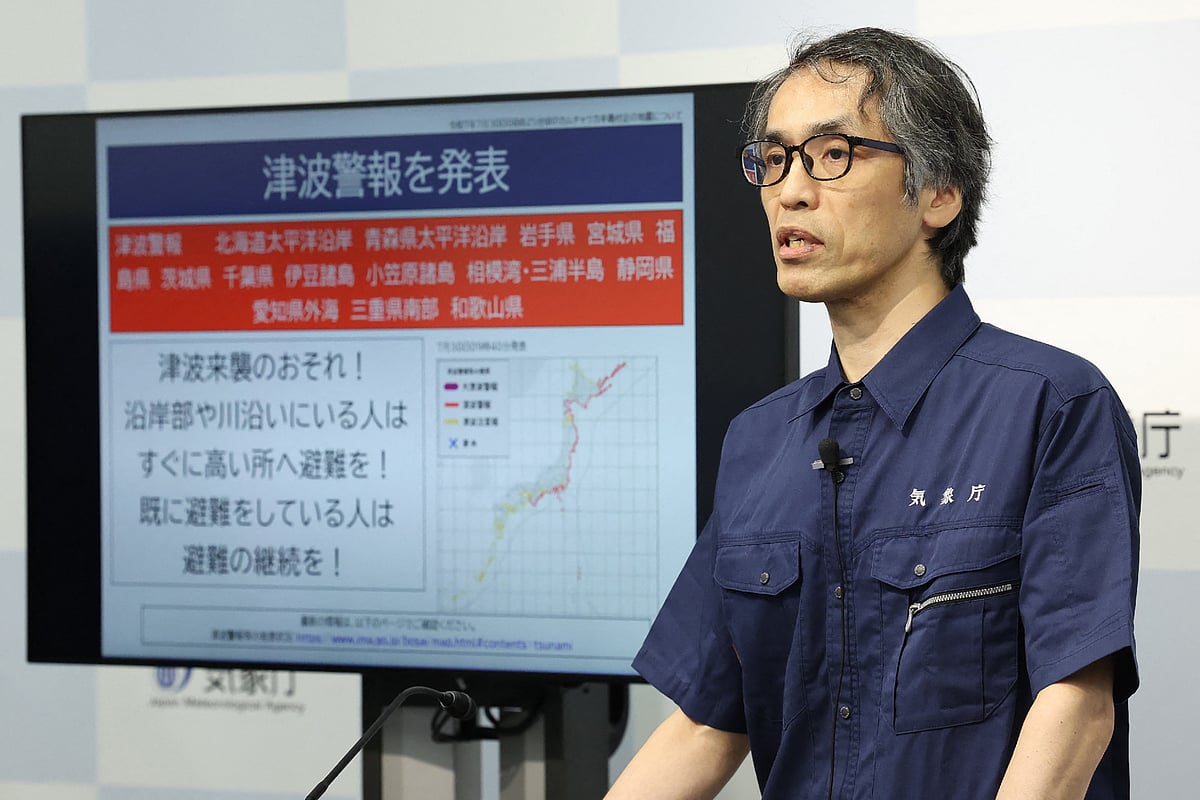
TOKYO: - A total of 28 people died in a major earthquake in Japan, the government said Thursday in a revised toll two days after the 7.1-magnitude tremor.
"The death toll currently stands at 28, including those whose deaths are under investigation in relation to the quake," government spokesman Minoru Kihara told reporters.
The magnitude 7.1 earthquake struck Kumamoto Prefecture on Kyushu island on Tuesday afternoon, producing the highest possible 7-level seismic intensity on Japan's domestic scale in parts of the region.
The shallow quake caused widespread structural damage, knocked out utilities and disrupted rail and air services.
Get it: Fast, verified news for FREE ... download the Gulf News app — simply click here
Rescuers were working against time, with several people still reported missing.
At an Aeon shopping mall in Kashima, a gas explosion following the earthquake killed at least four people, while three others remained unaccounted for, according to the latest AP report. Thousands of people were evacuated from the mall.
At a paper factory in Yatsushiro, a collapsed chimney killed five people, while a Vietnamese technical intern died after being struck by a falling crane at another factory. The incidents illustrated the wide-ranging damage caused by the earthquake across Kumamoto.
Rescue operation expands
Japan's Self-Defense Forces have been deployed to support search-and-rescue and relief operations. Authorities are also dealing with difficult summer conditions, including extreme heat and humidity, while aftershocks continue to complicate rescue work.
About 8,800 people were staying in evacuation shelters, while roughly 34,900 homes had lost electricity and about 15,000 had no water, according to the latest figures cited by AP.
The disruption has extended beyond residential areas. Bullet train services were suspended and flights were cancelled as authorities assessed damage and worked to keep transportation corridors safe. Major manufacturers in the region have also reported operational disruptions.
Tsunami advisory issued
The earthquake initially triggered a tsunami advisory for the Ariake Sea, with authorities warning that waves of roughly 1 metre could reach coastal areas. Prime Minister Sanae Takaichi urged residents to stay away from the coast while emergency agencies assessed the situation.
Japan's earthquake monitoring agency recorded the epicentre at a shallow depth of about 10 km, a factor that contributed to the intensity of the shaking at the surface.
Authorities have warned residents to remain alert for further aftershocks and possible landslides.
The disaster is particularly painful for Kumamoto, which suffered devastating earthquakes in 2016 that killed dozens of people and caused extensive destruction.
For now, the priority remains the search for survivors. As the casualty count continues to be revised, emergency crews are combing through collapsed structures and damaged facilities in a race against time to reach anyone still alive beneath the rubble.
Network Links
GN StoreDownload our app
© Al Nisr Publishing LLC 2026. All rights reserved.