Bangladesh wage protests cost garment sector $428 million: trade body
Strikes threaten Bangladesh's global garment export reputation and economy
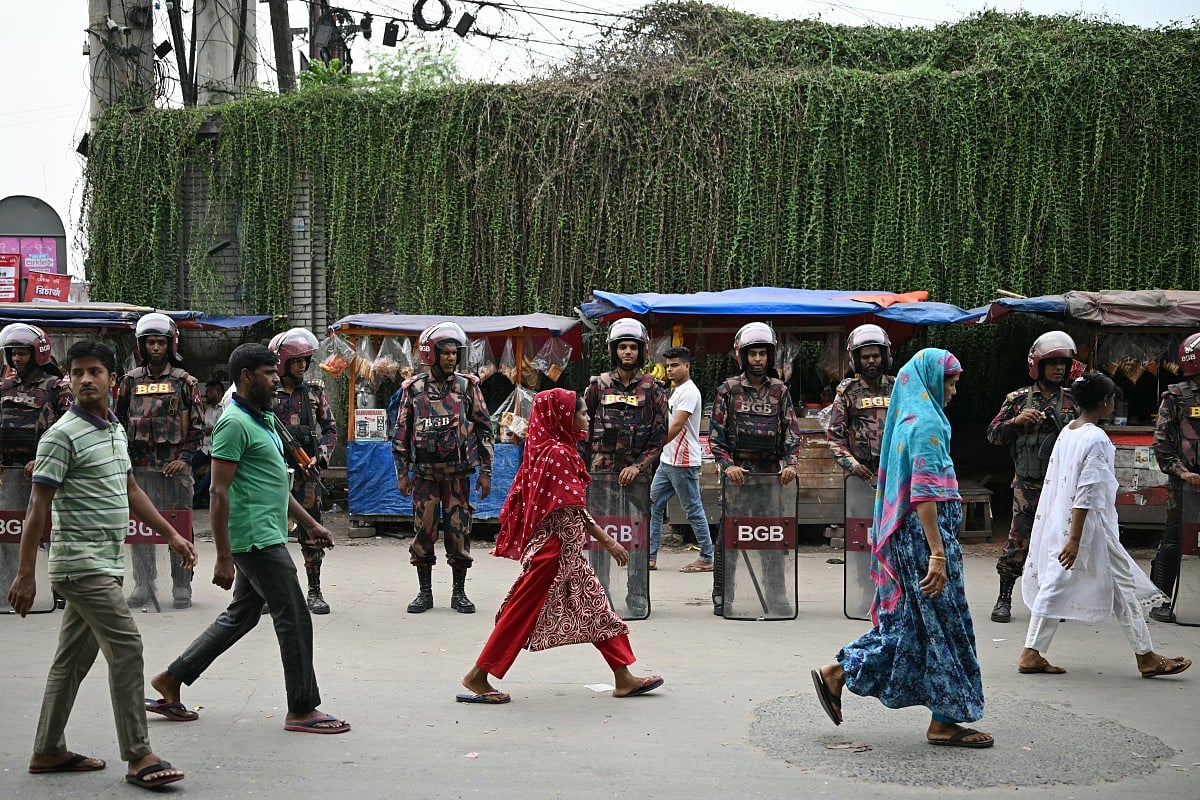
Bangladesh's garment industry, a key export sector, has lost an estimated $428 million due to protests by workers demanding higher wages, the country's main manufacturers' association said Sunday.
Large-scale protests since October have disrupted production, though they have eased after a government-appointed wage board pledged to announce a new minimum wage, expected next month.
Workers say their pay has failed to keep pace with rising costs of food, housing, transport and healthcare, demanding a minimum monthly wage of 30,000 taka ($240), up from the current 12,500 taka.
Strikes have continued at several of the more than 4,000 factories in the South Asian nation, the world's second-biggest garment exporter behind China.
The Bangladesh Garment Manufacturers and Exporters Association, citing a survey of members, said that "in the... ongoing unrest, 317 garment factories have suffered losses of $428 million, while orders worth $254 million have been shifted to other countries."
The garment industry, producing clothes for major international brands including Fruit of the Loom and Levi Strauss, earns around $38 billion annually, accounting for four-fifths of Bangladesh's export earnings.
Strikes, which in some cases have seen workers clash with police, have hit production, delayed shipments and undermined confidence among international buyers, the association said in a statement.
"Actual losses could be much higher," it added, saying only 317 out of 600 factories impacted by unrest had been able to send data in time.
The industry employs more than four million people, in a country of 170 million.
The disruption comes during the run-up to the busy Christmas season.
"It is imperative to overcome this critical situation as soon as possible, in the interest of the country's economy and the livelihoods of millions of workers," Md Shahedul Islam, secretary-general of the manufacturers' association, said in the statement.
"The extent of the damage cannot be measured solely in terms of immediate financial losses," he added.
"The unrest has also seriously affected the long-term image, reliability and future prospects of Bangladesh's garment industry in the global market."
Network Links
GN StoreDownload our app
© Al Nisr Publishing LLC 2026. All rights reserved.