Human rights activist Javier Tarazona (R) is greeted by his brother Jose Rafael Tarazona (L) and lawyer Omar de Dios Garcia after his release from prison at La Candelaria church in Caracas on February 1, 2026.
Venezuelan activist Javier Tarazona ends '1,675 days' of suffering in prison
Rights lawyer Javier Tarazona freed after 4 years, 7 months in a notorious Caracas prison
Last updated:
3 MIN READ
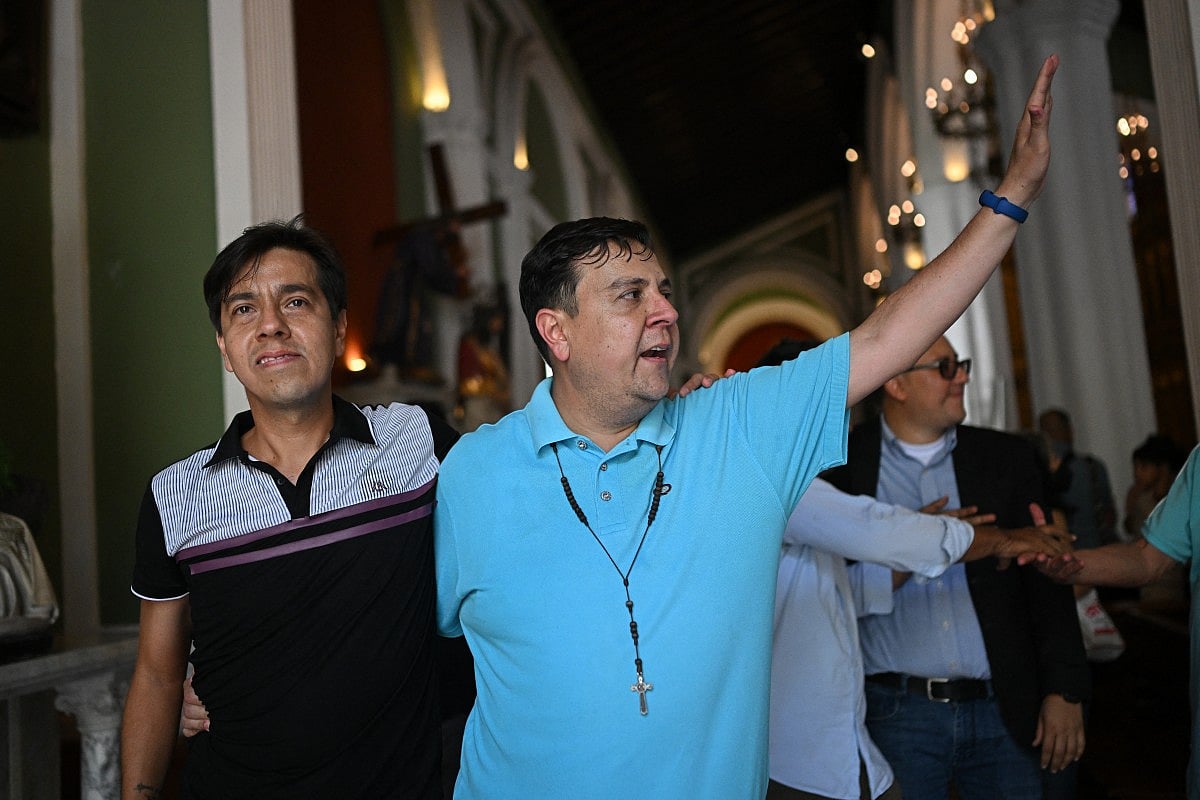
Human rights activist Javier Tarazona (R) walks with his brother Jose Rafael Tarazona (L) after his release from prison at La Candelaria church in Caracas on February 1, 2026.
AFP-FEDERICO PARRA
A renowned Venezuelan human rights activist was freed Sunday after more than four years in a notorious Caracas prison, saying he endured 1,675 days behind bars that were "too much pain for a human being."
"The message remains the same: four years and seven months in prison did not silence the truth. The truth set me free," Javier Tarazona told AFP in an interview, hours after being released from the Helicoide prison, where he was held on charges including terrorism and treason.
Freedom
The dissident's release marked the latest step by Venezuela's interim president, Delcy Rodriguez, to free political prisoners.
She has been under pressure from Washington to free prisoners after the United States ousted Nicolas Maduro on January 3 and declared it is in effect running the South American country.
Tarazona spent "1,675 days in a dark place," he said.
"It cannot be possible for this kind of case to keep happening."
To cries of "Freedom! Freedom! Freedom!" and applause from Catholic faithful, the 43-year-old was taken from prison to the forecourt of a Caracas church.
Released outside the church — authorities often do not free inmates in front of prisons — Tarazona was reunited with his brother and his mother, Teresa de Jesus Sanchez Garcia, 71.
Then came Omar de Dios Garcia, an activist arrested while accompanying Javier Tarazona on July 2, 2021.
The Tarazona brothers and De Dios, who at one point shared the same cell for four months, embraced for a long time.
"Javier is free at last," his brother Rafael told AFP.
The men prayed together and then left, as the faithful at La Candelaria church clapped.
"People are applauding out of a great longing for freedom, out of hope for reunions among Venezuelans, out of joy," Javier Tarazona said.
"People fervently wish that we can embrace one another with joy, with enthusiasm. Without fear."
Amnesty for political prisoners
One of Venezuela's most prominent jailed dissidents, Tarazona is among roughly 1,000 political prisoners, some of whom are gradually being freed as Venezuela seeks reforms after many years of authoritarian leftist rule.
He was freed two days after Rodriguez announced the closure of Helicoide and a general amnesty law.
This in turn came less than a month after US forces attacked Caracas and seized Maduro, whisking him and his wife Cilia Flores away to New York to face US drug-trafficking charges.
Tarazona is a major opposition figure in Venezuela. Amnesty International and other human rights groups had been calling for his release.
The rights group Foro Penal says there are still 711 political prisoners held in Venezuela.
The government has started to release some, but relatives of those detained and rights groups say the process is too slow. The amnesty is expected to speed things up.
Tarazona, director of the rights NGO Fundaredes, had been imprisoned since July 2021. Besides treason and terrorism he was accused of incitement to hatred.
He is known for his role in reporting clashes between military forces and guerrilla groups along the porous 2,000-kilometer (1,240-mile) Colombia-Venezuela border.
Fundaredes had accused the Maduro government of harboring Colombian guerrilla leaders in Venezuela.
US President Donald Trump says his administration is now running Venezuela and has allowed Rodriguez to be interim leader so long as she toes Washington's line -- in particular granting US access to Venezuela's vast oil reserves.
Rodriguez has quickly moved to overhaul Venezuelan society in ways sought by the Trump administration.
"The closure of the Helicoide does not solve the problem of injustice in this country. If closing the Helicoide means erasing a memory, I believe we have to work to ensure it does not happen again," Tarazona said.
Sign up for the Daily Briefing
Get the latest news and updates straight to your inbox
Network Links
GN StoreAbout Gulf NewsTerms & ConditionsReach by GNSitemapContact usPrivacy PolicyGN FocusHave your sayWork with usAdvertise with usGulf News epaperPrinting Services
Download our app
© Al Nisr Publishing LLC 2026. All rights reserved.