A billboard with images of Cuban national hero Jose Marti (R) and Venezuelan Simon Bolivar is seen at the entrance of the Cienfuegos oil refinery, 250 km southeast of Havana, on February 11, 2013.
US weighs drone threat from Cuba: report
Trump administration cites Iranian, Russian links in mounting Cuba drone concerns
Last updated:
2 MIN READ
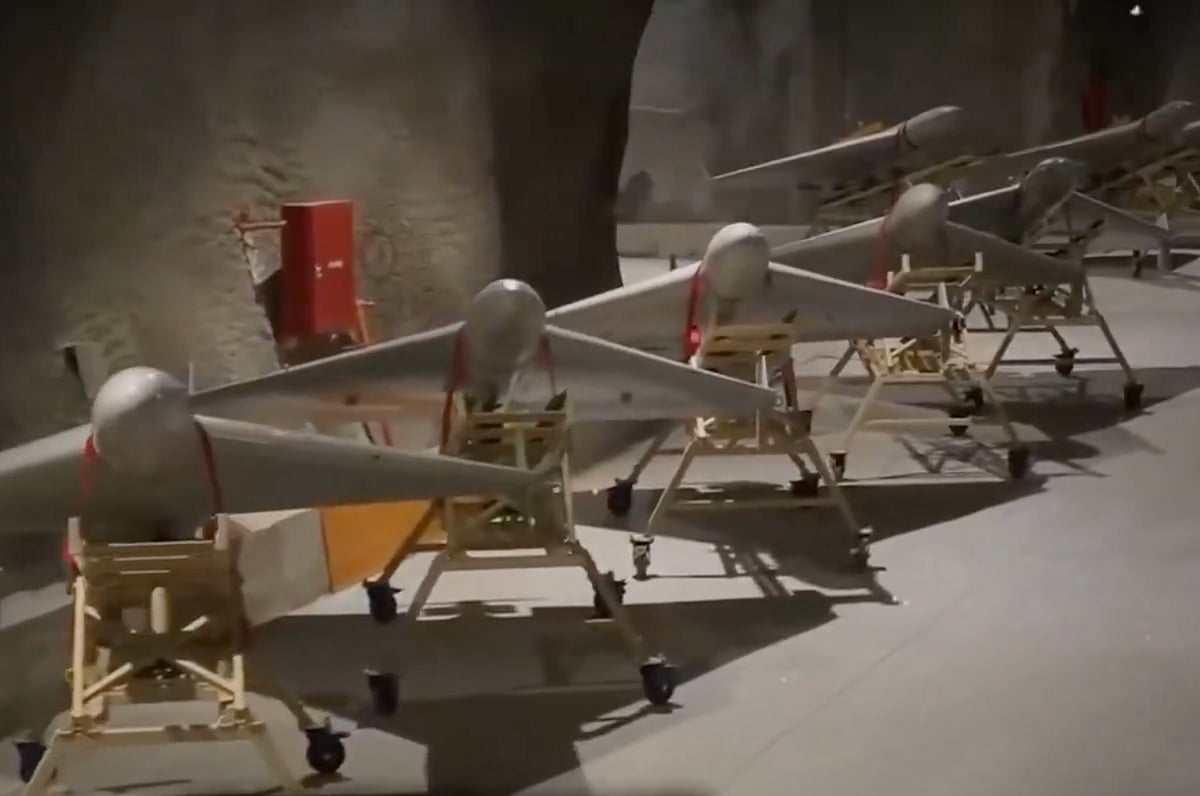
Cuba has been acquiring attack drones from Russia and Iran since 2023 and is seeking to buy more, US officials told Axios. A bunker full of Shahed-136 drones shown in an IRGC propaganda video. These one-way drones, known as "AK-47s of the sky" are low-cost platforms designed for "swarm" attacks and mass produced by Iran. Since Saturday, Iran has launched up to 2,000 one-way attack drones across the Gulf region, according to military estimates cited by The New York Times.
Screengrab
Cuba has obtained more than 300 military drones and recently began discussing plans to use them to attack the US base at Guantanamo Bay, US military vessels and possibly even Florida, Axios reported Sunday, citing classified intelligence.
The report comes as tensions simmer between Washington and Havana and amid speculation that the United States may be building an argument for military action against the communist-run island.
The development underscores the Trump administration's concern with the threat from Cuba because of developments in drone warfare and the presence of Iranian military advisers in Havana, Axios cited a senior US official as saying.
"When we think about those types of technologies being that close, and a range of bad actors from terror groups to drug cartels to Iranians to the Russians, it's concerning," the unnamed official was quoted as saying. "It's a growing threat."
Get updated faster and for FREE: Download the Gulf News app now - simply click here.
Attack drones from Russia, Iran
Cuba has been acquiring attack drones from Russia and Iran since 2023 and is seeking to buy more, US officials told Axios.
Havana slammed the report, casting the United States as the aggressor and Cuba as the victim.
"The anti-Cuban campaign aimed at justifying, without any excuse, a military attack against Cuba is intensifying by the hour, with increasingly implausible accusations," Cuban Deputy Foreign Minister Carlos Fernandez de Cossio said on X.
"The United States is the aggressor. Cuba is the country under attack, acting in self-defense."
The report comes days after CIA Director John Ratcliffe visited Havana, where Cubans have been enduring constant power outages prompted by President Donald Trump's fuel blockade.
According to Axios, Ratcliffe warned officials in Havana against engaging in hostilities.
"Director Ratcliffe made clear that Cuba can no longer serve as a platform for adversaries to advance hostile agendas in our hemisphere," Axios quoted an unnamed CIA official as saying.
Exile community
The communist island has been in a standoff with successive US administrations since the 1960s, and the southern state of Florida hosts a large, politically influential Cuban exile community.
Earlier this month Trump said the United States would be "taking over" the Caribbean island, only around 90 miles (145 km) from Florida, "almost immediately."
He has also said, following the US military operation to depose Venezuela's longtime leader Nicolas Maduro, that Cuba will be next.
US media also reported that US authorities are seeking to indict Raul Castro, the 94-year-old brother of late Cuban leader Fidel Castro.
Sign up for the Daily Briefing
Get the latest news and updates straight to your inbox
Network Links
GN StoreAbout Gulf NewsTerms & ConditionsReach by GNSitemapContact usPrivacy PolicyGN FocusHave your sayWork with usAdvertise with usGulf News epaperPrinting Services
Download our app
© Al Nisr Publishing LLC 2026. All rights reserved.