US draws up options for new Iran strikes despite Trump poll pledge
Pentagon prepares three-day offensive as Trump rules out attacks before November 3 vote
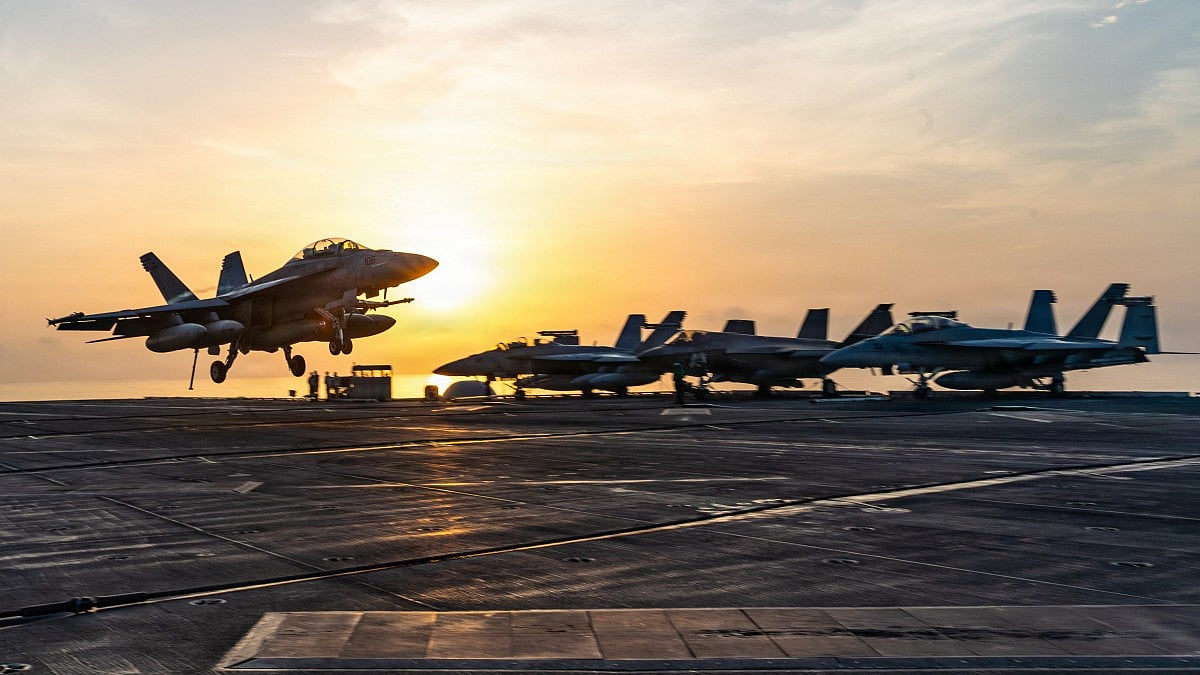
The US military is drawing up options for renewed large-scale strikes against Iran, including an intensive three-day campaign targeting missile and drone facilities, even as President Donald Trump has ruled out renewed attacks before the November 3 midterm elections.
The Pentagon, acting on Trump’s orders, has developed options to strike Iran’s missile and drone arsenal, energy facilities and other military installations, The New York Times reported on Thursday, citing American officials.
Senior national security officials, led by Vice-President JD Vance, discussed the proposals at a meeting at Camp David last Friday. The plans centre on a short but intense military campaign lasting about three days, according to people briefed on the discussions.
Potential targets include missile and drone stockpiles rebuilt by Iran’s Islamic Revolutionary Guard Corps (IRGC) since the early stages of the war, as well as energy infrastructure, Revolutionary Guard command posts and headquarters.
The latest preparations were first reported by Axios, which said the Pentagon had instructed US Central Command to complete preparations for a possible resumption of major combat operations. No final decision to launch strikes has been made.
Trump rules out pre-election strikes
Despite the military preparations, Trump said on Thursday that Washington would not attack Iran before the November 3 congressional elections.
In a social media post, he said the United States “will not be attacking Iran at any time prior to the Midterm Elections to be held in the United States on November 3rd.”
He also said Washington was “having productive discussions with the Islamic Republic of Iran.”
According to The New York Times, Trump has repeatedly resisted proposals to resume major combat operations, even as Iranian attacks on commercial shipping have intensified.
In recent months, his national security team and the Pentagon presented five proposals for significant military operations against Iran or the Iranian-backed Houthi movement in Yemen. Trump rejected all five, the newspaper reported.
However, he has again requested military options, leaving open the possibility of renewed strikes after the elections.
Three aircraft carriers
The preparations coincide with a substantial buildup of American naval forces in the Middle East.
The USS Theodore Roosevelt carrier strike group, which departed San Diego last week, is expected to join the USS George H.W. Bush and USS George Washington in the region as early as late October.
According to The New York Times, the deployment would mark the first time since 2003 that three American aircraft carriers have been assembled in the Middle East.
The combined force would temporarily include more than 20,000 sailors and Marines, along with hundreds of aircraft.
However, the concentration of forces is expected to be temporary, with the George Washington scheduled to return to its base in Japan after the Roosevelt arrives.
Iran’s improved military tactics
The Pentagon is also confronting growing challenges from Iran’s improved missile tactics, according to The New York Times.
American officials say Iranian forces have become more effective at targeting US military installations, forcing American and allied forces to expend more interceptor missiles to defend against incoming attacks.
The newspaper reported that satellite imagery supplied by Chinese companies has helped Iran improve its targeting of American bases.
The increased use of defensive missiles has raised concerns about dwindling US stockpiles, with Central Command drawing additional weaponry from Europe and Asia.
Iran has also stepped up attacks on commercial shipping. According to figures cited by The New York Times, a British Navy-run monitoring organisation recorded at least 13 ships struck since September, while US intelligence assessments put the number closer to 20.
Diplomacy continues
Meanwhile, indirect negotiations between Washington and Tehran remain under way, although disagreements over Iran’s nuclear programme continue to obstruct progress.
American officials want an agreement on Iran’s nuclear ambitions to take priority, while Iranian negotiators insist the issue should be addressed later in the process, according to The New York Times.
AP reported that Iranian Foreign Minister Abbas Araghchi said Tehran was reviewing a US counterproposal concerning the reopening of the Strait of Hormuz.
Some senior Trump administration officials have also questioned whether renewed military action would persuade Tehran to make concessions, arguing that economic pressure should be given more time.
Despite the extensive military preparations, The New York Times said it remains uncertain whether Trump will authorise another major offensive, even after the midterm elections.
Sign up for the Daily Briefing
Get the latest news and updates straight to your inbox
Network Links
GN StoreDownload our app
© Al Nisr Publishing LLC 2026. All rights reserved.