Iran, Oman move closer to Hormuz shipping 'deal': What it means for global oil trade
Tehran confirms temporary deal on Strait of Hormuz navigation
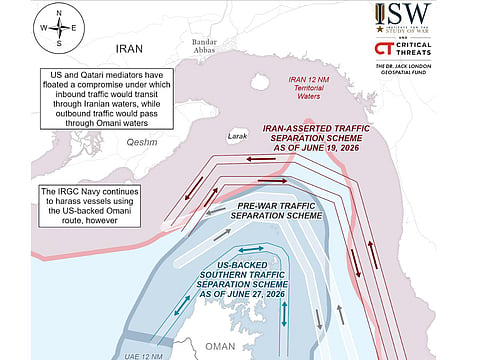
Iran has confirmed progress towards an agreement on shipping routes through the strategically important Strait of Hormuz.
The latest reported "deal" has not yet become a fully implemented, permanent maritime arrangement.
On November 15, 2026, Hassan Ghashghavi (also spelled "Qashqavi"), spokesman for the Iranian parliament's National Security and Foreign Policy Committee, said the committee had "completed" its expert review of a plan concerning the Strait of Hormuz and "reached an agreement with two coastal states" on shipping corridors.
Get it: Fast, verified news for FREE ... download the Gulf News app — simply click here
The report did not identify the two coastal states.
According to a report by China's Xinhua news agency, citing Iran's Tasnim news agency, the proposed shipping lanes would initially operate on a "temporary basis" before becoming permanent.
The plan was awaiting consideration by Iran's parliamentary leadership and a vote in the full parliament, said Ghashghavi.
Which countries are involved?
The publicly documented bilateral negotiations are between Iran and Oman, the two countries bordering the Strait of Hormuz.
Iranian parliamentary officials have referred to an understanding with two coastal states, but the November 15 reporting does not clearly identify a separate third-country participant.
Oman and Iran have already announced a phased framework for restoring safe navigation.
In a joint statement dated August 25, 2026, their foreign ministers outlined plans for:
A temporary joint navigational corridor.
Joint mine-clearance operations.
Technical negotiations towards a permanent shipping route.
Information-sharing and maritime traffic management.
Cooperation on navigational and security services.
Oman's Foreign Ministry published the joint statement, providing independent official confirmation of the bilateral framework.
Latest developments: November 16–18
November 16 — Iran says the plan is nearly complete.
Iranian Parliament Speaker Mohammad Bagher Ghalibaf was quoted as saying that Tehran and Muscat had reached a "mutual understanding" on the shipping corridor and "traffic separation scheme".
Foreign Ministry spokesman Esmaeil Baghaei separately confirmed an understanding on the geographical coordinates of the proposed route.
However, the arrangement still required formal approval and implementation by the authorised bodies of both countries.
AnewZ and Reuters carried these developments.
November 17 — Iranian foreign minister visits Oman.
Abbas Araghchi travelled to Muscat for discussions with Omani officials, as both governments pursued maritime security arrangements.
Araghchi stated that his Muscat visit was a "success, with constructive talks on a new, independent regional security framework and safe passage through the Strait of Hormuz", Beirut-based Al Mayadeen reported.
November 18 — Oman and Iran reaffirm maritime security cooperation.
According to Oman's official news agency, carried by Times of Oman, Araghchi met Sultan Haitham bin Tarik and Foreign Minister Badr Albusaidi in Muscat.
The discussions covered regional developments, diplomatic de-escalation, maritime passage security and the uninterrupted flow of international navigation and trade.
However, the meeting did not produce a publicly announced final navigation agreement.
What's confirmed
Iran and Oman have reached a mutual understanding on proposed shipping routes.
Iran's parliamentary committee reported agreement involving two coastal states on November 15.
The framework remains subject to formal approval and implementation.
There is no confirmed evidence that a permanent, fully operational agreement has taken effect.
The November 18 diplomatic meeting reaffirmed maritime cooperation but did not announce final implementation.