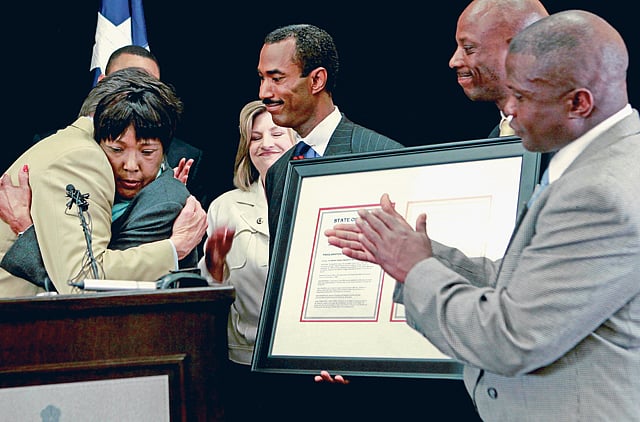
Fort Worth : The family of a Texas man who died while imprisoned for a rape he didn't commit gathered at his graveside on Friday with a framed copy of the state's first posthumous pardon — a document that finally proves his innocence.
Governor Rick Perry granted Timothy Cole's pardon nearly three weeks ago. He gave Cole's relatives the pardon document earlier on Friday at a Fort Worth hotel, completing their long-fought ordeal.
"This is a solemn occasion but it's also a joyful occasion," Perry said. "It's solemn because we're very mindful of the loss that was suffered by the Cole family, and we're joyful because we've restored Timothy's good name."
Cole was cleared by DNA testing in 2008, nine years after he died in prison at age 39 of asthma complications. He had spent more than 13 years behind bars, steadfastly maintaining his innocence of the rape of a Texas Tech University student in Lubbock.
Despite urgings for the pardon from Cole's family, Perry had said he lacked the authority to grant a posthumous pardon. But he granted it earlier this month after the state attorney general clarified the law in January. The Innocence Project of Texas then submitted a formal pardon request to the Board of Pardons and Paroles.
"Our family would like to thank those who worked so diligently to make this day come to pass," said Cole's mother, Ruby Session. She thanked her son, Timothy, too, "for his contributions, even though he's not here, towards affecting change and improvement in the criminal justice system".
Texas leads the United States in inmate exonerations. More than 40 Texas inmates have been released after being cleared — most exonerated by DNA evidence, according to the Innocence Project of Texas. Four of those men attended the presentation at the hotel.
Cole's brother, Cory Session, urged inmates who are innocent to keep fighting to clear their names and not to "surrender or languish in their cells".
Sign up for the Daily Briefing
Get the latest news and updates straight to your inbox
Network Links
GN StoreDownload our app
© Al Nisr Publishing LLC 2026. All rights reserved.