Harvey Kaye, Executive Chairman of US Critical Materials, says the company is ready to process and supply critical rare earths and gallium from Montana's high-grade Sheep Creek deposit starting in the second half of 2026, potentially bolstering US "sovereignty" in defence, EVs, and clean energy.
Rare-earth push stalls: US permitting delays undercut bid to curb China’s grip on critical minerals
US rare-earth hopes hinge on faster permits, public-private backing, firm 'offtakes'
Last updated:
4 MIN READ
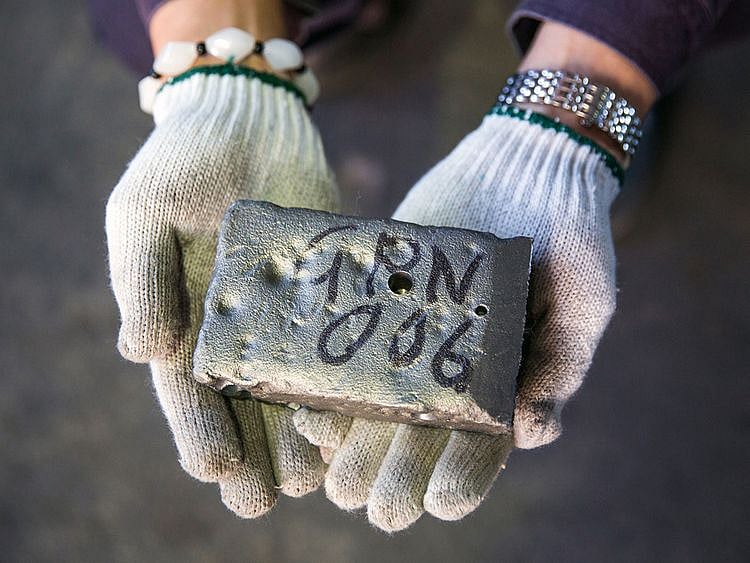
The export of rare-earth technologies has become the new object of big-power relations. In the US, bringing a new mine online, including development and planning, can take an average of 29 years, making it one of the longest lead times globally.
NYT
In the global race for critical minerals — used in defence, EVs and power-generating turbines — America seems to be shooting itself in the foot.
How?
Through a long and winding permitting process which stands in the way of utilising its own critical mineral resources.
Securing mining permits in the US typically takes seven to 10 years, according to an industry report.
However, bringing a new mine online, including development and planning, can take an average of 29 years, making it one of the longest lead times globally.
USGS analysis
A 2025 analysis by the US Geological Survey underscores a major structural problem: the US remains "highly dependent" on imports for many critical minerals, with concentrated foreign supply chains that pose economic and security risks.
The report’s modeling of “trade disruption scenarios” shows how US GDP and industrial output could be affected by "supply shocks" — highlighting that some critical minerals have sole or highly concentrated sources abroad, specifically China, creating "single points of failure".
This makes the US vulnerable if geopolitical tensions or trade restrictions interrupt supplies.
The process involves complex federal and state regulations, including environmental reviews.
This chokes the industry, especially the domestic production of high-quality magnets, and deprives America of keeping its strategic industrial advantage, an industry expert warned.
In an exclusive interview with Gulf News, Harvey Kaye, Executive Chairman of US Critical Materials, said there's a way to "speed things up".
These include:
"Quicker" permitting
Public‑private funding for processing and magnet plants, and
Long‑term purchase commitments from automakers, turbine makers, and defence contractors.
"More US government off-takes would also help," said Kaye, who recently testified before the US Congress (Committee on Small Business) on the "urgent need" to secure a domestic rare earth supply chain and reduce reliance on foreign adversaries.
US Critical Materials is a private company developing high-grade rare earth projects, notably the Sheep Creek deposit in Montana.
Kaye brings over 45 years of leadership experience in finance, strategy, and executive management to the company's efforts in securing a domestic, independent supply chain of critical minerals.
Secretary of State Marco Rubio speaks at a news conference during the Critical Minerals Ministerial meeting at the State Department, Wednesday, Feb. 4, 2026 in Washington. (AP Photo/Kevin Wolf)
China’s leverage
Amid supply contraints that provides a backdrop to US President Donald Trump's meeting in Beijing with Chinese leader Xi Jinping this week, Kaye pointed out a key challenge: China already dominates rare‑earth refining, and the new quota rules give it even "tighter control".
"It (China) could realistically pull 20–40% of exportable refined supply off the market without hurting its own industries," Kaye added.
But even small cuts would cause fast price spikes because EVs, wind turbines, and defense systems can’t easily substitute these materials.
Harvey Kaye, Executive Chairman of US Critical Materials, warned that the US defence sector is "vulnerable" because rare earths are low in volume but essential for jets, missiles, radars, and satellites.
Natural 'scarcity'
Over the next decade, the world faces both natural scarcity from rising demand and slow Western permitting, and intentional scarcity if Beijing chooses to restrict supply.
Kaye explained why US and allied production isn’t scaling faster
"Every rare‑earth deposit needs its own processing method, and separation plants are complex and expensive" said Kaye, whose company targets 2026 production from its Montana site.
The site is described as the "highest-grade rare earth deposit" in the US.
US permitting can add 5–10 years before a project even starts construction.
Price swings, often driven by China, make investors cautious -- unless there are long‑term contracts or government backing.
FILE - Workers use machinery to dig at a rare earth mine in Ganxian county in central China's Jiangxi province on Dec. 30, 2010. (Chinatopix via AP, File)
National‑security equation
Kaye describes what a China‑free chain looks like
"The U.S. defense sector is vulnerable because rare earths are low in volume but essential for jets, missiles, radars, and satellites," said Kaye.
A targeted Chinese restriction on heavy rare earths or finished magnets could slow production within months.
"A realistic China‑minimised supply chain would rely on mining in the US, Canada, Australia, and Europe; new separation plants across allied countries; and magnet factories that take 2–4 years to build and another 2–3 years to qualify for defence use.
"Big problem," Kaye stated.
Geopolitical risks: Concentration of processing
The Council on Foreign Relations (CFR) analysis of the U.S. critical minerals dilemma emphasizes that even as the U.S. identifies dozens of minerals as “critical” for high-tech and defense sectors, it remains heavily reliant on China and a small set of other countries for processing and refining.
China, for example, dominates refining capacity for rare earth elements, cobalt, lithium, and graphite — creating leverage that could be used as a political or economic tool. This concentrated control heightens vulnerability to export restrictions and geopolitical coercion, constraining U.S. leverage and freedom of action.
This picture shows bags containing a mixture of rare earth elements during a visit of the facility of Australian mining firm Lynas in eastern Malaysia's Gebeng on April 8, 2026.
'Brittle' supply chains
An in-depth brief from the Atlantic Council stresses that US critical minerals supply chains are “in crisis” because of geopolitical concentration, limited domestic capacity, and physical risks like extreme weather.
By simulating disruptions, the study found that US preparedness for major shocks (whether political or environmental) is "limited".
The council also found that supply resilience tools available within its domestic industry were "underdeveloped".
Because developing new mines and processing facilities takes years, so near-term resilience remains "weak" — even as global demand surges.
This creates a conundrum: "Costs would be higher than buying from China."
"In this landscape, US Critical Materials is an example of the kind of domestic, high‑grade resource that helps reduce dependence" on China’s supply decisions," he said.
Sign up for the Daily Briefing
Get the latest news and updates straight to your inbox
Network Links
GN StoreAbout Gulf NewsTerms & ConditionsReach by GNSitemapContact usPrivacy PolicyGN FocusHave your sayWork with usAdvertise with usGulf News epaperPrinting Services
Download our app
© Al Nisr Publishing LLC 2026. All rights reserved.