Ford CEO’s dire warning: Chinese EVs will crush America’s auto heartland
Clash of subsidies, security and jobs as Chinese EVs target vulnerable US market
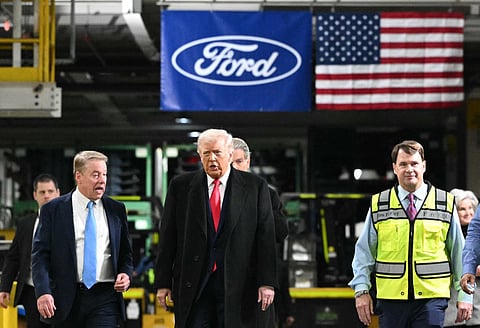
Ford CEO Jim Farley has issued a stark warning: Chinese-made electric vehicles, developed and manufactured with generous state subsidies, will crush US carmakers through low-cost offerings.
In a recent interview, the auto executive urged the US government to block Chinese-made electric vehicles from entering the market.
“We should not let them into our country,” Farley declared. “Manufacturing is the heart and soul of our country, and for us to lose that to those exports would be devastating.”


He highlighted the massive government subsidies Chinese carmakers receive, which allow them to slash prices and threaten domestic automakers like Ford.
“There is no way this is a fair fight,” he emphasised.
Why US-made EVs cost a fortune
The race to global EV dominance is not an equal competition.
American EVs carry hefty price tags due to stringent labour laws, high wages, and rigorous safety and environmental regulations.
Building a factory in the US demands compliance with the National Labor Relations Act, OSHA standards, and EPA emissions rules, driving up costs.
Supply chain constraints also hurt — critical battery minerals like lithium and cobalt often face tariffs or delays, while domestic production lags.
Tesla’s Model 3 starts at $42,000, and Ford’s F-150 Lightning exceeds $50,000 before incentives, reflecting these structural burdens.
Why Chinese EVs are cheaper and tempting
China’s EVs, by contrast, benefit from state-backed largesse.
Beijing pours billions into subsidies, cheap loans, and "land grants" for firms like BYD and NIO, enabling models like the BYD Seagull to retail under $10,000 in China.
Lower labour costs — workers in China earn a fraction of US wages — and laxer environmental rules further cut expenses.
Vertical integration, with giants like CATL dominating battery production, slashes logistics costs.
These vehicles offer compelling range, fast charging, and sleek designs at half the US price, making them a consumer magnet.
National security alarm
Farley also raised alarms about data risks, noting Chinese EVs’ 10+ cameras could harvest sensitive mapping and behavioural data, posing espionage threats on US roads.
With the 2026 Strait of Hormuz crisis already spiking fuel costs and pushing EV demand, Chinese imports could flood a vulnerable market, gutting jobs in Michigan and Ohio while raising security red flags.
Farley’s call underscores a high-stakes clash of economics, geopolitics, and the very survival for America’s auto industry.


