Why Trump called Nvidia CEO Jensen Huang for China trip at the last minute
Semiconductor exports, AI chip restrictions emerged as key issues in US-China talks
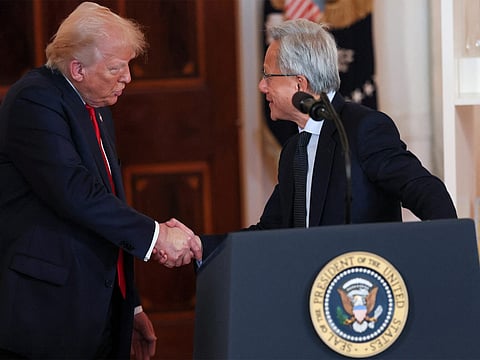
Dubai: Nvidia CEO Jensen Huang boarded Air Force One midway through US President Donald Trump’s trip to China after what was a last-minute invitation tied closely to growing tensions over semiconductor exports and artificial intelligence chips.
Get updated faster and for FREE: Download the Gulf News app now - simply click here.
Trump arrived in Beijing on Wednesday for the first visit by a sitting US president to China in nearly a decade, accompanied by senior officials and American business leaders as Washington and Beijing prepare for talks on trade, technology and market access.
Huang, whose Nvidia chips power much of the global AI industry, was not among the executives who initially departed Washington with Trump on Tuesday, raising speculation over whether the company had been sidelined amid escalating disputes over semiconductor restrictions and AI exports to China.
Asked about the reports during a CNBC interview earlier Tuesday, Huang avoided directly addressing whether he had been invited. “If invited, it would be a privilege,” Huang said. Hours later, Huang joined the delegation in Anchorage, Alaska, where Air Force One stopped to refuel before continuing to Beijing.
Politico and other outlets later reported that Trump personally called Huang after media coverage surrounding the apparent snub gained traction. Trump later denied reports that Huang had not been invited. “Jensen is currently on Air Force One,” Trump wrote on Truth Social, adding that Huang was among the 17 CEOs joining the delegation.
Semiconductor battle
Huang’s inclusion highlighted how semiconductor policy has become central to the U.S.-China relationship. Washington has imposed increasingly strict export controls on advanced AI chips and semiconductor equipment destined for China, arguing the technology could strengthen Chinese military and strategic capabilities.
Nvidia has been caught in the middle of that fight. The company dominates the market for graphics processing units used to train advanced AI models, but restrictions have blocked Chinese companies from accessing Nvidia’s most advanced chips.
Nvidia has spent months lobbying for wider access to the Chinese market, which Huang has previously described as a major long-term opportunity. China has meanwhile pushed Washington to ease restrictions on semiconductor technology and chipmaking tools during ongoing trade discussions.
Huang’s presence on the trip has fueled expectations that chip exports could become part of broader negotiations between Trump and Chinese President Xi Jinping.
The Trump-Xi meetings are expected to cover tariffs, technology restrictions, rare earth exports and investment flows as both countries attempt to stabilize relations between the world’s two largest economies.