This screen grab taken from a video shared by Israeli Defence Minister Israel Katz on X on September 10, 2026 shows the moment of an explosion that Israel says destroyed key underground infrastructure built by the Iran-backed Hezbollah group on the strategic Ali al-Taher ridge in south Lebanon.
Loss of 'Hezbollah Heights' in Lebanon triggers political infighting in Tehran: report
Loss of key Hezbollah ridge near Lebanon's Litany River fuels power struggle in Tehran
Last updated:
2 MIN READ
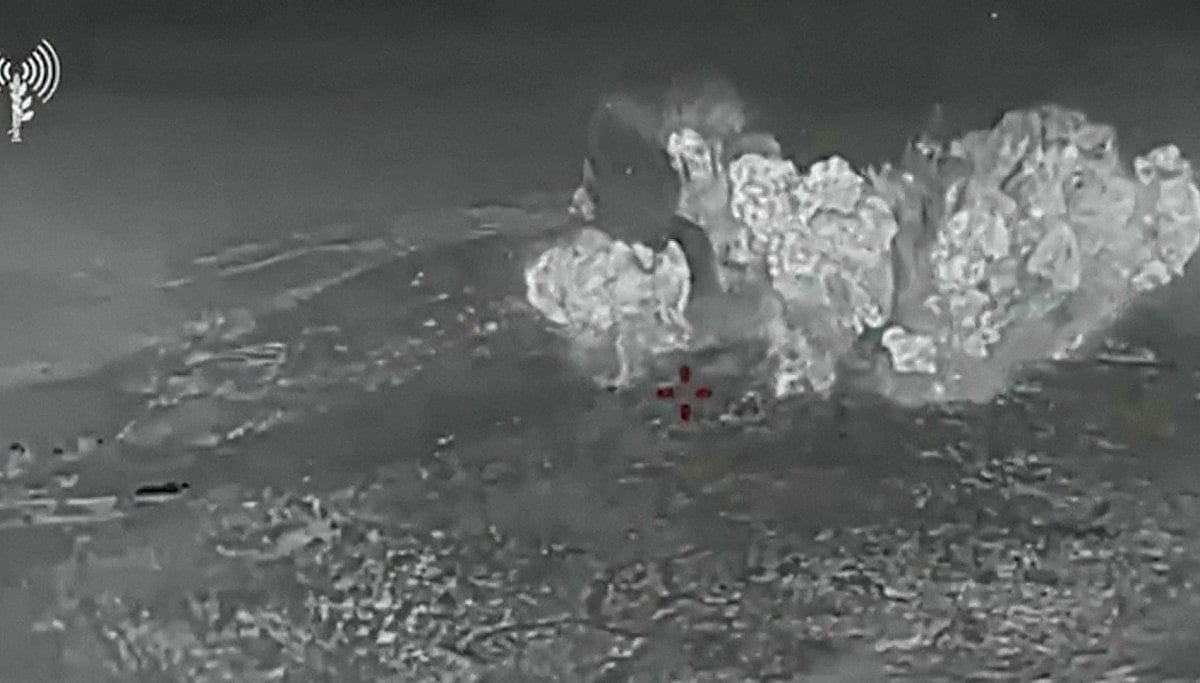
This screen grab taken from a handout video released by the Israeli army on September 10, 2026, shows explosions that Israel says destroyed key underground infrastructure built by the Iran-backed Hezbollah group on the strategic Ali al-Taher ridge in southern Lebanon.
AFP
The loss of the "Ali al-Taher heights" in southern Lebanon — also known as "Hezbollah Heights" — to Israeli forces has triggered a fierce political fight in Tehran.
Ali al-Taher ridge overlooks Nabatieh in southern Lebanon and has long been viewed as a strategically important Hezbollah position.
The ridge sits roughly 15 km from the Israeli border and north of the Litani River, an area central to the group’s military presence in southern Lebanon.
Israeli forces announced that they had taken operational control of the ridge on Sept. 3.
On Sept. 10, they destroyed the underground network in a major detonation, which Israeli officials said completed the consolidation of a security zone in the area.
Get it: Fast, verified news for FREE ... download the Gulf News app — simply click here
Now, Iranian hardliners are accusing the negotiators of a June agreement with Washington of failing to protect Hezbollah’s Lebanese front, Iran International reported.
Israel said it had destroyed more than 2km of underground Hezbollah infrastructure beneath the strategic ridge, including a command complex, weapons storage sites and living quarters.
The operation came after the Israeli military declared “operational control” over the area above and below ground.
2-km tunnel housed Hezbollah command complex
The Israeli military said the network housed a central command complex for Hezbollah’s Badr Unit, as well as command rooms, weapons depots and underground living quarters.
It said troops found rockets, missiles, drones, anti-tank weapons, mines and other explosive devices. Those claims could not be independently verified.
Reports said the tunnel system extended for more than 2 kilometers. Israeli media said the demolition involved more than 1,100 metric tons of explosives.
Deal becomes target
The military setback quickly became a domestic political weapon in Iran, the UK-based Iran International reported.
Hardliners have turned their anger toward the officials who negotiated the June 28 understanding with the United States in Islamabad.
The agreement began with a commitment to halt military operations “immediately and permanently” across all fronts, including Lebanon, and explicitly referred to Lebanon’s sovereignty and territorial integrity.
Iranian officials had promoted the clause as a "diplomatic win".
Parliament Speaker Mohammad-Bagher Ghalibaf, who was identified in Iranian reporting as Tehran’s chief negotiator in Islamabad, repeatedly described the inclusion of Lebanon as a victory for Iran.
Critics now argue that the agreement restrained Tehran while failing to stop Israeli operations in Lebanon.
Their case has sharpened after the destruction at Ali al-Taher ridge tunnel, which they say underscores the gap between the agreement’s promises and events on the ground.
Network Links
GN StoreAbout Gulf NewsTerms & ConditionsReach by GNSitemapContact usPrivacy PolicyGN FocusHave your sayWork with usAdvertise with usGulf News epaperPrinting Services
Download our app
© Al Nisr Publishing LLC 2026. All rights reserved.