It survives 70°C: Scientists discover remarkably heat-resistant life-form
Newly identified amoeba can reproduce at temperatures hot enough to kill most organisms
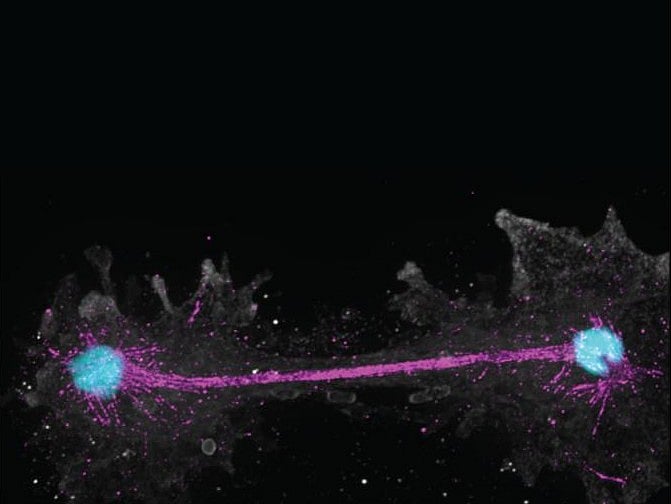
Scientists have discovered a microscopic organism capable of surviving exposure to temperatures of 70°C, setting a new heat-tolerance record for the broad group of life that includes animals, plants and fungi.
Researchers found the newly identified single-celled amoeba living in geothermal springs in California’s Lassen Volcanic National Park.
Get updated faster and for FREE: Download the Gulf News app now - simply click here.
Named Incendiamoeba cascadensis, the organism can reproduce at temperatures up to 63°C, remain active at 64°C, and recover after exposure to 70°C, researchers found.
Scientists say that pushes the known temperature limit for eukaryotic organisms higher than previously recognised.
The findings were published in the scientific journal Cell.
Living where most organisms cannot
Researchers discovered the amoeba in hot springs with roughly neutral acidity.
Researchers collected samples from the geothermal environment and studied the organism under different temperatures in the laboratory.
It proved remarkably resilient.
At 63°C, the amoeba could still divide by mitosis—the process by which a cell divides.
At 64°C, it remained active even though it was no longer reproducing.
At temperatures as high as 70°C, the organism entered a dormant state but could recover after temperatures fell.
Researchers said that ability establishes a new upper-temperature record for known eukaryotic life.
Previous records had been associated with certain heat-tolerant fungi and red algae.
Why the discovery matters
Eukaryotes are organisms whose cells contain a nucleus.
Humans, animals, plants, fungi and many microscopic organisms all belong to this enormously diverse group.
Some simpler microorganisms, particularly certain archaea, are already known to survive at substantially higher temperatures.
But eukaryotic cells are generally more structurally complex, and extreme heat can damage proteins, DNA and other cellular machinery they depend upon.
Understanding how Incendiamoeba cascadensis survives therefore gives scientists another opportunity to investigate how complex cells adapt to environments normally considered hostile.
Researchers found that the amoeba changes its shape and cellular structure as temperatures rise.
At extreme temperatures, it forms protective structures and activates genes associated with stress responses and DNA repair.
Predator of the hot springs
Despite its microscopic size, the amoeba occupies an important position in its unusual ecosystem.
It feeds on heat-adapted bacteria, making it effectively a predator within the hot-spring microbial community.
Living at such extreme temperatures may also provide an advantage: relatively few other eukaryotic organisms can tolerate the same conditions, reducing competition.
The discovery could also influence research into the potential limits of life beyond Earth.
Scientists studying extreme environments often use organisms known as extremophiles to understand the conditions under which life can survive.
Researchers are not suggesting that the California amoeba proves life exists elsewhere.
But every discovery that expands life’s known limits provides another clue about the range of environments in which living organisms might potentially function.
For Incendiamoeba cascadensis, that limit has now been pushed to a temperature approaching that of scalding water.
Network Links
GN StoreDownload our app
© Al Nisr Publishing LLC 2026. All rights reserved.