The B-21 "Raider", the long-range stealth bomber that can be armed with nuclear weapons, rolls onto the runway at Northrop Grumman's site at Air Force Plant 42.
China threat fuels push for more B-21 bombers: US Air Force
Modernisation push targets bombers, tankers and airlift as rivals close capability gap
Last updated:
3 MIN READ
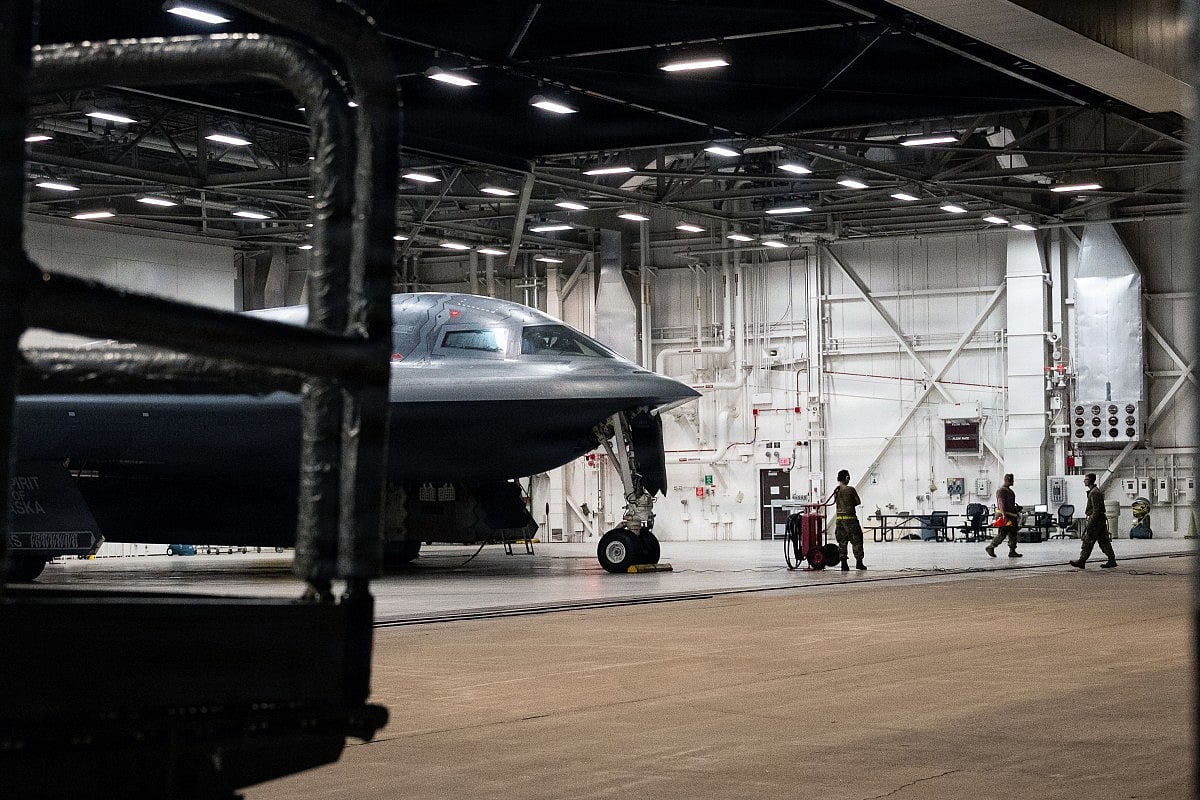
In this US Air Force handout photo released by US Central Command public affairs, US Airmen conduct preflight operations prior to a B-2 Spirit stealth bomber departing base in the US Strategic Command area of responsibility in support of Operation Epic Fury on March 29, 2026.
AFP--
Washington: Senior US Air Force officials told lawmakers that the rapidly evolving threat from China is forcing the Pentagon to reassess whether the planned fleet of 100 B-21 bombers will be enough, as Congress pressed the military on ageing aircraft, tanker vulnerabilities and drone threats.
Testifying before the House Armed Services subcommittee on projection forces, Lieutenant General David Tabor said the Air Force now believes it may need more than the currently planned fleet of B-21 stealth bombers to meet future threats in contested environments.
“My sense is that we do need more than 100,” Tabor told lawmakers, while noting that internal reviews were still underway to determine the precise number required.
Republican Congressman Rob Wittman said the strategic environment had changed dramatically since the B-21 programme was conceived more than a decade ago.
“The capability that aircraft provides is pretty amazing,” Wittman said, adding that the bomber would be critical in a “highly contested environment” where the US faces “a large-scale threat”.
The hearing focused heavily on the Air Force’s fiscal year 2027 budget request and the growing urgency of modernising ageing fleets of bombers, tankers and airlift aircraft.
Subcommittee chairman Trent Kelly warned that US adversaries were “investing heavily in advanced capabilities as they try to close in on our lead”.
“Our bomber fleet is the cornerstone of our strategic deterrent,” Kelly said. “Our mobility platforms are the backbone of our operational effectiveness.”
Air Force acquisition chief William Bailey defended the Pentagon’s efforts to modernise aerial refuelling fleets and improve aircraft survivability in future conflicts.
Bailey said the Air Force was investing in advanced tanker survivability systems, satellite communications and countermeasures as concerns grow over operating large aircraft near contested zones.
“We have hundreds of tankers,” Bailey said. “We have hundreds and hundreds of airlifters that also face those same style of threats.”
Tabor said the Air Force planned to fully modernise the KC-135 tanker fleet over the next six years with upgraded communications, tactical data systems and hybrid satellite connectivity.
Lawmakers also questioned officials about drone threats following recent conflicts in Ukraine and the Middle East.
Congressman Eugene Vindman asked whether the Air Force was adequately investing in offensive and defensive unmanned systems.
Bailey acknowledged the rapidly changing threat environment and warned against relying on expensive missile interceptors against low-cost drones.
“Shooting up a $1 million weapon at a $4,000 drone does not make sense,” Bailey said.
The Air Force said it was working closely with Joint Task Force 401 and the broader “Golden Dome” missile defence initiative to strengthen counter-drone capabilities at military bases and overseas operations.
The hearing also highlighted concerns over the ageing US airlift fleet. Congressman Joe Courtney noted that some tanker aircraft average nearly 64 years in age, while officials confirmed that planning was underway for a next-generation airlift platform to eventually replace older C-17 and C-5 aircraft.
Sign up for the Daily Briefing
Get the latest news and updates straight to your inbox
Network Links
GN StoreAbout Gulf NewsTerms & ConditionsReach by GNSitemapContact usPrivacy PolicyGN FocusHave your sayWork with usAdvertise with usGulf News epaperPrinting Services
Download our app
© Al Nisr Publishing LLC 2026. All rights reserved.