Aerial view of the new 50-meter steel statue of Our Lady of Aparecida, national patroness of Brazil, designed by artist Gilmar Pinna in Aparecida, Sao Paulo State, Brazil, on October 12, 2024.
Brazil election clash: Lula and Bolsonaro battle over Patron Saint Our Lady of Aparecida and religious vote
Lula and Bolsonaro clash over Our Lady of Aparecida in faith-fueled campaign
Last updated:
3 MIN READ
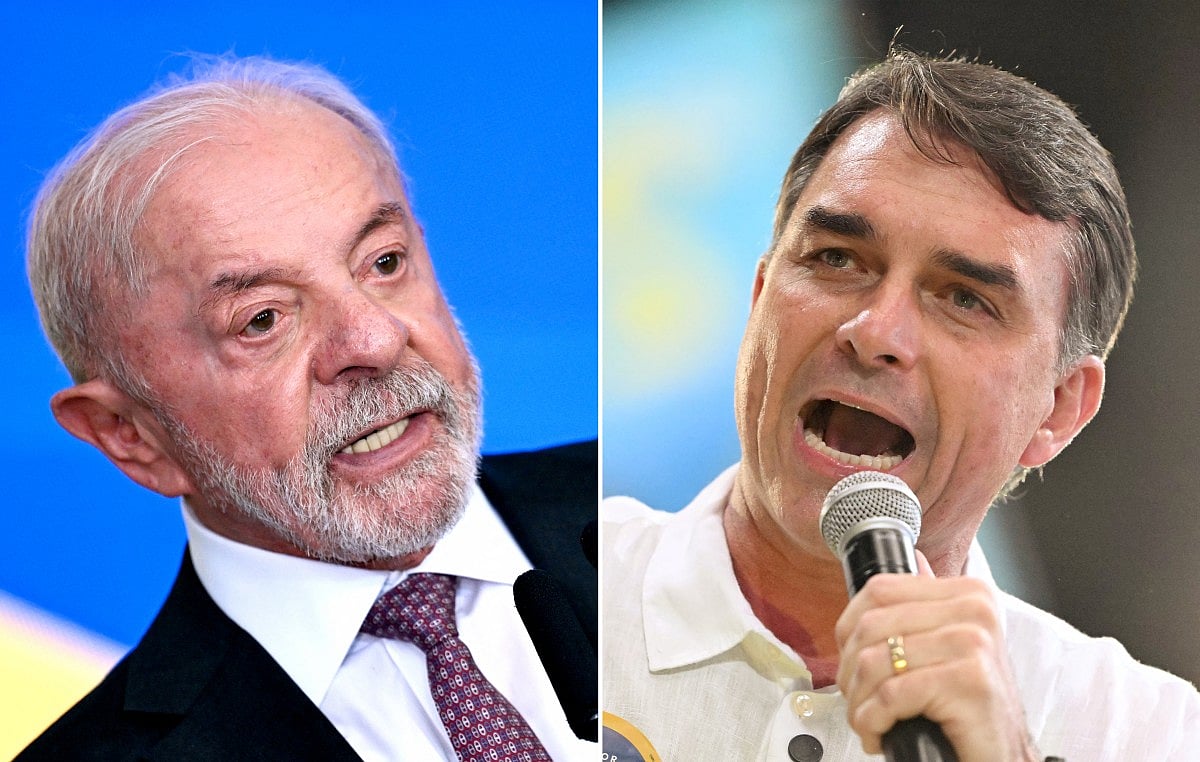
This combination of file pictures created on Setember 29, 2026, shows Brazil's President Luiz Inacio Lula da Silva at the Planalto Palace in Brasilia on September 16, 2026; and Brazil's right-wing Presidential candidate Flavio Bolsonaro at the Maracanazinho gymnasium in Rio de Janeiro, Brazil, on August 22, 2026.
AFP
Brazil's patron saint has become a political flashpoint as the predominantly Catholic country's leading presidential candidates make a last-ditch effort to court religious voters.
Senator Flavio Bolsonaro has lashed out at President Luiz Inacio Lula da Silva for apparently feeding rumours about his right-wing rival, with the saga exposing tensions between Brazil's Catholic majority and its expanding evangelical population.
In recent days, the leftist incumbent has referred to claims that Bolsonaro plans to strip Our Lady of Aparecida of her patron saint status if elected.
Evangelicals, a booming denomination in Brazil with growing political power and an important right-wing voter base, do not recognise the saint.
"As long as I am president...no one is going to disrespect Our Lady of Aparecida," Lula, who is seeking a fourth nonconsecutive term, said at a rally on Monday.
Bolsonaro, 45, has frequently invoked religion on the campaign trail, and denies the accusations.
"Everyone knows that I respect religions. All of them!" he said, accusing the government of spreading "fake news."
'Oxygen to rumours'
The quarrel erupted after media reports that figures in the Catholic Church were concerned about the future status of the beloved saint, who is depicted in Brazil as a black woman.
The unearthing of an abandoned 2007 bill, initially proposed by a Bolsonaro-aligned lawmaker, to demote the patron saint subsequently unleashed rampant speculation online.
The president's decision to "give oxygen to rumours" signals a sea change in how he engages with religious voters, said Victor Araujo, a comparative politics professor at the UK's University of Reading.
"By actively engaging with religious controversies and bringing them into the mainstream campaign, Lula is trying to neutralize Bolsonaro's moral appeal and force his rival onto the defensive on religious grounds," Araujo told AFP.
Lula currently has 48 percent of Catholic voting intentions on Sunday compared with 29 percent for Bolsonaro, according to a Quaest survey.
Evangelical voting intentions go in the opposite direction, with 46 percent for Bolsonaro and 27 percent for Lula.
Janaina, 51, a Catholic art teacher working in Rio de Janeiro, firmly believes that the right-wing camp has the saint in its sights.
"Religion has nothing to do with politics," she said, voicing concern that Evangelicals "want this other religion to grow…and attack the Catholic Church."
Andre Paschoal, a worshipper at the same church, is less convinced.
"Lula took advantage of this and he will certainly lose many votes because of it," the civil servant, 58, told AFP.
"Instead of being sincere, he is making use of an artificial lie to sway Catholics or Evangelicals in his favor," Paschoal believes.
'Pure politics'
"It's pure politics," echoed Tereza Helael as she made her way to an evangelical service in the city center.
"It's meant to target a certain area, a certain group… just to get votes," the 70-year-old artist said.
Brazil, known for its Christ the Redeemer statue looming over Rio de Janeiro, hosts the world's second-largest Christian population after the United States, according to the Pew Research Center.
Catholics have historically dominated that cohort, but rapid demographic changes in recent years have seen the country's evangelical population shoot up.
Ultra-conservative actors from this community have provided crucial political backing to Flavio Bolsonaro's father, ex-president Jair Bolsonaro, who was convicted of plotting a coup.
"This controversy is a reaction to these churches' political activity becoming ever more aggressive in recent years," said Rodrigo Nunes, a philosophy professor at the Pontifical Catholic University of Rio de Janeiro.
However, he said, most Catholics are perturbed by the rumor "because it challenges their tacit, unspoken position as the dominant religion in Brazil."
Network Links
GN StoreAbout Gulf NewsTerms & ConditionsReach by GNSitemapContact usPrivacy PolicyGN FocusHave your sayWork with usAdvertise with usGulf News epaperPrinting Services
Download our app
© Al Nisr Publishing LLC 2026. All rights reserved.