Bombs loaded, targets picked: Why Trump pulled back from striking Houthis
US weighed Houthi strikes as Trump balanced Saudi security, Iran war risks, Red Sea threa
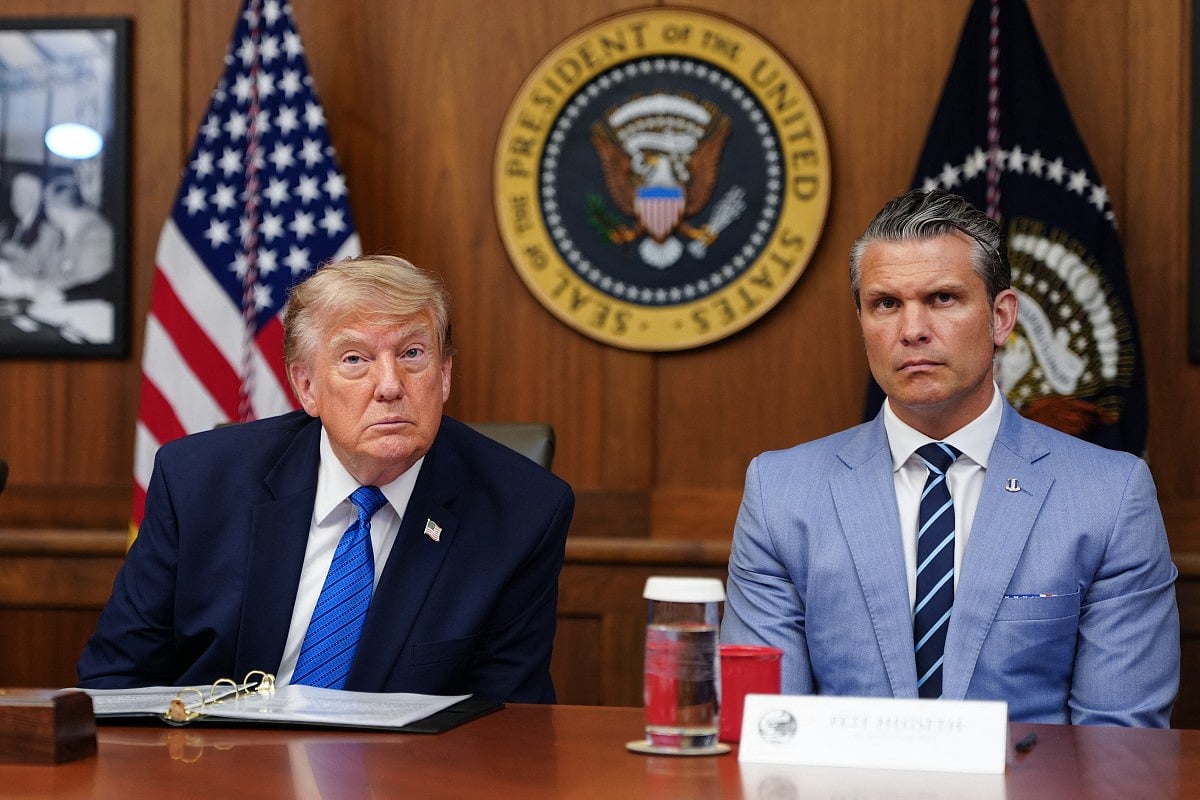
Dubai: The targets had been selected. Bombs were being loaded onto US warplanes. An American attack on Houthi positions in Yemen appeared imminent.
Then President Donald Trump pulled back.
The extraordinary sequence, reported by The New York Times citing US administration officials and people briefed on the operation, shows how close Washington came to opening another front in an already widening Middle East war.
Trump had been considering requests from Saudi Arabia, a key US ally, for American military support as the Iran-backed Houthi militants intensified attacks on the kingdom and expanded their control of strategic territory along Yemen’s Red Sea coast.
The issue took on greater urgency after Houthi missile and drone attacks targeted Riyadh and other Saudi locations, while the group’s advances around the Bab Al Mandab raised fresh concerns over one of the world’s most important shipping routes. Saudi forces said they intercepted a missile aimed at Riyadh during the latest escalation.
According to the Times, Crown Prince Mohammed bin Salman spoke to Trump on Thursday about the growing Houthi threat.
Trump, who had told advisers a day earlier that he did not favour US strikes, subsequently instructed the Pentagon to prepare for possible military action.
By the time the operation was nearing execution, commanders had approved target lists and personnel were loading bombs onto aircraft selected for the mission.
But by Sunday, Trump had changed course again. For now, there would be no American airstrikes.
Why did Trump pull back?
At the heart of the decision is a difficult strategic calculation.
The United States is already deeply committed to its confrontation with Iran. Opening a separate campaign against the Houthis could stretch US military resources further and potentially draw American forces into another prolonged conflict.
Most members of Trump’s inner circle were reportedly sceptical about expanding direct US military involvement in Yemen while the Iran conflict continues.
There is another crucial consideration: the Houthis have so far avoided attacking American ships under an understanding reached with Washington.
Trump told Fox News on Sunday that the United States remained in communication with the group and said the Houthis had agreed not to fight the US.
A senior Houthi official separately told AP that the group did not intend to target American vessels. Oman-mediated discussions have also reaffirmed the 2025 US-Houthi ceasefire arrangement.
American strikes could change that calculation almost immediately.
Washington would then risk facing Houthi attacks on US naval forces at a time when American military assets are already heavily committed elsewhere in the region.
The lessons of 2025
Trump also knows how difficult it is to bomb the Houthis into submission.
The US launched an intensive campaign against Houthi targets in March 2025 aimed at protecting navigation through the Red Sea.
By late April, US Central Command said American forces had struck more than 800 targets, including command centres, air-defence systems, weapons-production facilities and missile and drone infrastructure. CENTCOM said the campaign reduced the pace of Houthi missile and drone attacks.
The campaign ultimately exceeded 1,000 targets before Trump announced in May that the United States would halt its attacks after an Oman-mediated understanding under which the Houthis agreed to stop targeting US vessels.
Yet the group survived.
More than a year later, the Houthis retain substantial missile and drone capabilities and have expanded their territorial position in Yemen. AP reported last week that years of airstrikes by several countries had failed to eliminate the group’s military capabilities.
That history raises the central question confronting Washington today: What would another bombing campaign actually achieve?
Ground offensive poses another challenge
One possibility discussed by US officials is that American airstrikes could support a new offensive by forces aligned with Yemen’s internationally recognised government.
But that carries its own uncertainties.
Anti-Houthi forces in Yemen remain fragmented, and analysts have questioned whether they could translate American air power into lasting territorial gains.
Without an effective ground component, US strikes could damage Houthi missile sites, drones and command facilities without fundamentally changing the balance of power.
Two strategic waterways at risk
There is also a wider economic danger.
The Strait of Hormuz remains severely disrupted by the Iran conflict. Only 17 commodity vessels crossed the waterway over the weekend, compared with 37 the previous weekend and a pre-war average of about 125 vessels a day, according to Reuters.
At the same time, Houthi operations are putting pressure on shipping around the Bab Al Mandab, the gateway connecting the Red Sea with the Gulf of Aden.
A renewed US-Houthi conflict could therefore intensify instability around a second critical energy and trade route just as the world is struggling with disruption at Hormuz.
The Saudi-US alliance remains critical
For Washington, however, staying out carries its own strategic costs.
Saudi Arabia remains one of America’s most important regional partners, and the kingdom has faced an escalating series of Houthi missile and drone attacks.
The White House declined to discuss Trump’s deliberations in detail, but stressed that Washington’s commitment to Riyadh remained firm.
“The US has a defence agreement with Saudi Arabia and we will always defend our allies,” a senior administration official told The New York Times.
That leaves Trump balancing two objectives: Supporting a major regional ally confronting an expanding Houthi threat while avoiding a new US military campaign that could widen the war and expose American forces to retaliation.
For several hours, Washington appeared to have made its choice.
The targets were ready and the aircraft were being armed.
Then the order to strike did not come.
For now, Trump has chosen to hold back. But with the Houthis continuing their offensive and attacks on Saudi Arabia, the decision may not be the last one he has to make.

Sign up for the Daily Briefing
Get the latest news and updates straight to your inbox
Network Links
GN StoreDownload our app
© Al Nisr Publishing LLC 2026. All rights reserved.