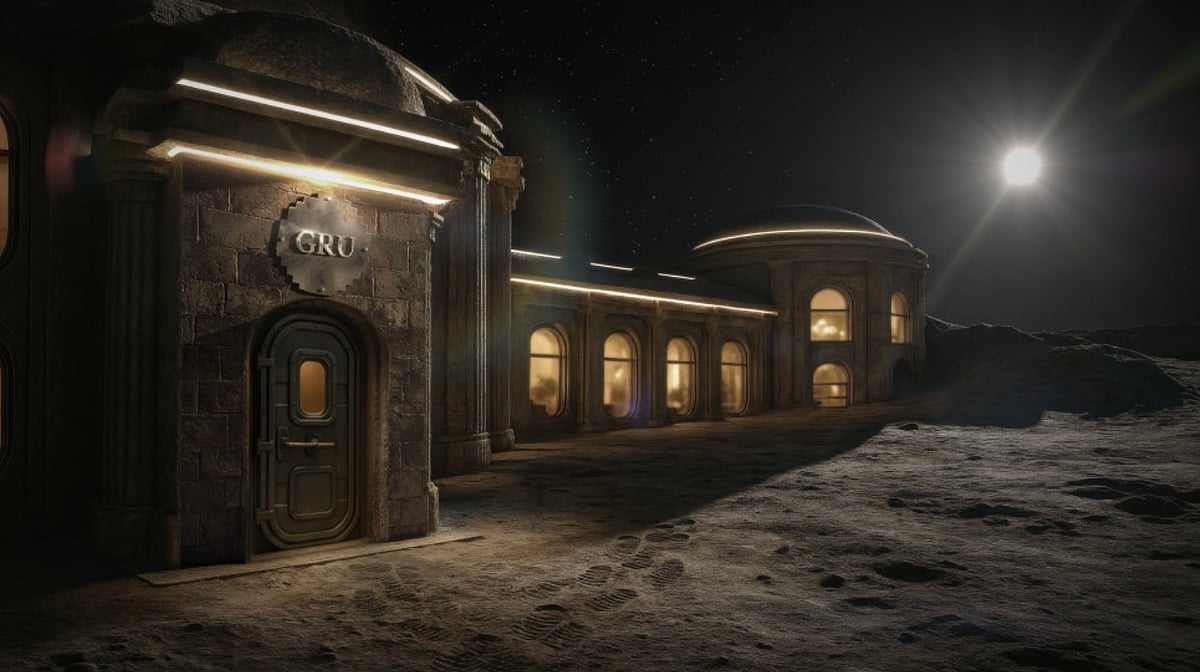
A stay on the Moon may soon move from science fiction to ultra-luxury travel. US company GRU Space has announced plans to build what it says will be the world’s first permanent hotel on the Moon, aiming to welcome guests as early as 2032.
If realised, the project would mark the first human-designed structure intended for long-term use beyond Earth.
Prospective guests are being asked to place a deposit of at least $1 million, positioning the venture at the extreme end of the emerging space tourism market.
Innovative construction using lunar soil
The lunar hotel will be built with inflatable living modules manufactured on Earth, combined with an automated system that transforms lunar soil into brick-like material for the building’s outer shell. This approach reduces the need to transport heavy construction materials from Earth, a longstanding challenge in space engineering.
The initial phase targets travellers who have already experienced commercial spaceflight, as well as those seeking “a once-in-a-universe holiday.” Early guests would pioneer a new category of tourism, combining space travel with extended stays beyond Earth’s orbit.
Technology tests before construction
GRU Space plans to begin testing lunar construction technologies by 2029 in cooperation with NASA. The first trial will deploy a small inflatable structure on the Moon to assess materials, durability, and environmental conditions.
If successful, the company will construct a larger structure in a lunar pit, believed to offer more stable conditions.
The initial hotel will accommodate four guests, with plans to expand capacity as technology and logistics evolve.
“If we succeed, this will generate billions on the Moon and Mars,” said founder Skyli Chan. “People will be able to experience the wonder of life in space.”
Network Links
GN StoreDownload our app
© Al Nisr Publishing LLC 2026. All rights reserved.