WHO alarmed by ‘scale and speed’ of Ebola outbreak
Deaths rise in Congo as health officials warn crisis could become prolonged
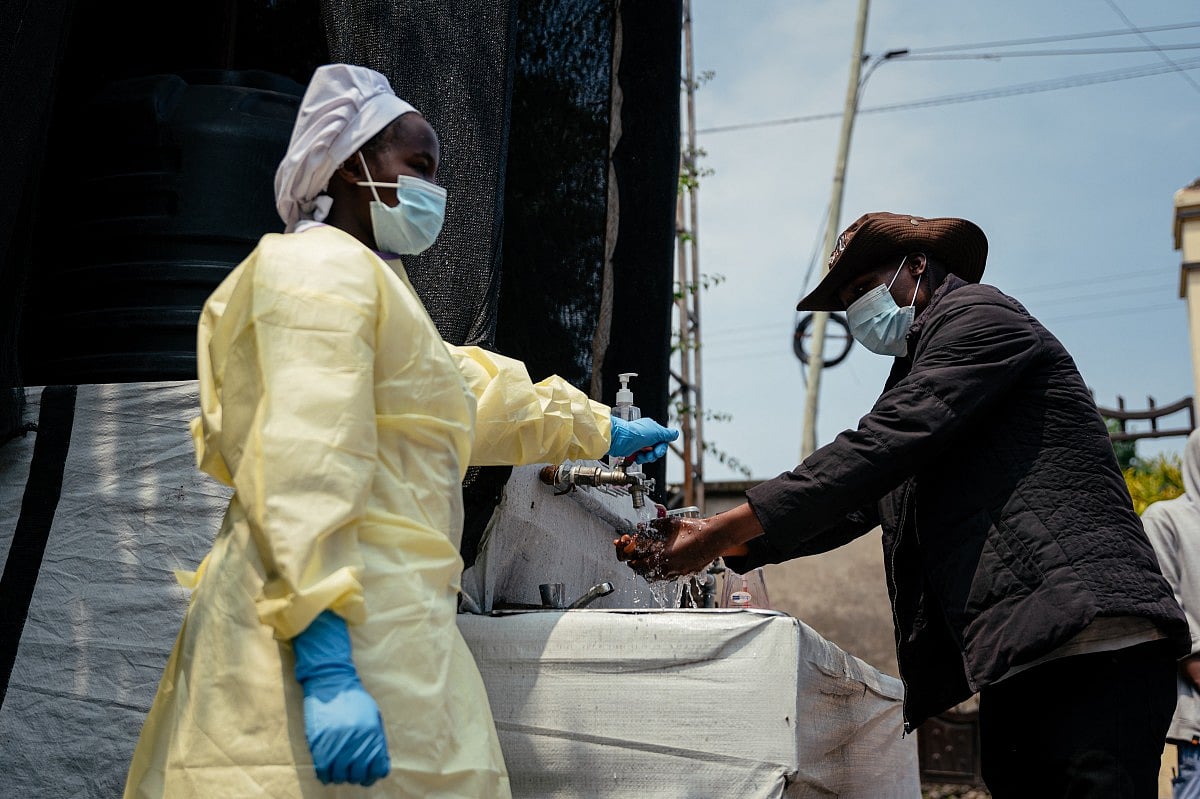
The World Health Organisation on Tuesday voiced growing alarm over the “scale and speed” of the Ebola outbreak spreading through eastern Democratic Republic of Congo, warning that the crisis could become prolonged and increasingly difficult to contain as suspected cases surged past 500.
WHO chief Tedros Adhanom Ghebreyesus said the UN health agency was “deeply concerned” about the outbreak, which has already killed an estimated 131 people and spread beyond Congo’s borders into Uganda.
The WHO has already declared the outbreak an international public health emergency — its second-highest alert level — and convened an emergency meeting on Tuesday to assess response options.
What has heightened concern among health officials is that the outbreak involves the rare Bundibugyo strain of Ebola, for which there is currently no approved vaccine or specific treatment.
“We have recorded roughly 131 deaths in total and we have around 513 suspected cases,” Congolese Health Minister Samuel Roger Kamba said on national television.
The latest figures mark a sharp jump from the numbers released only days earlier, when authorities had reported 91 deaths and around 350 suspected infections.
The epicentre of the outbreak is in Ituri province in northeastern Congo, near the borders with Uganda and South Sudan — a region plagued by armed conflict, population displacement and weak healthcare access.
Health officials say those conditions are complicating efforts to isolate patients, trace contacts and transport medical supplies.
As a major gold-mining hub, the area also sees heavy movement of people across borders, increasing fears of wider regional spread.
The virus has already spread into neighbouring Ugandan territory, with WHO confirming two Ebola cases in Kampala, including one death involving travellers from Congo.
Suspected cases have also emerged in Butembo and in Goma, the strategic eastern Congolese city currently controlled by Rwanda-backed M23 rebels.
Key developments
WHO says it is “deeply concerned” about the outbreak’s “scale and speed”
Around 131 deaths and more than 500 suspected cases reported
No approved vaccine or treatment exists for the Bundibugyo strain
Ebola cases confirmed in Uganda
Suspected cases reported in Butembo and Goma
US begins airport screening and suspends visa services
WHO examining experimental vaccine and treatment options
‘People thought it was a mystical illness’
Congolese Health Minister Kamba acknowledged that delays in recognising the outbreak had worsened the crisis.
“Unfortunately, the alert was slow to circulate within the community, because people thought it was a mystical illness,” he said.
Officials say the outbreak is spreading in remote and conflict-hit areas where laboratory testing remains limited, meaning many current figures are based on suspected rather than confirmed cases.
The Bundibugyo strain has previously caused outbreaks in Uganda in 2007 and Congo in 2012, with mortality rates ranging between 30 and 50 per cent.
Ebola, first identified in 1976 and believed to originate in bats, spreads through direct contact with bodily fluids and can cause severe bleeding and organ failure.
Over the past 50 years, the disease has killed more than 15,000 people across Africa. Congo alone has experienced 17 Ebola outbreaks, including the devastating 2018-2020 epidemic that claimed nearly 2,300 lives.
Why the outbreak worries WHO
Main concerns flagged by health officials
No approved vaccine for the Bundibugyo strain
Conflict zones complicating humanitarian access
Delayed detection and underreporting
Cross-border movement into Uganda
Cases reported in major urban centres
Limited laboratory testing capacity
Potential for a lengthy outbreak
WHO officials said they are now urgently examining whether experimental vaccine candidates or treatments could help contain the outbreak.
Anne Ancia, the WHO’s representative in Congo, said technical experts were evaluating whether candidate vaccines — including one known as Ervebo — could offer protection despite being designed for the Zaire strain of Ebola.
But she warned that even if approved, it could take at least two months before doses become available.
“I don’t think that in two months we will be done with this outbreak,” Ancia said, pointing to previous Ebola outbreaks that lasted years.
The WHO said it has already deployed more than 40 experts and shipped 12 tonnes of emergency medical supplies, including protective equipment for frontline health workers.
Medical charity Doctors Without Borders is also helping establish treatment centres and expand laboratory capacity.
Meanwhile, the United States has begun screening air passengers arriving from outbreak-hit areas and temporarily suspended visa services. Germany said it was preparing to receive an American doctor infected while working in Congo for a Christian NGO.
Humanitarian agencies warn the outbreak could become even harder to manage if conflict intensifies in eastern Congo.
“Humanitarian access and coordination between the various stakeholders, particularly the parties to the conflict, could be one of the challenges for the response,” Francois Moreillon of the International Committee of the Red Cross told AFP.
- With inputs from AFP
Sign up for the Daily Briefing
Get the latest news and updates straight to your inbox
Network Links
GN StoreDownload our app
© Al Nisr Publishing LLC 2026. All rights reserved.