As a country with an abundance of mineral resources but a relatively small population providing limited domestic demand, it is hardly surprising that South Africa has long looked to the rest of the world for its markets.
Indeed, as emerging-market demandhas swollen, exports as a percentage of GDP have risen steadily, to just over35 per cent, although the trade balancehas actually deteriorated, with imports growing at a faster rate.
In a recent BusinessWeek survey, South Africa had three companies featured in the ranking based partly on the proportion of overseas sales. Highest, at seventh, was mobile telecommunications giant MTN, with a staggering 61 per cent of its sales overseas, followed by Sasol, the energy and chemicals company, and Bidvest, the trading and distribution group.
But a glance at South Africa's raw trade statistics has one fact standing out, namely the dramatic emergence of China as the country's main export market.
Last year exports to China, predominantly of minerals, surged by 36 per cent, going some way to offsetting the fall in the overall total relating mainly to traditional, Western markets. At more than five times the 2005 level, exportsto China according to latest data account for11 per cent of the total.
Another noticeable trend has been the increasing importance of other sub-Saharan African countries, particularly those in the Southern African region. Restricted from doing business there during the apartheid era, South African companies are now making up for lost time on their own continent — Zimbabwe, Mozambique, Zambia are all high on the list.
Both trends happily coincide with the country's foreign policy of favouring links with Asia, Latin America and Africa, to reduce its historical dependence on Europe and the US.
Digging deep
No matter South Africa's achievements in diversifying its manufacturing base, it is hard to imagine any industry eclipsing the mining sector.
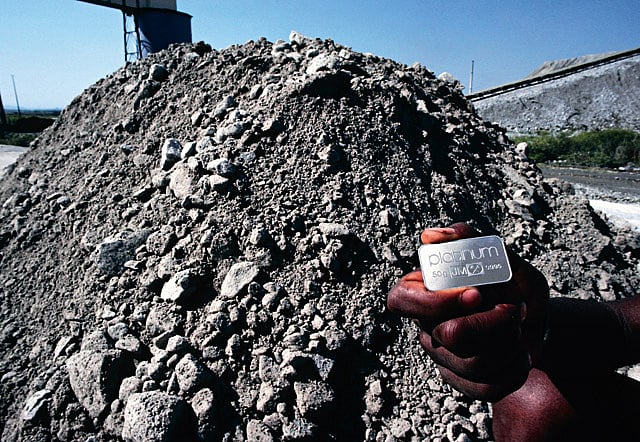
The scale and range of mineral wealth can only be marvelled at. Of the world's total supply of key commodities, South Africa accounts for 60 per cent of platinum, 80 per cent of manganese, 73 per cent of chrome, 45 per cent of vanadium and 41 per cent of gold supplied. It is also the world's fourth-largest producer of diamonds, as well as a leading producer of coal.
That's not to say there haven't been changes. Partly reflecting disruptions to output caused by electricity shortages, and the stoppages of mines on safety grounds, South Africa has slipped from its long-held position as the world's largest producer of gold, and now ranks behind China, Australia and the United States. Nonetheless the industry remains a crucial part of the economy. In 2009 gold earned 48.7 billion rand ($6.6 billion or about Dh24.5 billion) in foreign exchange, making it the country's second-largest export, behind platinum group metals (PGM) at 58 billion rand.
The PGM sector now represents around 15 per cent of exports, calling upon 87 per cent of the world's reserves.
Sometimes referred to as ‘white gold', platinum has the benefit of being diversified both in market and usage. Exports go substantially to Europe (38 per cent of global demand), followed by China (20 per cent) and Japan (17 per cent). Uses range from auto catalysts (43 per cent), industrial (28 per cent) and the growing sector of jewellery (22 per cent).
But there is life, as it were, beyond minerals. Diversification has been a key policy theme, though it has, naturally enough, partly been built on those primary resources. Adding value to � raw mineral materials before export has been identified by government as a major growth area.
South Africa has built a high level of technical and production expertise in these fields,enabling world-leading primary processing facilities covering carbon steel, stainless steeland aluminium. It is also ground breaking innew technologies, such as the process that converts low-grade superfine iron ore intohigh-quality iron units.
Point of assembly
In manufacturing, the automotive industry is one of South Africa's most important sectors. Despite its distance from major markets, many multinationals use South Africa to source components, such as catalytic converters, exhausts and leather seat covers, besides assembling vehicles for both the local and international markets. Exports of automotive products account for just over 10 per centof total exports.
It's hardly been a great time for the sector, but Volkswagen South Africa has reported some good news recently. Cars sold in the first part of 2010 have risen to a level of nearly 24 per cent over the same period for 2009, a key element being the export of the new Polo to right-hand-drive markets. In fact, Volkswagen is set to double the number of cars it exports from South Africa after winning orders for 55,000 Polos to countries including the UK, Ireland, Australia, New Zealand, Malaysia and Singapore.
Despite difficult conditions in many parts of the country, with a lack of water and variable climatic conditions, agriculture is well-diversified. South Africa has used its scarce arable landto produce high-value crops such as grapes, citrus fruit and nuts.
While the sector's importance in theeconomy has declined, it still provides close to 10 per cent of exports, becoming increasingly overseas market-oriented (about 40 per cent of products exported).
In all, South Africa delivers a rich menufor consumption around the world.
Sign up for the Daily Briefing
Get the latest news and updates straight to your inbox
Network Links
GN StoreDownload our app
© Al Nisr Publishing LLC 2026. All rights reserved.